Gum disease: risks and what helps
Early gum disease can be reversed with good daily cleaning. Periodontitis, the later stage, cannot be reversed, but a dental team can help control it. Smoking and diabetes raise the risk.
On this page
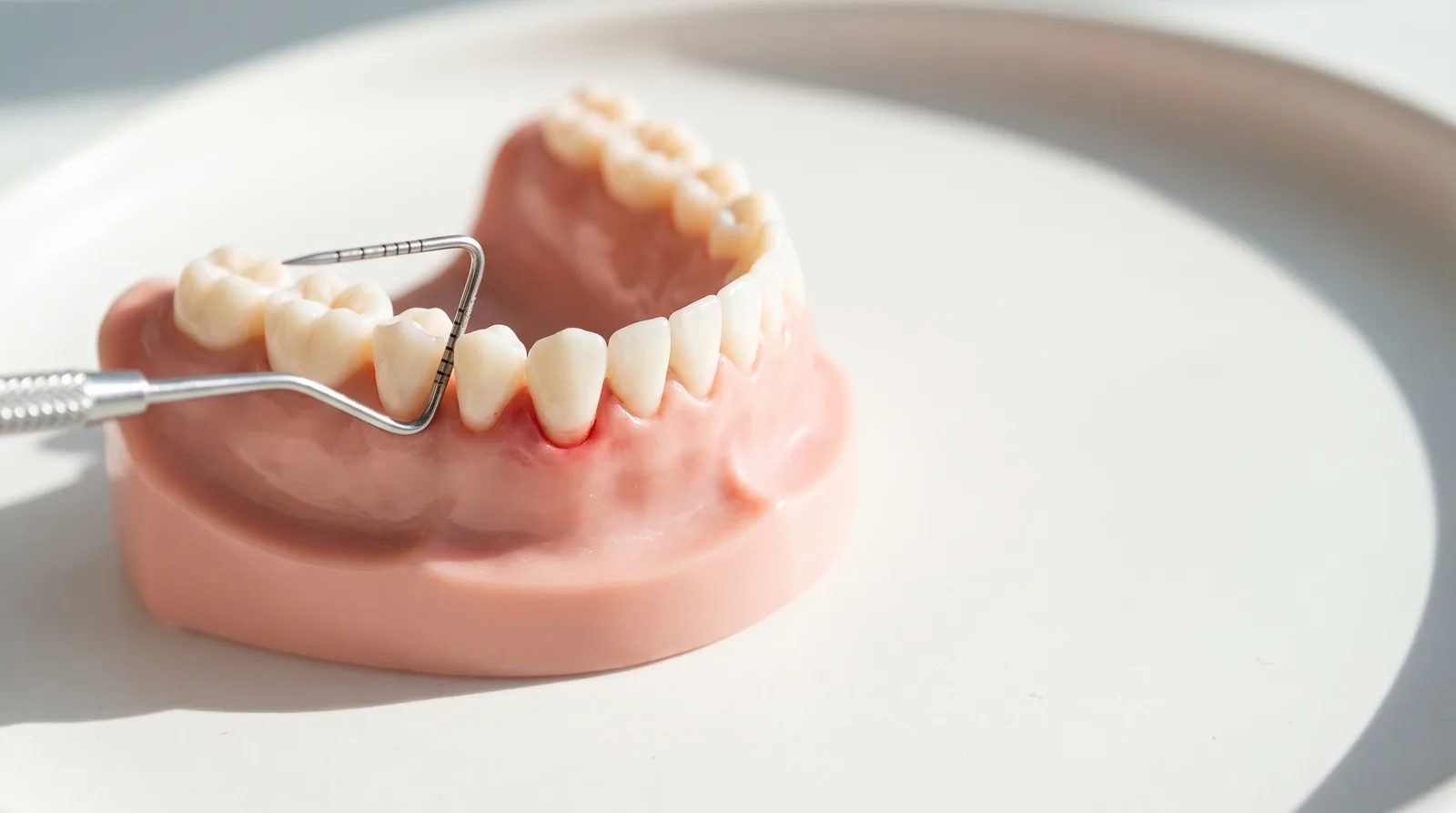
If your gums bleed when you brush, you probably want to know how worried to be and what you can do yourself. It depends on how far the disease has gone. Early gum disease can be reversed with good daily cleaning. The later stage can be controlled but not undone, and that takes a dental team as well as you.
What is gum disease?
Gum disease is caused by plaque, the film of bacteria that coats teeth. The NHS says that if you do not remove it by brushing and cleaning between your teeth, it builds up and irritates your gums. There are two main stages, and the difference matters because only one can be reversed.
| Question | Gingivitis | Periodontitis |
|---|---|---|
| What is affected? | The gums only | The tissue and bone that hold the teeth |
| Can it be reversed? | Yes | No, but it can be controlled |
| What helps? | Daily cleaning and advice | The same, plus professional treatment |
The government’s prevention toolkit, updated in September 2025, says gingivitis stays within the gums and reducing plaque reverses it. Periodontitis damages the tissue and bone that hold the teeth in place, and that loss cannot be reversed. Not everyone with gingivitis goes on to develop periodontitis. The toolkit says some level of irreversible periodontitis affects almost half of UK adults, using the 2009 Adult Dental Health Survey, and that this may be an underestimate.
The NHS lists gums that bleed when you brush, floss or eat hard foods, and gums that are swollen, red and sore, as the signs. It says gum disease can lead to bad breath, shrinking gums, loose or lost teeth and a dental abscess. The toolkit adds that the early stages may cause no symptoms, which is one reason regular check-ups matter.
What raises your risk?
Plaque is the starting point. The government toolkit calls it the most important of a complex mix of risk factors, and names several others.
- Tobacco. Smoking and smokeless tobacco have a profound effect on the risk of periodontitis and make treatment work less well, according to the toolkit. Stopping can prevent further deterioration. Findings on vaping are mixed. People who vape seem to be at greater risk than non-smokers, but most are former smokers, so the toolkit says it will take time to know the effect of vaping itself. Vaping is far less harmful than smoking, but it still carries some risk.
- Diabetes. Raised blood sugar is a risk factor for poor gum health and weakens the response to treatment. Well-controlled diabetes is not itself a risk factor, but control often changes, so the toolkit advises assuming a higher risk for anyone with diabetes.
- Some medicines. Some medicines can cause a dry mouth, including some antidepressants. Others can make the gums swell, most commonly calcium channel blockers used for cardiovascular disease, the toolkit says. Tell your dentist what you take. Do not stop a prescribed medicine on your own: ask your pharmacist or GP.
- Alcohol. Emerging evidence, of low certainty, links drinking to periodontitis, the toolkit says.
- Family history. The British Society of Periodontology and Implant Dentistry (BSP) says most people can get mild gum disease, but some are more prone to aggressive forms, and severe gum disease can run in families, especially when it starts at a young age.
UK sources differ on some other factors. A 2017 BSP leaflet also lists stress, a poor diet and obesity as raising the risk of severe disease, while the government toolkit says the evidence is not strong enough to show a clear link. We have left those three out of the list rather than choose between them.
What can you do at home?
Self-care is vitally important for preventing and managing periodontitis, according to the toolkit. The BSP’s guidance for dental teams says regular, effective plaque removal by the patient offers the largest treatment benefit.
- Brush twice a day for about 2 minutes with fluoride toothpaste, last thing at night and once more, and spit afterwards without rinsing, says the NHS. If you have periodontitis, the toolkit says careful cleaning at the gum line may take longer, and no particular technique has been shown to be better than another.
- Clean between your teeth every day. An interdental brush should fit snugly, says the NHS, and the toolkit says floss or tape can be used where teeth are closer together. For people with, or treated for, periodontitis, who usually have larger gaps, it says interdental brushes work better. The evidence that cleaning between teeth reduces gum inflammation is rated low to very low certainty, but the toolkit still recommends doing it every day.
- Use a powered or a manual brush. Either will do, the NHS says, as long as you clean every surface of every tooth. Medium or soft bristles suit most people, and the toolkit reports low-certainty evidence that they are less likely than hard bristles to damage the gums.
- Skip wooden toothpicks. They may damage your gums, which could lead to an infection, the NHS warns.
Mouthwash has been studied as an addition to cleaning. The toolkit says reviews found that some mouthwashes reduce plaque and gum bleeding more than mechanical cleaning alone, and rates that evidence as low to moderate certainty. The NHS says not to use mouthwash straight after brushing, as it washes away the toothpaste’s fluoride. The BSP leaflet adds that a mouthwash may help very mild gum disease but may hide more serious disease.
What home care cannot do
It cannot undo the loss of bone and supporting tissue that periodontitis has already caused. The toolkit calls that damage irreversible, and the BSP leaflet says treatment generally cannot replace the support your teeth have lost. The leaflet also says a dentist or hygienist can remove tartar, which is hardened plaque, above the gum line, and can remove bacteria below it by deep cleaning. Gums that keep bleeding despite careful cleaning are a reason to see a dentist.
What do dentists and hygienists do?
Treatment depends on how severe the disease is, says the NHS. Early on, your dentist may advise on cleaning, advise you to stop smoking if you smoke, and suggest a clean by a hygienist. For serious gum disease the NHS lists deep cleaning under the gums, antibiotics, removing some teeth and gum surgery, and says your dentist may refer you to a specialist.
The BSP’s guidance for dental teams describes the usual order of care for periodontitis.
- Explain and prepare. The team explains the disease and your options, supports cleaning at home, works on risk factors such as smoking and diabetes control, and may clean and scale your teeth, including just below the gum edge. They then check how your cleaning at home is going before moving on.
- Clean the roots below the gum. This is called subgingival instrumentation, done by hand or with sonic or ultrasonic instruments.
- Check again after about 3 months. Pockets that have not settled may be cleaned again, or you may be referred for further treatment.
- Keep it stable. The BSP strongly encourages supportive care, with visits every 3 to 12 months, set to suit the individual.
Periodontitis tends to come back and get worse without good plaque control, says the toolkit, which is why the support continues. The BSP leaflet says you can ask for an injection to numb your gums and teeth if you would like one. Afterwards your gums are likely to bleed more at first. The leaflet says this is normal and will improve, so keep cleaning. As your gums get healthier they may shrink, leaving gaps between the teeth. Teeth can feel more sensitive to hot, cold or sweet things. The leaflet says this usually gets better within a few weeks, but some people need a sensitivity toothpaste or other treatment, so tell your dentist if it does not settle. It adds that smokers who carry on are less likely to improve.
When to see a dentist
Even when nothing seems wrong, the NHS advises regular check-ups, and says to book one if you have not been in 2 years (1 year if you are under 18). It recommends regular dentist and hygienist visits especially if you are pregnant or have type 2 diabetes.
- gums that bleed when you brush or eat hard foods
- gums that are sore, red or swollen, or you have bad breath
- gums that are shrinking, gaps opening between teeth, or teeth that have moved
- sore or bleeding gums in a child
The NHS says to ask for an urgent dentist appointment if gum disease comes with very sore, swollen gums, teeth becoming loose or falling out, ulcers or red patches in your mouth, or a lump in your mouth or on your lip. If you have no dentist or cannot get an emergency appointment, call 111.
Gum disease can lead to a dental abscess, a build-up of pus caused by infection. The NHS says an abscess needs urgent treatment by a dentist and will not go away on its own. Signs include intense pain in the gums, a swollen face or jaw, a bad taste in your mouth and a high temperature. Do not go to a GP surgery for one, because they cannot give dental treatment.
The NHS says to call 999 or go to A&E if any of these apply.
- you find it hard to breathe, speak or swallow
- you have a swollen or painful eye, or you suddenly start having problems with your eyesight
- you have a lot of swelling in your mouth
- you find it hard to open your mouth
Do not drive yourself to A&E, the NHS says: ask someone to drive you, or call 999 for an ambulance.
What we would do
A new patient exam is the first step if it has been a while. We examine your teeth, gums and soft tissues, take small X-rays where needed and talk through what we find.
If your gums need attention, a dental hygiene appointment starts with your hygienist checking your gum health and looking for plaque build-up and early signs of gum disease. They clean and scale your teeth, polish them and advise you on brushing and flossing. Our price list shows single, double and triple hygiene and periodontal sessions. Where a gum pocket has not responded fully to cleaning alone, a perio chip can be placed after a periodontal clean, alongside it and not instead of it.
If you need more than cleaning, your dentist will tell you whether you need a specialist and what applies in your case. If you have noticed changes in your gums, book an appointment and we can take a look together.
If you are told you have periodontitis, ask for your own plan: which cleaning aids suit your teeth, what you are aiming for at home, and when you will be seen next.
Want us to take a look?
Book an appointment at whichever of our five practices suits you. We will check what is going on and talk you through your options.
Questions this guide answers
Can gum disease be reversed?
The early stage, gingivitis, can be reversed by cleaning plaque away well each day, according to the government prevention toolkit. Periodontitis, the later stage, cannot be reversed because it damages the tissue and bone that hold teeth in place, but a dental team can help control it.
Can I treat gum disease at home?
Daily cleaning at home is the foundation, and it can reverse gingivitis. It cannot undo periodontitis, and the British Society of Periodontology and Implant Dentistry says a dentist or hygienist can remove tartar and the bacteria below the gum line. Gums that keep bleeding are a reason to book a check-up.
Does gum disease run in families?
Most people can get mild gum disease, but the British Society of Periodontology and Implant Dentistry says some people are prone to more aggressive forms, and that severe gum disease, especially at a young age, can run in families. If it is in your family, tell your dentist.
Do smoking and diabetes make gum disease worse?
The government prevention toolkit says tobacco has a profound effect on the risk of periodontitis and makes treatment work less well. It says raised blood sugar is a risk factor too and also reduces the response to treatment. Tell your dentist if you smoke or have diabetes.
Sources (8)
- Gum disease
- How to keep your teeth clean
- Dental abscess
- Delivering better oral health: an evidence-based toolkit for prevention, chapter 5: periodontal diseases
- Delivering better oral health: an evidence-based toolkit for prevention, chapter 8: oral hygiene
- Periodontal health for a better life (patient information leaflet, 2017)
- BSP UK clinical practice guidelines for the treatment of periodontal diseases (flow chart, 2021)
- Gum disease