Tooth infection and abscess
A tooth abscess is a pocket of pus caused by a bacterial infection in a tooth or gum. The NHS says it will not go away on its own and needs urgent treatment by a dentist. It is often painful, but not always.
On this page
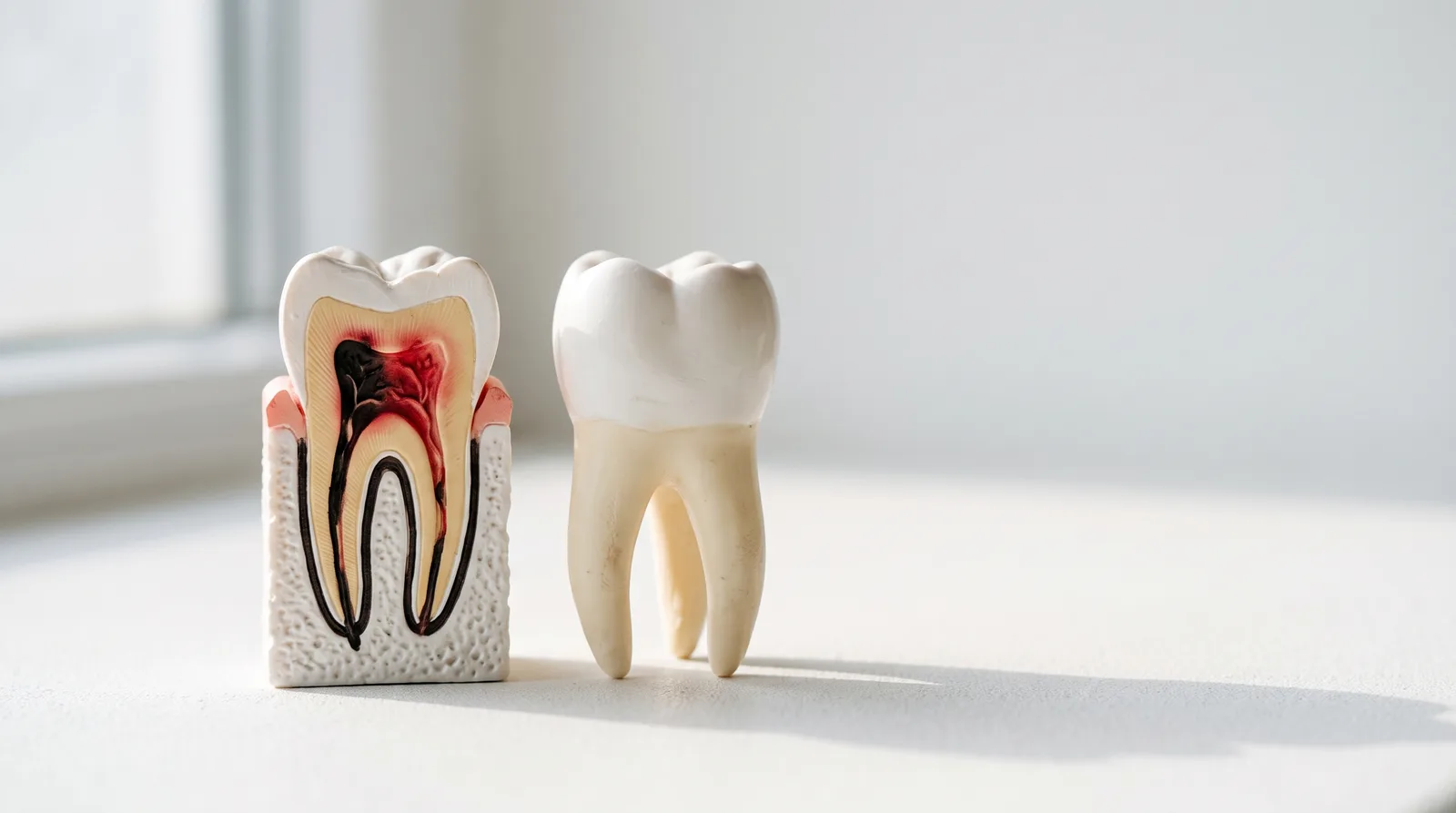
A throbbing tooth, a swollen gum or a bad taste that will not shift can all be signs of infection. When an infection forms a pocket of pus in a tooth or gum, it is called a dental abscess. The NHS says it needs urgent treatment by a dentist, and that it will not go away on its own.
What is a tooth abscess?
Your mouth is full of bacteria, and an abscess is what NHS inform describes as a collection of pus caused by a bacterial infection. It can form inside a tooth, in the gum, or in the bone that holds the teeth in place. Dentists name it after where it forms.
| Type | Where it forms | Can follow |
|---|---|---|
| Periapical | At the tip of the tooth’s root | A problem with the tooth, such as decay or injury |
| Periodontal | In the gum beside the tooth | Gum disease, or food stuck in the gum |
Only a dentist can tell which kind you have and what is behind it.
What can cause one?
The NHS lists several starting points:
- tooth decay or gum disease
- an injury to a tooth, gum or the mouth
- a tooth that has not come through the gum properly (an impacted tooth)
- radiotherapy or chemotherapy
NHS inform adds earlier surgery to the list, noting that bacteria can get into any damaged part of a tooth or gum. It says plaque that is not cleaned off can lead to decay or gum disease, and that too much sugary food and drink may lead to decay that can result in an abscess. A weakened immune system raises the chance too. That can come from conditions such as diabetes, or from treatments including steroid medication.
The NHS says that if decay has reached the soft tissue in the middle of a tooth, you may need root canal treatment, and sometimes the tooth needs to be removed. The Scottish Dental Clinical Effectiveness Programme (SDCEP) writes its guidance for dental and other healthcare professionals. It says gum abscesses that keep coming back may be a sign of undiagnosed type 2 diabetes. Mention it to your dentist or GP if that sounds familiar.
What are the signs?
NHS inform says dental abscesses are often painful but not always. Either way, it says they should be looked at by a dentist. These signs in and around the mouth are described by the NHS, NHS inform and SDCEP:
- a throbbing or intense ache in a tooth or gum, which can come on suddenly and get worse, and may spread to the ear, jaw or neck on the same side
- pain that is worse when you lie down, or when you chew or touch the tooth
- a tooth that is tender, discoloured or loose
- red, shiny, swollen gums
- sensitivity to hot or cold food and drink
- a bad taste, or bad breath
Beyond the mouth, these signs are listed:
- redness or swelling in the face or jaw
- difficulty opening your mouth (this is also a 999 sign, see below)
- swollen glands in your neck
- a high temperature, and feeling unwell
For children under 16, SDCEP also lists tiredness, listlessness and loss of appetite.
How is an abscess treated?
Painkillers, soft food and a soft toothbrush can make the wait easier. The NHS suggests avoiding very hot or cold food and drink too. A pharmacist can advise which painkiller suits you. Do not give aspirin to children under 16. The NHS warns that taking more than the recommended dose will not work better and can be very dangerous.
The Oral Health Foundation says pain relief eases discomfort but does not fix the cause of toothache, and an abscess is one possible cause. None of these measures should be used to delay seeing a dentist, NHS inform adds. A dentist treats an abscess by removing the source of the infection and draining the pus. NHS inform lists these possible treatments, depending on where the abscess is and how severe the infection is:
- root canal treatment, which removes the abscess from the root of the tooth before the tooth is filled and sealed
- removing the tooth, which may be needed if a root canal is not possible
- draining the abscess through a small cut in the gum, which NHS inform says is usually only a temporary solution
Local anaesthetic is usually used to numb the mouth for these. More extensive operations may be done under general anaesthetic.
Antibiotics are a separate question. NHS inform says they are not routinely prescribed for dental abscesses, but may be used if the infection spreads or is particularly severe. SDCEP’s guidance for dentists goes further. Local measures such as draining the abscess come first. Antibiotics are kept for signs of spreading or whole-body infection, or for someone with a weakened immune system. Rarely, they are also used when swelling is severe and draining is not possible. The dentist who examines you decides what applies to you.
Can a tooth infection spread?
Sometimes. NHS inform says an abscess can spread to other parts of the face and neck and make you ill. SDCEP tells dental professionals to look for swelling and swollen lymph glands as signs of spreading infection, and for fever and feeling unwell as signs of infection in the whole body. A swollen face or jaw, or a high temperature, means you should ask for an urgent dental appointment. If you find it hard to open your mouth, breathe or swallow, that is an emergency: see the 999 signs below.
How can you lower the chance?
The NHS and NHS inform give overlapping everyday advice for preventing abscesses:
- brush with fluoride toothpaste at least twice a day, then spit rather than rinse
- clean between your teeth every day with floss or interdental brushes
- replace your toothbrush every 2 to 3 months
- cut down on sugary food and drink, particularly between meals and close to bedtime (our guide to sugar and your teeth goes into more detail)
- avoid mouthwash straight after brushing, and avoid smoking (see smoking and your mouth)
The NHS says regular check-ups help problems to be spotted early. If it has been a while, you can book a check-up.
When to see a dentist
The NHS says to ask for an urgent dentist appointment, or get help from NHS 111, if you think you have a dental abscess. Call your dentist first. If the practice is closed, its answerphone may tell you what to do.
- you think you have a dental abscess, from any of the signs above
- toothache lasts more than 2 days, or does not ease with painkillers
- toothache comes with a high temperature, pain when you bite, red gums or a bad taste
- toothache comes with a swollen cheek or jaw
If you do not have a dentist, or cannot get an emergency appointment, the NHS says to call 111 or use 111 online, which can tell you where to get help, or to find a dentist and ask for an emergency appointment. You may have to pay for the appointment. Do not go to a GP surgery for an abscess: the NHS says they cannot give you dental treatment.
Some signs mean emergency help instead. The NHS says to call 999 or go to A&E if any of these apply:
- you find it hard to breathe, speak or swallow
- an eye is swollen or painful, or you suddenly have problems with your eyesight
- there is a lot of swelling in your mouth
- you find it hard to open your mouth
- the area around your eye, or your neck, is swollen
The NHS advises against driving yourself to A&E. Ask someone to drive you, or call 999 and ask for an ambulance, and bring any medicines you take. The Oral Health Foundation adds that infections can spread quickly, so swelling is not something to ignore.
What we would do
If you think you have an abscess, call your nearest practice and describe what is happening. Our emergency dentist page explains how urgent care works. The team will tell you the soonest appointment they can offer. Outside opening hours, the practice voicemail gives a mobile number for dental emergencies. At the appointment we look for the cause of the pain, take an X-ray if it is needed, and explain your options. We treat the immediate problem with pain relief or temporary treatment, then agree any follow-up with you. Our fees for emergency appointments are on the price list.
Where a tooth can be saved, root canal treatment removes the infected pulp, cleans the inside of the tooth, then fills and seals it, under local anaesthetic. We often recommend a crown on top afterwards. If the tooth cannot be saved, we talk through tooth extraction, which we only recommend once other options have been ruled out or the tooth is too damaged to save. We also talk through what could replace the tooth afterwards.
A dentist can find the source of the infection and treat it, whether or not the tooth hurts.
Want us to take a look?
Book an appointment at whichever of our five practices suits you. We will check what is going on and talk you through your options.
Questions this guide answers
Can a tooth abscess go away on its own?
The NHS says a dental abscess will not go away on its own and needs urgent treatment by a dentist. Painkillers can ease discomfort while you wait, but the Oral Health Foundation says pain relief does not fix the cause of toothache.
Can I have an abscess without any pain?
It is possible. NHS inform says dental abscesses are often painful but not always, and that either way a dentist should look at them. Other signs include a bad taste, swollen gums or a swollen face or jaw.
Will I need antibiotics for a tooth abscess?
NHS inform says antibiotics are not routinely prescribed for dental abscesses, but may be used if the infection spreads or is particularly severe. The dentist who examines you decides what is right for you.
Should I go to my GP or to A&E with a tooth abscess?
The NHS says to ask for an urgent dentist appointment or get help from NHS 111, and not to go to a GP surgery, which cannot give dental treatment. Call 999 or go to A&E if you find it hard to breathe, speak or swallow, have a swollen or painful eye, suddenly have problems with your eyesight, have a lot of swelling in your mouth, or find it hard to open your mouth.