Cleaning your tongue
The NHS and the Oral Health Foundation advise gentle tongue cleaning once a day. Small trials suggest it may reduce bad breath, but it does not replace brushing and cleaning between teeth. Bad breath has other causes.
On this page
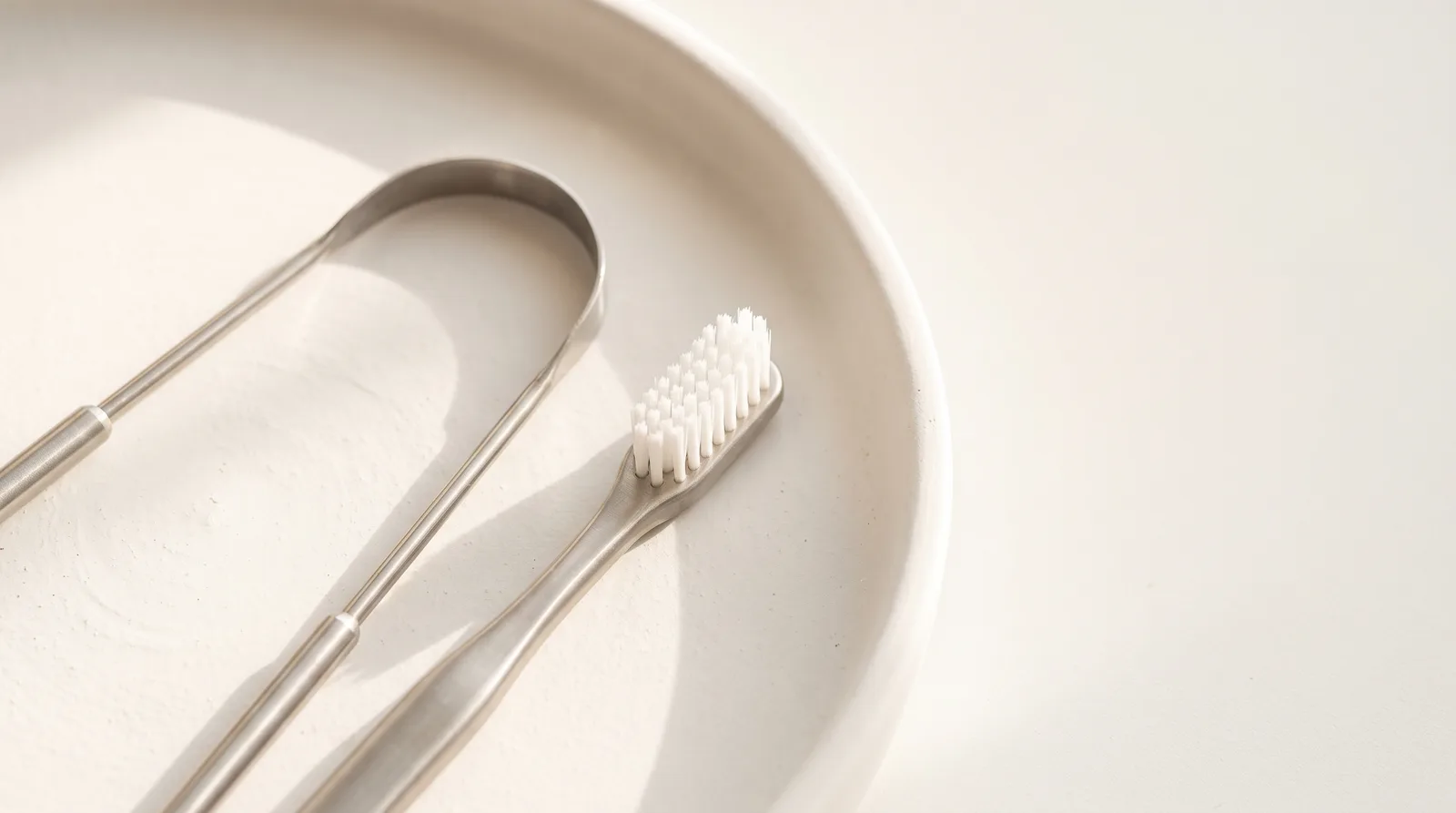
You brush your teeth twice a day, but your tongue is easy to forget.
Why clean your tongue at all?
The Oral Health Foundation says bacteria, bits of food and dead cells can build up on your tongue and cause bad breath. The Clinical Knowledge Summaries (CKS) are guidance for GPs, hosted on the website of the National Institute for Health and Care Excellence (NICE). They describe the back of the tongue as a major source of the bacteria behind bad breath.
The NHS advises keeping your teeth, tongue and mouth clean to avoid bad breath. Its steps for treating bad breath yourself include cleaning your tongue once a day, alongside brushing and cleaning between your teeth.
What does tongue cleaning do?
Most of the research is about bad breath, and it is modest. The CKS describe a 2013 review of five trials with 251 people aged 17 to 80. In it, cleaning the tongue as well as brushing lowered levels of smelly sulphur compounds more than brushing alone. A 2010 review of five studies found a benefit for measures of bad breath in every experiment, but said there was too little data on long-lasting bad breath.
| Aim | What was found | How firm |
|---|---|---|
| Bad breath | Less breath odour and tongue coating when tongue cleaning was added to brushing | Results from small trials, with little on long-lasting bad breath |
| Taste | Taste sensitivity improved in all four studies in a 2025 review, though not every gain was statistically significant | Four small studies in people with a coated tongue, followed for two weeks at most |
| Tooth decay and gum disease | The reviews listed under Sources looked at breath, coating and taste, not these | No evidence cited here |
The Oral Health Foundation also says tongue cleaning can lower the bacteria that contribute to decay and gum problems. That is the charity’s own claim: none of the reviews listed here tested it. Tongue cleaning comes on top of brushing and cleaning between your teeth.
Bad breath also has causes that a scraper will not reach. The NHS lists gum disease, holes in teeth, infection, dry mouth, acid reflux, smoking and strong-smelling food and drink, among others.
How to clean your tongue
The NHS says to clean your tongue gently once a day. The CKS add ideally before bedtime, with a focus on the back of the upper tongue, where they say bacteria flourish. They also note that one review they drew on found too little evidence to recommend an optimal frequency, duration or delivery method, so these are sensible habits rather than proven rules.
- Stand at a mirror with your tongue out, so you can see the coating.
- Rest the scraper towards the back of your tongue, but only as far back as is comfortable.
- Draw it forward to the tip with light pressure. The Oral Health Foundation says to always work from back to front.
- Rinse the scraper and repeat until the surface looks clean. The Oral Health Foundation says one or two passes in each area is enough.
- Wash the scraper in warm soapy water afterwards.
Keep the pressure light. The NHS says not to brush so hard that your gums or tongue bleed, and the CKS warn that excessive scraping can damage the tongue and cause bleeding.
Gagging is common at first. The Oral Health Foundation suggests starting in the middle of the tongue and moving further back over time, breathing out slowly, and going gently.
None of the pages or reviews listed under Sources advises on cleaning a child’s tongue, so ask a dentist about a child.
Scraper or toothbrush?
Most UK sources favour a scraper, but a toothbrush is also an option. The NHS page on bad breath names a tongue scraper or cleaner, and the Oral Health Foundation says a tongue cleaner is usually the most effective option, although it lists your toothbrush too. The CKS also advise a cleaner or scraper rather than a toothbrush. The NHS page on a sore or white tongue says to brush your tongue or use a scraper. The 2010 review counted both tongue brushing and scraping as methods with the potential to reduce breath odour.
If you are unsure which suits you, ask your dental team.
When to see a dentist
Cleaning your tongue is routine. A change in your breath or your tongue is a separate question, and the NHS and the Oral Health Foundation set out when to get it checked.
The NHS says brushing or scraping can help improve a white tongue, but leukoplakia causes white, raised patches that do not come off when you rub them. It says to see a GP or dentist about white patches, so if a patch stays put when you clean, get it checked rather than scraping at it.
- bad breath that does not go away after a few weeks of looking after your mouth
- painful, bleeding or swollen gums, toothache, wobbly adult teeth or problems with dentures
- tongue pain or itchiness that does not go away or gets worse
- white patches on your tongue, including patches that do not rub off
- lumps, ulcers or colour changes on your tongue
For bad breath and gum or tooth problems, the NHS points to a dentist. For tongue pain and white patches it says a GP or dentist, and the Oral Health Foundation says dentist or doctor for patches, lumps, ulcers and colour changes. Our guide to bad taste and tongue changes goes through white and sore tongues in more detail, including the NHS signs of mouth cancer and of an urgent infection.
What we would do
If bad breath or a tongue change has not settled, we would start with a new patient exam. We examine your teeth, gums and soft tissues and carry out an oral cancer screening, so mention anything you have noticed on your tongue. We take small X-rays where needed and explain any next steps in plain language.
A dental hygiene appointment starts with an assessment of your gum health and a check for plaque build-up. It continues with a thorough clean and scale and a polish to finish, and includes advice on your own brushing and flossing routine.
If you would like to talk it through, book an appointment at whichever of our practices suits you.
Want us to take a look?
Book an appointment at whichever of our five practices suits you. We will check what is going on and talk you through your options.
Questions this guide answers
How often should I clean my tongue?
The NHS and the Oral Health Foundation both say once a day. Guidance for GPs on the NICE website adds ideally before bedtime, and notes that a review it drew on found too little evidence to recommend an optimal frequency. Treat this as guidance, not a tested rule.
Will cleaning my tongue stop bad breath?
It may help. The NHS includes tongue cleaning in its advice on bad breath, and small trials found less breath odour when it was added to brushing. Bad breath has other causes, and the NHS says to see a dentist if it has not gone after a few weeks of looking after your mouth.
Can I use my toothbrush instead of a tongue scraper?
Most UK sources favour a tongue scraper or cleaner. The NHS bad breath page names one, and the Oral Health Foundation says a scraper is usually the most effective option. A toothbrush is also an option: the NHS page on a white tongue says to brush your tongue or use a scraper. If you are unsure, ask your dental team.
Is tongue cleaning safe, and why does it make me gag?
Guidance for GPs on the NICE website advises a gentle scraping action and warns that excessive scraping can damage the tongue and cause bleeding. The Oral Health Foundation says gagging is common at first, and that starting in the middle of the tongue, breathing out slowly and keeping the pressure light can help.