Dry mouth: causes and what helps
Causes include dehydration, some medicines, mouth breathing at night and ageing. The NHS says a dry mouth is rarely a sign of anything serious, but it raises decay risk, so fluoride, less sugar and check-ups help.
On this page
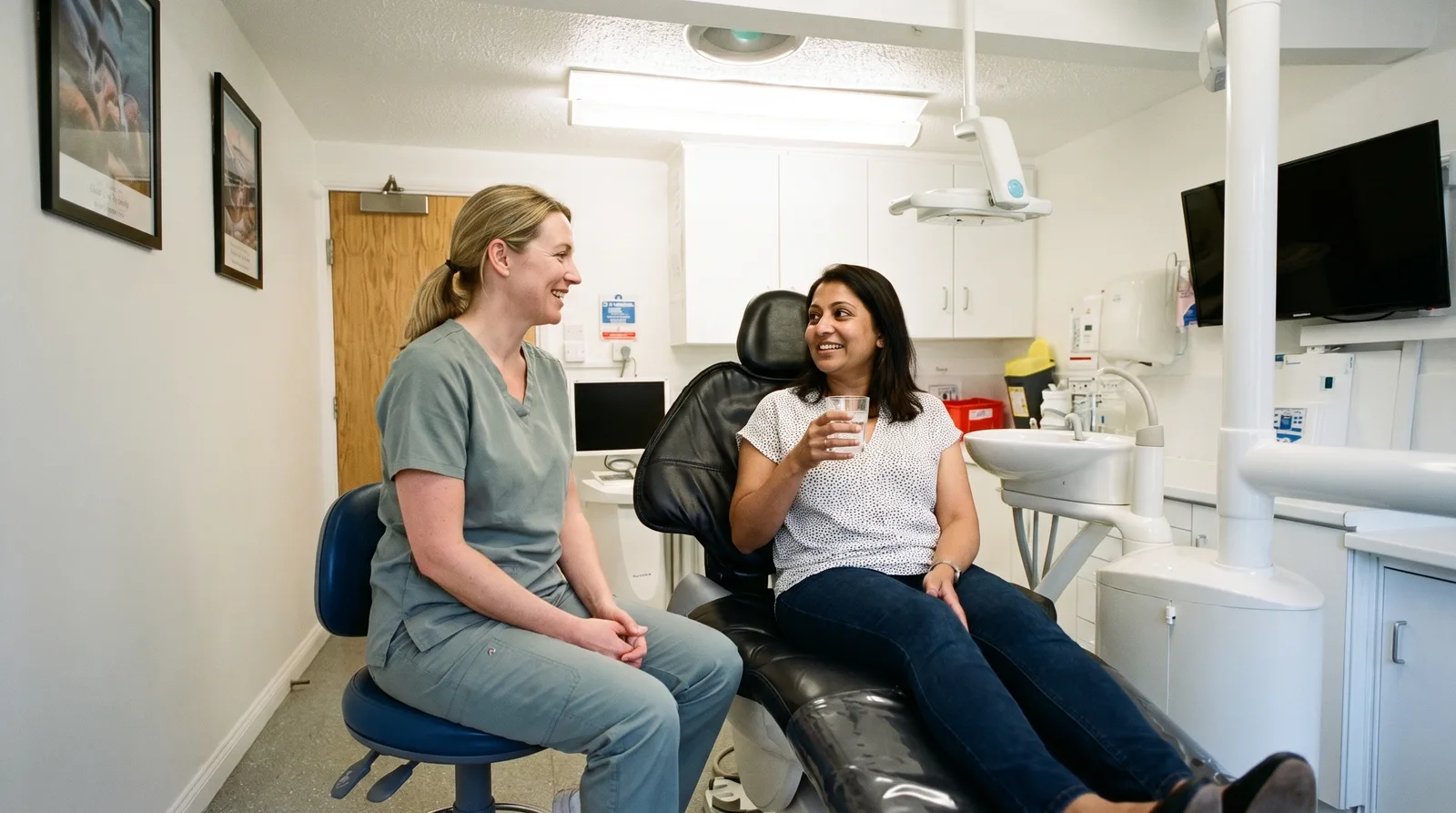
A mouth that feels dry or sticky, or that wakes you in the night, is uncomfortable. It can also affect your teeth, because saliva helps protect them.
What causes a dry mouth?
Dry mouth, also called xerostomia, happens when your mouth does not make enough saliva.
Everyday causes come first. You may not be drinking enough, or you may be sweating a lot or ill. You may be breathing through your mouth at night, because of a blocked nose or because you sleep with your mouth open. The NHS also names anxiety.
Health and treatment can play a part too. Some medicines list dry mouth as a side effect, and the leaflet in the box will say whether yours does. Radiotherapy, chemotherapy and oral thrush are also on the NHS list of main causes.
The Oral Health Foundation adds that saliva production can slow down as part of normal ageing, and that radiotherapy to the head, neck or mouth can reduce or stop saliva flow.
Sometimes a dry mouth that does not go away is caused by a condition such as diabetes or Sjögren’s syndrome. The NHS describes Sjögren’s syndrome as a condition in which the glands that make tears and saliva stop working properly.
Why a dry mouth matters for your teeth
Saliva helps you chew, swallow and speak, and it helps protect your teeth and gums. Without enough of it, the Oral Health Foundation says you may be more likely to have tooth decay, gum disease, mouth infections and bad breath. The NHS also says you are more likely to get tooth decay if you have a dry mouth.
Three things help protect your teeth: fluoride toothpaste, going easy on sugary food and drink, and regular check-ups.
Fluoride toothpaste
Brush for about 2 minutes twice a day with fluoride toothpaste, including last thing at night. Spit out the excess and do not rinse your mouth afterwards, as rinsing dilutes the fluoride left on your teeth. Because a dry mouth makes tooth decay more likely, your dentist can talk through extra fluoride protection with you.
Less sugar
The NHS says tooth decay is often caused by too much sugary food and drink, together with not cleaning your teeth regularly. Cutting down helps protect your teeth, and the NHS suggests sugar-free gum and unsweetened drinks for a dry mouth (more on those below).
Regular check-ups
How often you need one depends on your risk of dental problems. The NHS says the gap can be as short as 3 months or as long as 2 years (up to 1 year if you are under 18), and people with more problems come back more often. Your dentist should ask about your general health and any trouble with your teeth, mouth or gums, so mention a dry mouth.
What can help during the day?
A few small habits can ease the dryness.
- Sip cold water regularly through the day.
- Try ice cubes, or a cold drink without sugar.
- Chew sugar-free gum or have a sugar-free sweet. The Oral Health Foundation says gum helps stimulate saliva.
- Brush twice a day and choose an alcohol-free mouthwash.
- Use the mouthwash at a different time from brushing, such as after lunch. Rinsing straight after brushing washes away the fluoride left on your teeth from the toothpaste.
- Put lip balm on if your lips are dry too.
- Choose softer, moist foods, and add sauces or gravy to make swallowing easier.
It helps to go easy on large amounts of alcohol, caffeine and fizzy drinks, and on food that is acidic (such as lemons), spicy, salty or sugary. The NHS also advises against smoking.
Pharmacies sell gels, sprays, tablets and lozenges that keep the mouth moist, and a pharmacist can help you choose. Not every product suits everyone. The NHS says not to use acidic artificial saliva products if you have your own teeth, so ask which one is right for you.
What can help at night?
Waking in the night with a dry mouth is one of the signs the Oral Health Foundation lists, and it can cost you sleep. A few things are worth trying.
- Keep a glass of water by your bed. The NHS and the Oral Health Foundation both suggest this.
- A blocked nose can push you to breathe through your mouth in your sleep. A pharmacist may suggest a decongestant to help clear it.
- Take your dentures out at night.
- Keep lip balm by the bed if your lips dry out overnight.
If someone has noticed that your breathing stops and starts, or that you gasp, snort or choke in your sleep, see a GP. The NHS says these can be signs of sleep apnoea, which needs to be treated. Our guide to sleep, snoring and your mouth covers this.
Medicines and health conditions
If you think a medicine is causing your dry mouth, speak to your GP or pharmacist. Do not stop a prescribed medicine on your own, even if you are fairly sure it is the cause. If your dry mouth began after cancer treatment, tell your cancer team or GP, and mention it to your dentist too.
Diabetes and Sjögren’s syndrome, covered above, are examples the NHS gives of conditions that can cause a dry mouth that does not go away. Among the reasons to see a GP, it lists other symptoms such as needing to pass urine a lot, or dry eyes. If you have Sjögren’s syndrome, the NHS suggests brushing 2 or 3 times a day with fluoride toothpaste, chewing sugar-free gum and having dental check-ups every 6 months.
When to see a dentist or your GP
Most of the signs below are ones the NHS says to take to a GP. The Oral Health Foundation says your dental team, doctor or pharmacist can help.
- your dry mouth makes talking or eating difficult, means you are struggling to eat regularly, or affects your sleep
- it is still dry after a few weeks of home or pharmacy treatments
- your mouth is painful, red, swollen or bleeding, or you have sore white patches
- you notice more tooth problems or mouth soreness
- problems with your sense of taste are not going away
- you have other symptoms, such as needing to pass urine a lot, or dry eyes
- you think a prescribed medicine might be causing your dry mouth
What we would do
Because a dry mouth can affect your teeth and gums, we would begin with a new patient exam. We examine your teeth, gums and soft tissues, carry out an oral cancer screening and take small X-rays where needed. Tell us about your dry mouth, so we can check how your teeth and gums are doing and look out for early decay.
If we find decay that needs treatment, a filling can repair the tooth. A dental hygiene appointment removes plaque and tartar and includes advice on your brushing and flossing. Medicines, and the conditions that can sit behind a dry mouth, are for your GP or pharmacist to look at.
If your mouth stays dry, book an appointment so we can check your teeth and gums.
Want us to take a look?
Book an appointment at whichever of our five practices suits you. We will check what is going on and talk you through your options.
Questions this guide answers
Is a dry mouth a sign of something serious?
The NHS says a dry mouth is rarely a sign of anything serious. Sometimes one that does not go away is caused by a condition such as diabetes or Sjögren’s syndrome, so see a GP if it lasts after a few weeks of home or pharmacy treatments, or you have other symptoms.
Why is my mouth so dry at night?
One reason is breathing through your mouth, which can happen with a blocked nose or if you sleep with your mouth open. Some medicines can also dry the mouth. The NHS suggests keeping water by your bed, and a pharmacist can advise on products and on a blocked nose.
Does a dry mouth cause tooth decay?
Saliva helps protect your teeth, and the NHS says you are more likely to get tooth decay if you have a dry mouth. Fluoride toothpaste, less sugar and regular check-ups all help, and your dentist can talk through extra fluoride protection if you need it.
Should I stop my medicine if it dries my mouth?
No, not without medical advice. Speak to your GP or pharmacist first, even if you are fairly sure the medicine is the cause.