Teeth grinding: causes and what helps
Grinding or clenching, awake or asleep, is often linked to stress and sometimes to sleep problems. Not everyone needs treatment, but see a dentist if teeth look worn or your jaw, face or ear hurts.
On this page
Perhaps your partner has heard grinding in the night, or you wake with a tight jaw. Many people grind or clench their teeth without realising, and a dentist can check whether it is affecting your teeth or jaw.
What is teeth grinding?
Teeth grinding, also called bruxism, covers two habits. Clenching means keeping your teeth in contact, and grinding means moving them against each other, which does not always make a noise. Either can happen while you are awake or asleep.
A 2025 international expert consensus describes bruxism as a behaviour of the jaw muscles rather than a disorder. It is most often described as a risk factor for jaw pain or tooth wear. It can also be harmless, so what matters is whether it is causing any effects.
According to a 2026 systematic review of awake clenching, about one in four people in the general population report clenching or grinding while awake, although the figure depends on how it is measured. The Northern Ireland government’s health site, nidirect, says it often happens during sleep, or while concentrating or under stress.
What are the signs?
Grinding does not always cause symptoms, and nidirect says most people who do it are not aware of it. When there are signs, the NHS and nidirect list:
- worn-down or broken teeth, which can make them more sensitive, and broken fillings
- a painful or stiff jaw
- headaches or earache
- pain in the face
- disturbed sleep, for you or your partner
The NHS says a painful jaw can lead to a condition called temporomandibular disorder (TMD). A dentist can check your teeth and jaw for signs of grinding. Tooth damage usually only happens in severe cases, according to nidirect.
What causes it?
The NHS says it is not always clear why people grind their teeth. These are the factors it and nidirect link to it.
| Factor | What the sources say |
|---|---|
| Stress and anxiety | The most common cause, according to the NHS |
| Sleep problems | Snoring and sleep apnoea, where breathing stops and starts in your sleep, are linked to grinding |
| Some medicines | The NHS lists medicines for sleep problems, depression or anxiety. nidirect says a type of antidepressant called an SSRI is sometimes linked |
| Alcohol, caffeine and smoking | The NHS lists smoking and lots of alcohol or caffeine. nidirect also lists recreational drugs, and puts a lot of caffeine at six or more cups of tea or coffee a day |
A 2026 review of sleep grinding says the evidence behind the links with medicines is weak. If you think a prescribed medicine may be involved, nidirect advises talking to your pharmacist or GP, who can go through your options with you.
What about children?
Children can grind their teeth too. nidirect says it tends to start when baby or adult teeth first come through, and usually stops once the adult teeth are fully formed. The NHS advises seeing a dentist if you are worried about your child grinding their teeth, and nidirect suggests seeing a GP too if it is affecting their sleep.
What can help?
The NHS says treatment is not always needed. A 2026 review of sleep grinding agrees that most people who do it do not need treatment when it is causing no problems.
Things you can try yourself
The NHS suggests:
- finding ways to relax, such as breathing exercises, listening to music and regular exercise
- going to bed at the same time each night, relaxing before bed, and keeping your bedroom dark and quiet
- having regular dental check-ups
- not smoking, and not drinking too much alcohol or caffeine
- avoiding chewing gum and hard foods if you have tooth or jaw pain
How the options compare
| Approach | What it can do | What to know |
|---|---|---|
| Mouth guard or splint, worn at night | Protects teeth from damage | Not shown to stop grinding in the long term |
| Relaxation and stress support | Aims at stress, which the NHS says is the most common cause | Evidence is limited, though it may help some people |
| Sleep and lifestyle changes | Listed by the NHS | No strong evidence yet that they change grinding |
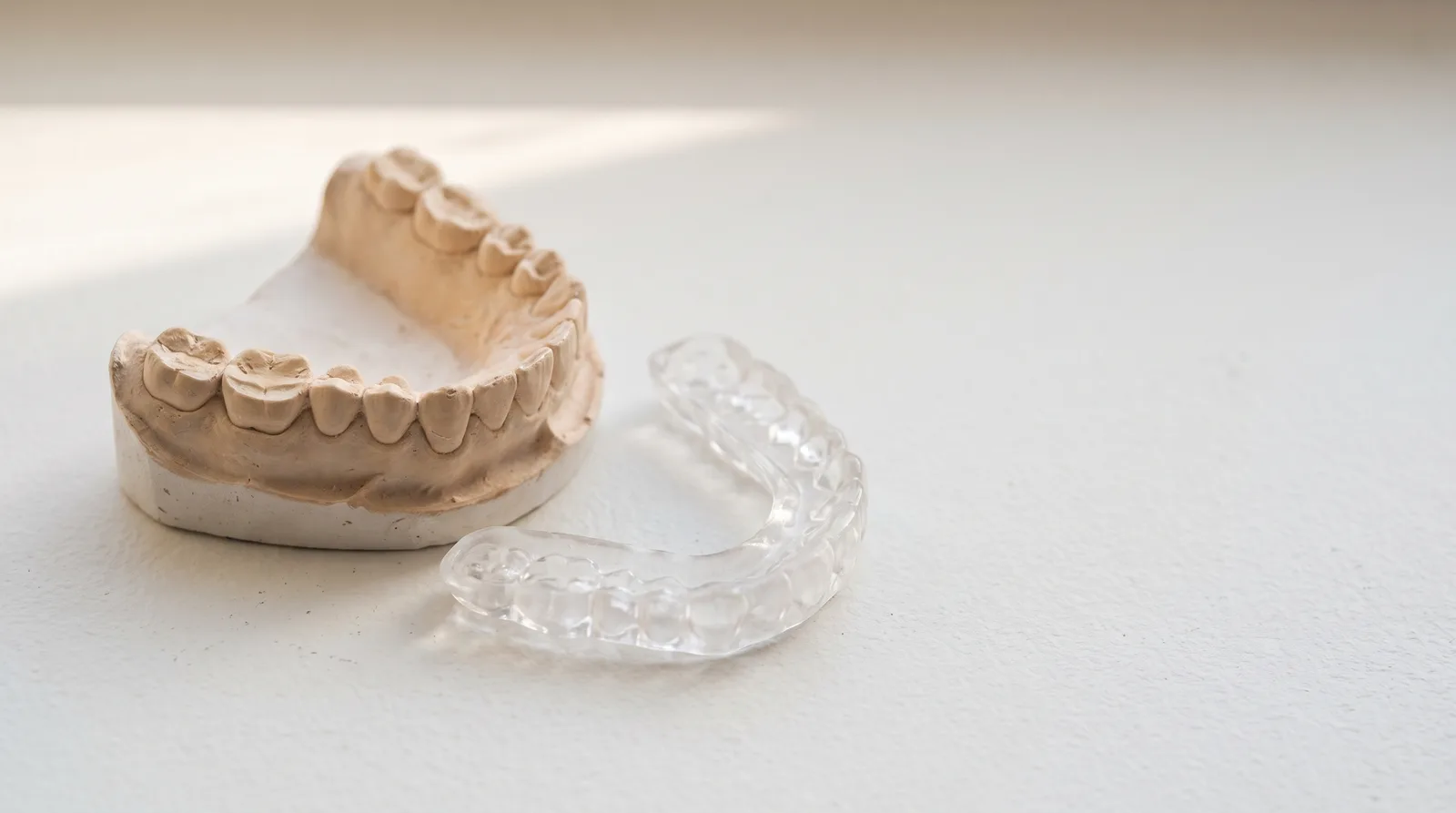
For a mouth guard or splint, the NHS says a dentist may recommend one to wear at night, made to fit precisely over your upper or lower teeth. The aim is to protect your teeth. The 2026 review of sleep grinding says no treatment has been proven to eliminate it, so care focuses on its effects, such as tooth wear or jaw pain. If you snore, or someone has noticed your breathing stop and start in your sleep, tell your dentist, as this can change which approach suits you.
For awake clenching, the 2026 systematic review found limited evidence, but it suggests that behavioural approaches may help. These include a small device that alerts you when you clench (biofeedback), learning to notice the habit and swap it for a relaxed jaw (habit reversal), and reminders such as a note on your screen.
If something else is behind it
Experts agree that when grinding is a sign of another health problem, such as sleep apnoea, treating that problem should come first where possible. For stress, the NHS says a GP can give advice and recommend ways to reduce it. NHS talking therapies may also help, and if you are 18 or over (16 or over in some areas) you can refer yourself without seeing a GP.
When to see a dentist
Your dentist will check your teeth and jaw for signs of grinding, nidirect says. Some of the causes behind it are a matter for your GP.
- you grind your teeth and have tooth damage or sensitive teeth (dentist)
- you grind your teeth and have pain in your jaw, face or ear (dentist)
- your partner says you grind your teeth in your sleep (dentist)
- you are worried about your child grinding their teeth (dentist)
- you need help with stress, anxiety, smoking, drinking too much or drugs (GP)
- your breathing stops and starts in your sleep, you make gasping, snorting or choking noises, or you feel very tired all day (GP)
If your jaw locks, you cannot open your mouth fully or you cannot eat or drink, or you have severe headaches, tenderness on your scalp or problems with your vision, do not wait for a dental appointment. Read when jaw pain needs urgent help.
What we would do
Anyone new to us would start with a new patient exam. If you already see us, you can bring it up at your next check-up. At the exam we examine your teeth, gums and soft tissues, and take small X-rays where needed. Tell us about any wear, a sore jaw or a partner’s report, so your dentist can check your teeth and jaw for signs of grinding and explain what they find.
If a tooth is worn, nidirect says you may need treatment to avoid further problems such as infection, and your dentist will explain the options. Your dentist can also talk through how to protect your teeth, including whether a night-time mouth guard or splint is suitable for you.
If you think you grind your teeth, book an appointment and tell us about any wear or a sore jaw.
Want us to take a look?
Book an appointment at whichever of our five practices suits you. We will check what is going on and talk you through your options.
Questions this guide answers
Is teeth grinding bad for you?
Not always. Grinding does not always cause symptoms, but it can wear or break teeth and is linked to jaw pain and headaches. The NHS advises seeing a dentist if you have tooth damage, sensitive teeth, or pain in your jaw, face or ear.
What is the difference between grinding and clenching?
Clenching means keeping your teeth in contact, and grinding means moving them against each other, which does not always make a noise. Either can happen awake or asleep, and a dentist can check your teeth and jaw for signs of grinding.
Will a mouth guard stop me grinding?
The NHS says a mouth guard or splint worn at night protects your teeth from damage. A 2026 review says no treatment has been proven to eliminate sleep grinding, so the aim is to protect teeth and ease the effects. Ask your dentist whether one suits you.
Does stress cause teeth grinding?
The NHS says stress and anxiety are the most common cause, although the cause is not always clear. If stress is a worry, a GP can advise on ways to reduce it, and NHS talking therapies may be able to help.