Jaw pain and TMJ problems: what helps
TMJ problems (temporomandibular disorders) can cause jaw pain, clicking or locking. The NHS says they are not usually serious. Severe headaches or vision problems need an urgent GP appointment or NHS 111.
On this page
Your jaw aches when you chew, clicks when you open wide, or sometimes feels stuck. It is natural to wonder whether it is serious, and whether a dentist, a GP or neither is the right person to ask.
What is a TMJ problem?
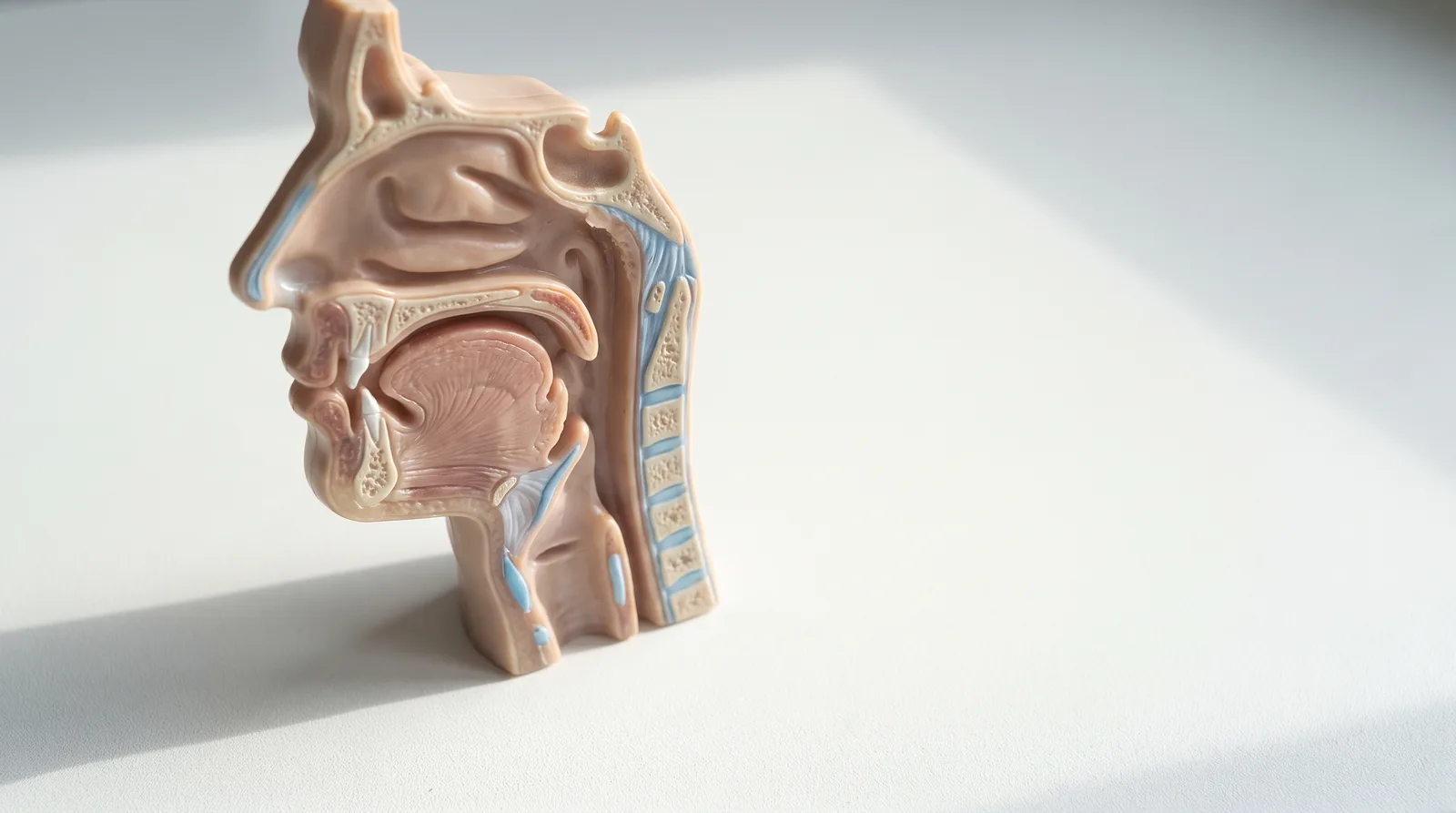
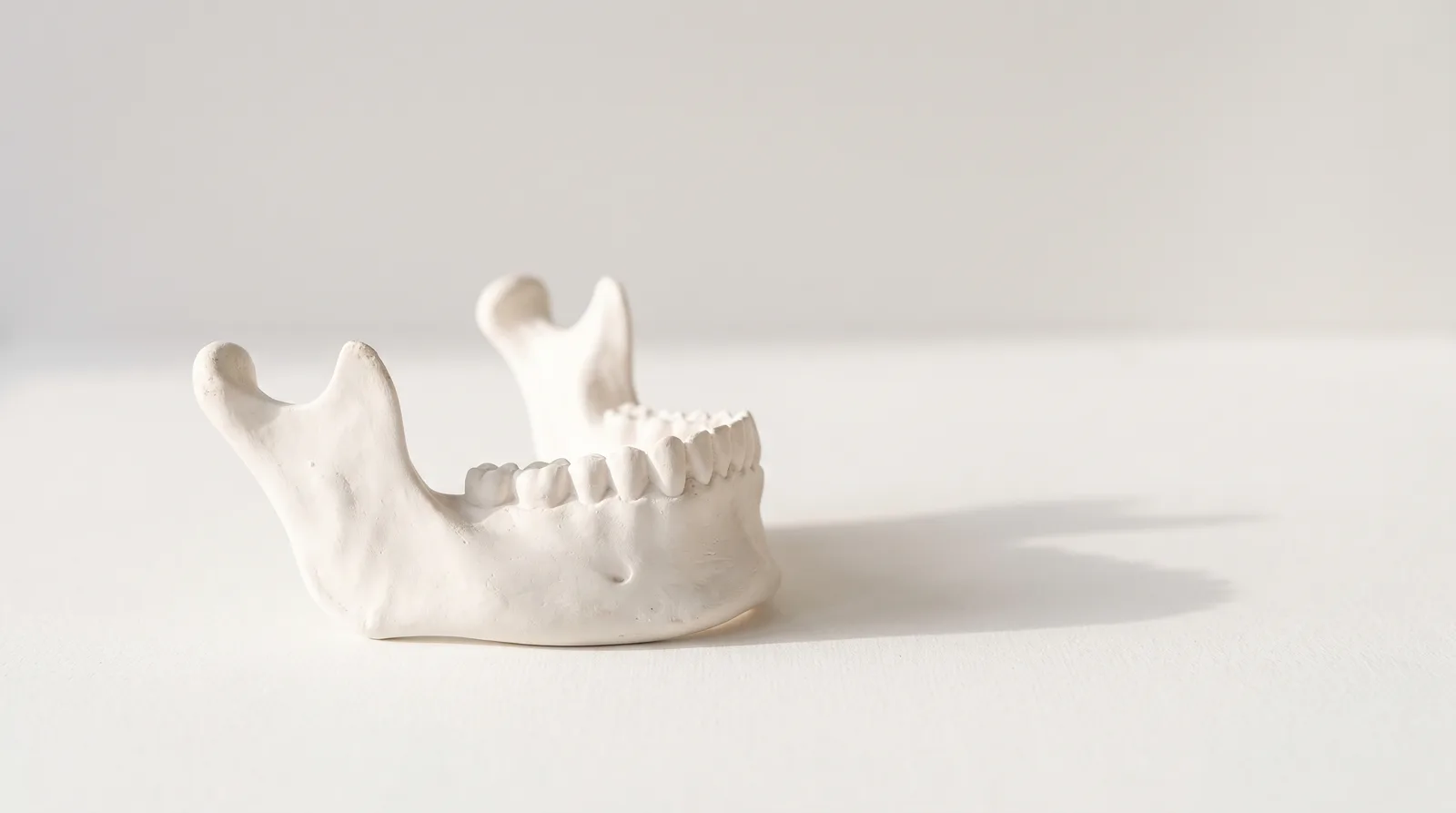
The temporomandibular joint, or TMJ, is the joint just in front of each ear that connects your lower jaw to your skull. Problems with it are usually called temporomandibular disorders (TMD). NICE’s guidance summary for clinicians describes them as a group of related conditions affecting the chewing muscles, the joint and the structures around it. They can be mainly muscular, mainly in the joint, or a mix of the two.
The same NICE summary, last revised in May 2026, says TMD affects up to 1 in 15 people in the UK. It is most common between the ages of 20 and 40. Many people never ask for help, so the true figure is hard to pin down.
What are the symptoms?
The NHS lists these symptoms of TMD:
- pain around your jaw, ear and temple
- clicking, popping or grinding noises when you move your jaw
- a headache around your temples
- difficulty opening your mouth fully
- your jaw locking when you open your mouth
The NHS says the pain may be worse when chewing and when you feel stressed, and that TMD can also stop you getting a good night’s sleep. Pain around the jaw and face can have other causes too, including problems with the teeth, so NICE advises clinicians to rule these out as part of an assessment. Our guide to why teeth are sensitive covers one common dental cause of pain.
What causes it?
Nobody knows exactly. NICE says the causes are not fully understood and are likely to involve several factors working together. The March 2024 guideline from NHS England and the Royal College of Surgeons says no single cause has been identified. The table sets out some of the factors the sources name.
| Possible factor | What the sources say |
|---|---|
| Joint changes | NICE lists problems inside the joint, such as a disc that has moved out of position or degenerative joint disease. The NHS lists wear and tear of the joint. |
| Injury | The NHS lists a blow to the head or face. NICE gives a fall onto the chin, a road accident or a sports injury as examples. |
| Grinding or clenching | The NHS lists teeth grinding. NICE says the link between grinding or clenching and TMD is unclear. The 2024 guideline says a direct causal relationship has not been confirmed. Our guide to teeth grinding has more. |
| Stress, anxiety and low mood | The NHS lists stress. NICE says stress, anxiety and depression are significant predictors of TMD developing and becoming long-lasting. |
| Other health conditions | NICE says TMD has been linked with some long-term pain conditions, such as fibromyalgia and migraine. It also names some types of arthritis, including rheumatoid arthritis. |
| An uneven bite | The NHS page lists it. NICE and the 2024 guideline do not name it as a cause, and a systematic review found no clinically relevant link. See below. |
The NHS TMD page, last reviewed in June 2023, lists an uneven bite as a possible cause. The stronger evidence points the other way. A 2017 systematic review of 25 studies in adults found the studies were quite consistent in showing no clinically relevant link between TMD and the way the teeth meet. Where one bite feature was linked, the authors said this does not show cause and may be a result of TMD.
The review’s authors said there seemed to be no ground to keep suggesting that the bite plays a part in TMD. The March 2024 guideline says care should focus on reversible, non-invasive treatment, and NICE describes conservative, reversible treatment as effective. Neither recommends treatment that permanently changes the bite. A bite that has changed recently is a different matter, so see the signs to get checked below.
Can children be affected?
Yes, though less is known. In a 2019 systematic review, the share of 10 to 19 year olds with TMD varied between 7.3 and 30.4 percent across the studies it included. Muscle pain and a disc problem in the joint were the most common diagnoses. NICE quotes the same range and says figures vary widely because studies differ in who they look at and how they diagnose TMD.
The 2019 review found only two studies on treatment in 12 to 18 year olds. It concluded that it was not possible to draw up evidence-based treatment strategies or guidelines for children and adolescents. The NHS TMD page gives no separate advice for children, and NICE’s management guidance for primary care applies from age 12. The 2024 UK guideline is written for adults, which it defines as people aged 18 and over.
If your child has jaw pain that does not settle, trouble opening their mouth, or a jaw that looks swollen or uneven, mention it to your dentist or GP. Do the same if they grind their teeth: the NHS advises seeing a dentist if you are worried about your child grinding their teeth.
What can you do yourself?
The NHS says TMD usually gets better without treatment, and suggests things that may ease the symptoms. It advises you to:
- eat soft food, such as pasta, omelettes and soup
- take paracetamol or ibuprofen, if they are suitable for you (a pharmacist can advise)
- hold an ice pack or heat pack, wrapped in a tea towel, against the jaw, whichever feels better
- massage the painful jaw muscles
- find ways to relax
For a cold pack, the NHS suggests frozen peas wrapped in a tea towel for no more than 5 minutes at a time. For a warm pack, it suggests a hot water bottle wrapped in a tea towel, used twice a day for 15 to 20 minutes.
It also advises you not to chew gum or pen tops, bite food with your front teeth, yawn too wide, bite your nails or clench your teeth. Apart from when you are eating, your teeth should be apart.
NICE adds that caffeine may increase muscle tension, and suggests regular exercise and good sleep habits. Our guide to sleep, snoring and your mouth has more on sleep. The 2024 guideline says self-management, with support from a clinician, has no reported adverse effects and is the expected first step.
The March 2024 guideline says that when TMD is treated early with simple measures that can be undone, 75 to 90 percent of people improve to their satisfaction. For them, symptoms either go away or become occasional and manageable. NICE’s 2026 summary gives the same 75 to 90 percent figure. It also says symptoms may fluctuate but should improve, and that the muscle type of TMD is more likely to become long-lasting.
What treatment is there?
If self-care is not enough, a GP may suggest stronger painkillers, relaxation techniques or ways to improve your sleep, the NHS says. The GP might also suggest a dentist if teeth grinding could be an issue. They might suggest a psychologist if stress and anxiety are making the pain worse, or a physiotherapist for jaw exercises and massage. NICE says people with suspected TMD may be advised to see a general dentist for a thorough examination of the teeth and jaw joint.
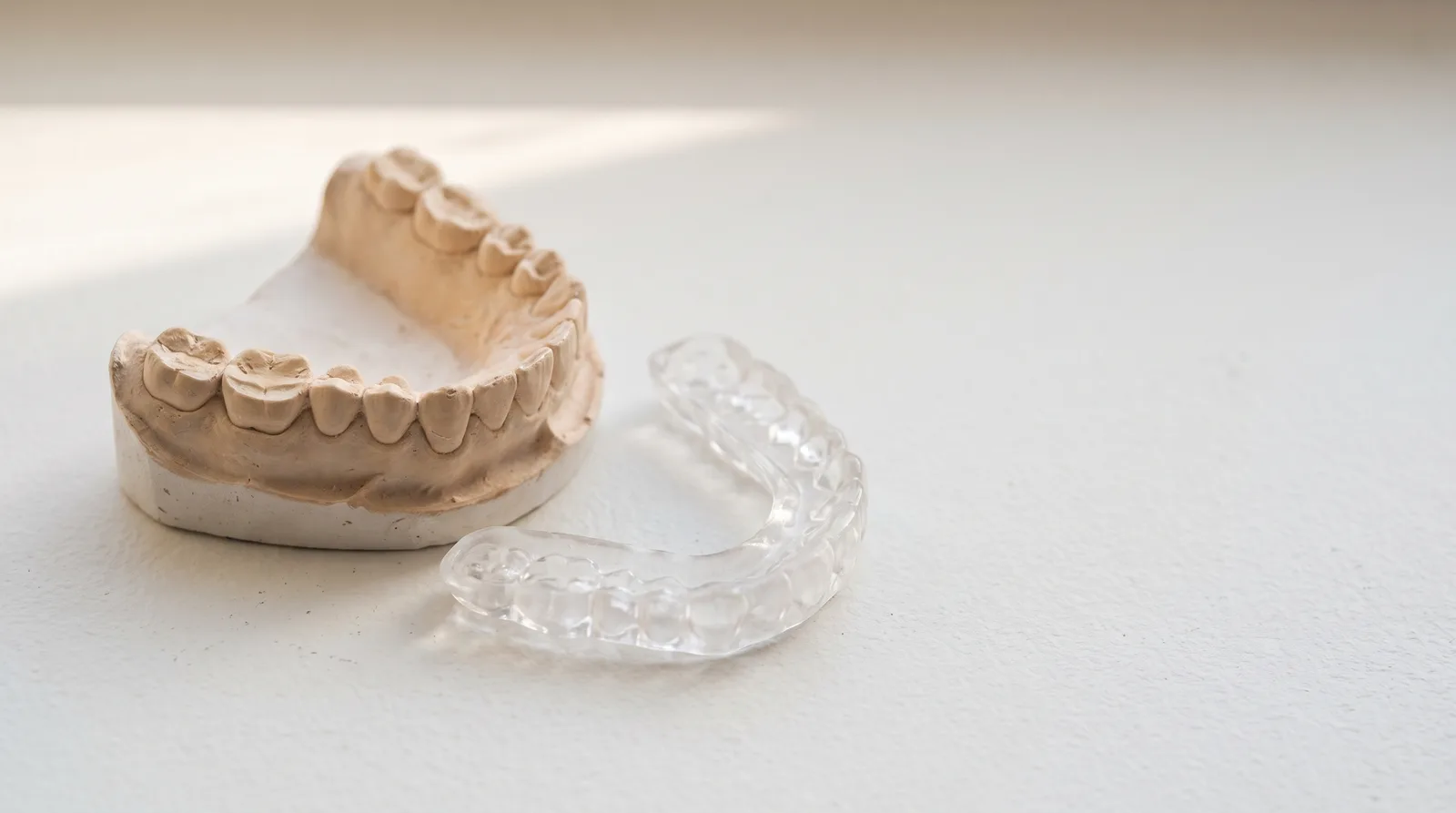
If you grind your teeth, a dentist may recommend a mouth guard or mouth splint, worn at night to protect them from damage, according to the NHS. Our guide to teeth grinding covers this in more detail.
For TMD in adults, the 2024 guideline calls the evidence for splints mixed. A splint should be an addition to self-management, not the first or only treatment, and it is most likely to help muscle-related pain and headache. The guideline also says splints should not be used only to treat joint noise. It adds that soft and part-coverage splints can change how the teeth meet and may make joint pain worse. They should be used only for a short time, under a dentist’s supervision.
If these steps do not help, you may be referred to a specialist in joint problems to talk through other options, such as painkilling injections or surgery, the NHS says. NICE suggests a review after 6 to 8 weeks of self-management. It suggests referral to a specialist if symptoms are getting worse, have not improved by then, or you cannot manage a normal diet.
When to see a dentist or GP
Speak to a dentist or GP if jaw symptoms keep coming back or do not settle with self-care. Some signs need help sooner.
- you cannot eat or drink
- your jaw locks, or you cannot open your mouth fully
- you have frequent, severe headaches
- you have pain or tenderness at the side of your head or on your scalp
- you have vision problems, such as double vision or loss of vision in one or both eyes
- you have jaw pain when eating or talking, along with any of the headache, scalp or vision signs above
For these signs, the NHS says to ask for an urgent GP appointment or get help from NHS 111. It says they can be signs of a serious problem that needs urgent treatment. The NHS TMD page puts ordinary jaw, ear and side-of-head pain, and clicking, popping or grinding noises, in the same urgent box. If you are not sure how quickly you need to be seen, NHS 111 can help.
The NHS lists the main symptoms of temporal arteritis as frequent severe headaches and pain or tenderness at the side of the head or on the scalp. It also lists jaw pain while eating or talking, and vision problems. In this condition, also called giant cell arteritis, the arteries at the side of the head become inflamed. The NHS says it is serious and needs urgent treatment, and that it can lead to serious problems like stroke and blindness if it is not treated quickly. NICE’s guidance for clinicians says new headache or scalp tenderness, cramp-like jaw pain and sight changes may point to it, especially in people over 50.
Some other signs are on the red flag lists in NICE’s guidance and the 2024 UK guideline. These are signs that something other than TMD may be going on. If you have one, tell a dentist or GP soon, without waiting to see whether self-care helps:
- your teeth no longer meet the way they used to
- your face is swollen, or you have a lump on your face or neck
- you have numbness or a change in feeling in part of your face
- you have a mouth ulcer that has not healed after 3 weeks
- you have new jaw pain and take a bisphosphonate (a bone-strengthening medicine) or a related medicine
- you have a fever or weight loss that you cannot explain
- your jaw has been injured, for example in a fall or accident
If you grind your teeth and have pain in your jaw, face or ear, the NHS says that is a reason to see a dentist.
After an injury, the NHS says A&E is for serious injuries and life-threatening emergencies. If you are not sure whether you need to go, NHS 111 can check your symptoms and tell you what to do. The NHS says not to drive yourself to A&E: ask someone to take you, or call 999 for an ambulance.
What we would do
First, we would carry out a new patient exam. We examine your teeth, gums and soft tissues, and take small X-rays where needed. That matters here because NICE advises ruling out problems with the teeth when someone has pain around the jaw. Your dentist can talk through your symptoms and advise whether your GP or a specialist should be involved.
Treatment for jaw joint problems, splints and night-time guards are not listed on our treatment pages, so ask when you book whether a practice can help with them.
If your jaw hurts, book a check-up so a dentist can rule out problems with the teeth.
Want us to take a look?
Book an appointment at whichever of our five practices suits you. We will check what is going on and talk you through your options.
Questions this guide answers
Is a TMJ problem serious?
The NHS says temporomandibular disorder is not usually serious and generally gets better on its own. It also lists signs that need an urgent GP appointment or help from NHS 111. These include a jaw that locks, being unable to eat or drink, frequent severe headaches, scalp tenderness and vision problems. Some of these signs can also point to temporal arteritis, which the NHS says needs urgent treatment.
Can a misaligned bite cause TMJ problems?
The stronger evidence does not support it. A 2017 systematic review of 25 studies in adults found no clinically relevant link between TMD and the way the teeth meet. NICE and the 2024 UK guideline do not name the bite as a cause. The NHS TMD page, last reviewed in June 2023, still lists an uneven bite. UK guidance recommends reversible, non-invasive care, not treatment that permanently changes the bite. If your bite has changed recently, tell a dentist or GP.
Can children get TMJ problems?
Yes. In a 2019 systematic review, the share of 10 to 19 year olds with TMD varied between 7.3 and 30.4 percent across the studies it included. It found too little evidence on treatment to draw up guidance for young people. If your child has jaw pain or trouble opening their mouth, mention it to your dentist or GP.
Will a night guard help jaw pain?
It depends on the cause. The NHS says a dentist may recommend a mouth guard or splint for teeth grinding, to protect the teeth. For TMD in adults, the March 2024 NHS England and Royal College of Surgeons guideline says the evidence is mixed. It says a splint should be added to self-management, not used as the first or only treatment. It also says soft and part-coverage splints can change how the teeth meet, so a dentist should supervise any splint.
Should I see a dentist or my GP about jaw pain?
Either can be a starting point. The NHS TMD page points to a GP, who may suggest seeing a dentist if teeth grinding might be an issue. NICE says people with suspected TMD may be advised to see a general dentist for a thorough examination of the teeth and jaw joint.
Sources (8)
- Temporomandibular disorder (TMD)
- Temporomandibular disorders (TMDs)
- Management of painful temporomandibular disorder in adults
- Temporomandibular disorders and dental occlusion. A systematic review of association studies: end of an era?
- Prevalence and treatment strategies regarding temporomandibular disorders in children and adolescents: a systematic review
- Teeth grinding (bruxism)
- When to go to A&E
- Temporal arteritis