Why are my teeth sensitive?
Teeth feel sensitive when dentine is exposed by worn enamel or receding gums. See a dentist if the pain is severe or sudden, affects one tooth or lasts over a few weeks, as it can mean decay or a cracked tooth.
On this page
A sharp twinge from a mouthful of ice cream, a sip of hot tea or brushing one particular tooth is easy to shrug off. Sensitive teeth are common, and there is usually something that can be done about them.
What is going on inside a sensitive tooth?
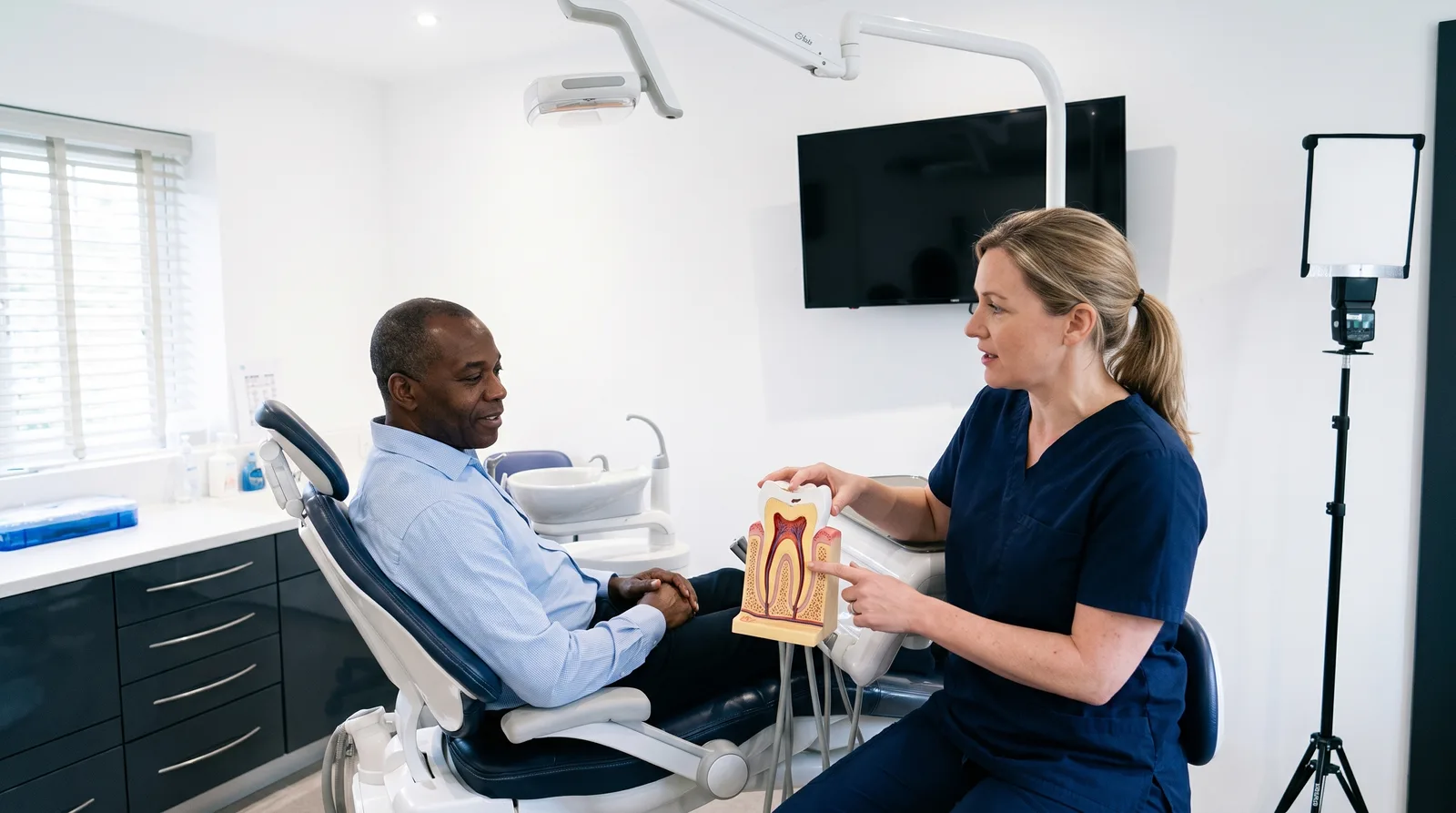
Each tooth has a hard outer layer of enamel. Underneath is dentine, which contains tiny channels linked to the nerve. When enamel wears away or the gums shrink back, dentine is exposed and heat, cold or sweetness can reach the nerve more easily.
According to the Oral Health Foundation, the pain can be a quick, sharp twinge or a longer ache. It often comes with hot, cold, sweet or acidic food and drink, and sometimes when you brush a particular tooth. UK government guidance for dentists adds that sensitivity can happen with only a little wear, and does not necessarily mean the wear is getting worse.
What causes sensitive teeth?
A dentist works out which cause applies to you, because what helps depends on the cause.
| Cause | How it leads to sensitivity |
|---|---|
| Worn enamel | Acid from fizzy drinks, fruit juice, citrus fruit or stomach acid can wear enamel away. So can brushing too hard or with a hard brush, and grinding or clenching your teeth. |
| Gums pulling back | Gum disease can make gums shrink. Gums also recede naturally over time, so sensitivity becomes more common as we get older. |
| Decay or damage | Decay can cause sharp pain with hot, cold or sweet things once a hole has formed. A cracked or damaged tooth can also be sensitive. |
| Whitening | Professional whitening can make teeth sensitive to cold or sweet food and drink, usually for a short time. |
The government guidance describes tooth wear as a mix of acid wear, tooth-on-tooth contact from grinding, and wear from objects such as a toothbrush. It also says most people do not need to eat less fruit because of it.
What can you do at home?
The Oral Health Foundation says sensitivity can often be managed at home. If the pain is severe or sudden, or only one tooth hurts, see a dentist rather than trying a new toothpaste first. These steps draw on the foundation’s advice, the NHS and the government guidance for dentists.
- Try a toothpaste made for sensitive teeth. Look for potassium citrate, potassium nitrate or stannous fluoride on the pack. These toothpastes work by blocking the tiny channels in the dentine, so you need to keep using them.
- After brushing, spit out the toothpaste and do not rinse with water.
- Use a soft or medium toothbrush with small circular movements, and brush twice a day with fluoride toothpaste.
- Clean between your teeth every day. The NHS lists this, with cutting down on sugary food and drink, among the ways to help prevent decay.
- Go easy on acidic and sugary drinks. For people with signs of tooth wear, the government guidance suggests keeping fizzy and acidic drinks to mealtimes and swapping some for plain water.
A 2015 review of 31 randomised trials found that toothpastes with potassium, stannous fluoride, calcium sodium phosphosilicate or arginine did better than a dummy toothpaste. Results varied widely between trials. The Oral Health Foundation also suggests rubbing a little sensitive toothpaste onto the sore area at night and leaving it on.
Advice on brushing straight after acidic food or drink is mixed. The Oral Health Foundation suggests waiting at least an hour, while the government guidance says there is no strong evidence that the timing matters much. Your dentist can tell you what suits you.
If you grind or clench your teeth, often linked to stress and anxiety, tell your dentist. The NHS says worn or broken teeth from grinding can increase sensitivity, and a dentist may recommend a mouth guard or splint to wear at night.
If you often have heartburn or acid reflux, or are often sick, tell your dentist. The government guidance for dentists says to seek medical advice to control reflux, and your GP can help with the cause.
What can a dentist do?
Once the cause is clear, the Oral Health Foundation says a dentist may:
- apply a desensitising treatment to the tooth
- recommend a high-fluoride toothpaste
- place a filling over worn areas near the gumline
- treat gum disease or other causes
If decay has made a hole in the tooth, the NHS says you will probably need a filling. You may need root canal treatment if the decay has reached the soft centre of the tooth. A dentist can prescribe fluoride treatments to reverse very early decay. Decay may cause no symptoms at first, so a check-up can be worth having even when nothing hurts.
When to see a dentist
The Oral Health Foundation says sensitive teeth can sometimes be a sign of a dental problem, so they should not be ignored.
Sensitivity is usually a short twinge when something hot, cold or sweet touches the tooth, though the pain can sometimes last longer. Toothache that does not settle is different, and the NHS signs in the list below apply to it.
- the pain is severe, or comes on suddenly
- only one tooth is affected
- the sensitivity lasts more than a few weeks
- toothache lasts more than 2 days, or does not ease with painkillers
- toothache comes with a high temperature, pain when you bite, red gums or a bad taste in your mouth
- toothache comes with a swollen cheek or jaw
- you grind your teeth and have tooth damage or sensitive teeth
- sensitivity after whitening bothers you
- you often have heartburn or acid reflux, or are often sick (tell your dentist, and ask your GP about the cause)
The NHS says a GP cannot give dental treatment. For an urgent appointment, call your dentist first: if they are closed, their answerphone may tell you what to do. If you do not have a dentist or cannot get an emergency appointment, call 111 or use 111 online. Go to A&E if toothache comes with swelling around your eye or neck, or swelling in your mouth or neck that makes it hard to breathe, swallow or speak. Do not drive yourself: ask someone to take you, or call 999.
What we would do
A new patient exam is where we would begin with sensitivity. We examine your teeth, gums and soft tissues. Small X-rays are taken where needed to check for anything not visible during the exam, such as decay between teeth or below the gumline. We then explain the options in plain language.
A dental hygiene appointment removes plaque and tartar, and includes advice on brushing and flossing. If decay is the cause, a filling repairs the tooth, and treating decay early can mean a smaller filling. If decay has reached the centre of the tooth, root canal treatment may be needed.
If the pain is severe or has come on suddenly, our emergency dentist page explains how to reach your nearest practice.
To find out what is behind the sensitivity, book an appointment.
Want us to take a look?
Book an appointment at whichever of our five practices suits you. We will check what is going on and talk you through your options.
Questions this guide answers
Is toothpaste for sensitive teeth worth trying?
The Oral Health Foundation says sensitivity can often be managed at home. It suggests a toothpaste containing potassium citrate, potassium nitrate or stannous fluoride, used every day, because these work by blocking tiny channels in the dentine. If only one tooth is affected, or the pain is sudden, severe or lasts more than a few weeks, see a dentist.
Can sensitive teeth be a sign of a cavity?
Yes, it can. The NHS says decay can cause a sharp pain with hot, cold or sweet things once a hole has formed, though decay may cause no symptoms at first. Worn enamel and gums pulling back are other common causes, and a dentist can tell which applies to you.
Can teeth whitening make my teeth sensitive?
Yes. The NHS lists sensitivity to cold or sweet food and drink among the side effects of professional whitening, and says you may get them for a short time. Talk to your dentist if a side effect bothers you.
Can grinding my teeth cause sensitivity?
It can. The NHS says grinding can wear teeth down or break them, which can increase sensitivity. If you grind your teeth and have tooth damage or sensitive teeth, the NHS advises seeing a dentist, who may recommend a mouth guard or splint to wear at night.