What wears down tooth enamel?
Enamel is lost in three main ways: acid dissolves it (erosion), plaque bacteria cause decay, and grinding or hard brushing wears it down. Your dentist can help work out which apply, because each needs different care.
On this page
Enamel is the hard outer layer that protects the softer dentine underneath. If your teeth have started to feel sensitive or look thinner, you may wonder what is behind it. Is it the orange juice, the way you brush, or something that happens in your sleep? Usually it is more than one thing, and it helps to know which is which.
Three ways enamel is lost
Dentists tell these apart because the causes, and so the advice, differ.
| Type | How it happens |
|---|---|
| Erosion | Acid dissolves the tooth surface, with no bacteria involved. It comes from acidic food and drink, or from stomach acid in reflux or vomiting. |
| Decay | Plaque bacteria damage the tooth surface over time. It is linked to sugary food and drink and to not cleaning teeth and gums regularly. |
| Wear or damage from rubbing or biting | Teeth rub against each other or against something else, such as a toothbrush. Causes include grinding and hard brushing. Biting something hard can also chip or crack a tooth. |
Erosion and physical wear often happen together. Government guidance for dentists says tooth wear normally has more than one cause, and that wear is a natural part of ageing. In the 2009 national survey of adults with their own teeth in England, Wales and Northern Ireland, 77 in 100 had some wear. Moderate wear was found in 15 in 100, and severe wear in 2 in 100. The same guidance says most people do not have fast-moving wear.
Acid from food and drink
The Oral Health Foundation explains that each acidic food or drink softens your enamel for a while, and some minerals are lost. Between acid attacks, saliva helps the enamel recover. Damage builds up when the attacks come too close together for that to happen.
The Oral Health Foundation lists fizzy drinks, including diet ones, energy and sports drinks, fruit juice, smoothies, lemon water and wine as acidic drinks. It also names citrus fruit, tomatoes, vinegar, pickles and sour sweets, and points out that a drink with no sugar can still be acidic. Government guidance for dentists says unflavoured water, still or sparkling, milk, and regular tea and coffee have the lowest erosive potential. It adds that the damage depends on how long acid stays in contact with teeth and on how many acid attacks there are in a day.
The Oral Health Foundation advises keeping acidic food and drink to mealtimes and swallowing drinks quickly rather than holding them in your mouth. It also suggests a straw. Government guidance says a straw may be worth considering, but there is not enough evidence yet to know whether it reduces erosion.
For most people fruit is not a concern. The same guidance says most people are not at risk of fast wear from the fruit they eat and should not be told to eat less of it. The exception is when your dentist finds that fruit is part of the problem, for example grazing on acidic fruit over long periods.
Some medicines, such as chewable vitamin C tablets, can be acidic, and the guidance says saliva helps clear acid, so a dry mouth can leave teeth less protected. Do not stop taking any medicine, but you can ask your pharmacist or GP whether there is an alternative. Our article on dry mouth has more.
Enamel softened by acid can take back some minerals, but enamel that has worn away does not come back. Government guidance says finding tooth wear early is key to managing it.
Acid from the stomach
Acid can also come from inside the body. Government guidance links stomach acid from reflux, repeated vomiting and eating disorders to erosion, and says pregnancy sickness that goes on for a long time can have the same effect. If this sounds familiar, the guidance says medical advice should be considered, so speak to your GP as well as your dentist. For people who are sick often, it suggests avoiding brushing after vomiting, rinsing the mouth with water, and applying fluoride toothpaste with a finger or using a fluoride mouthwash.
Should you wait before brushing?
You may have heard that brushing straight after something acidic scrubs softened enamel away. Advice on how long to wait is not settled. The Oral Health Foundation suggests waiting at least an hour after eating or drinking. The government guidance says there is no strong evidence that the timing of brushing matters much. The NHS toothbrushing page says nothing about waiting after acidic food or drink. The guidance itself describes most of the evidence on preventing tooth wear as low in certainty. If you are unsure, ask your dentist what suits you.
Plaque and sugar
Not all enamel loss comes from acid that arrives from outside. The NHS says decay happens when bacteria form a sticky layer called plaque on your teeth. It is often caused by too much sugary food and drink and not cleaning your teeth and gums regularly. Decay may cause no symptoms at first. The NHS says a dentist can prescribe fluoride treatments, such as a mouthwash or varnish, to reverse early decay. Once there is a hole, you will probably need a filling.
This is different from erosion, which government guidance describes as the dissolving of tooth mineral without plaque being involved. The NHS says brushing twice a day for about 2 minutes with fluoride toothpaste stops plaque building up, and to spit out the toothpaste afterwards rather than rinse.
Brushing hard and grinding
The third group is physical wear. Government guidance calls it attrition when teeth wear against each other, and abrasion when something else does the wearing, such as a toothbrush. It also lists opening things with your teeth among the causes.
Brushing hard
The guidance lists aggressive brushing and high-abrasive toothpastes, such as smokers’ toothpastes, among the causes of wear. It suggests adapting your brushing technique, using a soft to medium brush and choosing a standard or low-abrasive toothpaste. The NHS says medium or soft bristles suit most people.
Grinding
The NHS lists worn-down or broken teeth among the signs of grinding or clenching, which can happen awake or asleep. It says a dentist may recommend a mouth guard or splint worn at night to protect the teeth, and that stress and anxiety are the most common cause. If you have tooth or jaw pain, the NHS suggests avoiding hard foods and chewing gum.
Chips and cracks from hard foods
Biting on something hard is a different kind of damage. It can crack or chip a tooth rather than wear it down. The Oral Health Foundation says biting on ice, fruit stones, bones or hard sweets can crack a tooth. It also names grinding or clenching, large fillings and sudden knocks.
Cracks can be small. The Oral Health Foundation says fine surface cracks called craze lines are common, do not usually hurt and do not need treatment, but other cracks cannot heal by themselves. Treatment depends on how deep the crack is and whether it has reached the nerve or root.
When to see a dentist
Government guidance recommends checking for tooth wear at routine examinations, and says wear is generally slow. A sooner appointment makes sense if:
- teeth have become sensitive, which the Oral Health Foundation links to enamel wearing thin
- teeth look thinner, more yellow or different in shape
- a tooth is chipped, cracked or broken, or hurts when you bite
- you grind your teeth and have tooth damage, sensitivity or jaw pain, or someone has heard you grinding
- you have toothache, a hole in a tooth, or white, brown or black spots on a tooth
- you are sick often or have regular reflux, in which case speak to your GP too
If a piece of tooth has broken off, the NHS says to keep it in milk or saliva and take it to a dentist, who may be able to glue it back on. If you do not have a dentist or cannot get an emergency appointment, the NHS says to call 111 and they can advise you what to do.
Six months has long been the usual gap. NICE says it should be set for each person from their level of disease and their risk, and discussed with them. For adults it can be anywhere from 3 to 24 months. Where wear is moving fast, government guidance says a shorter gap may be worth considering.
What we would do
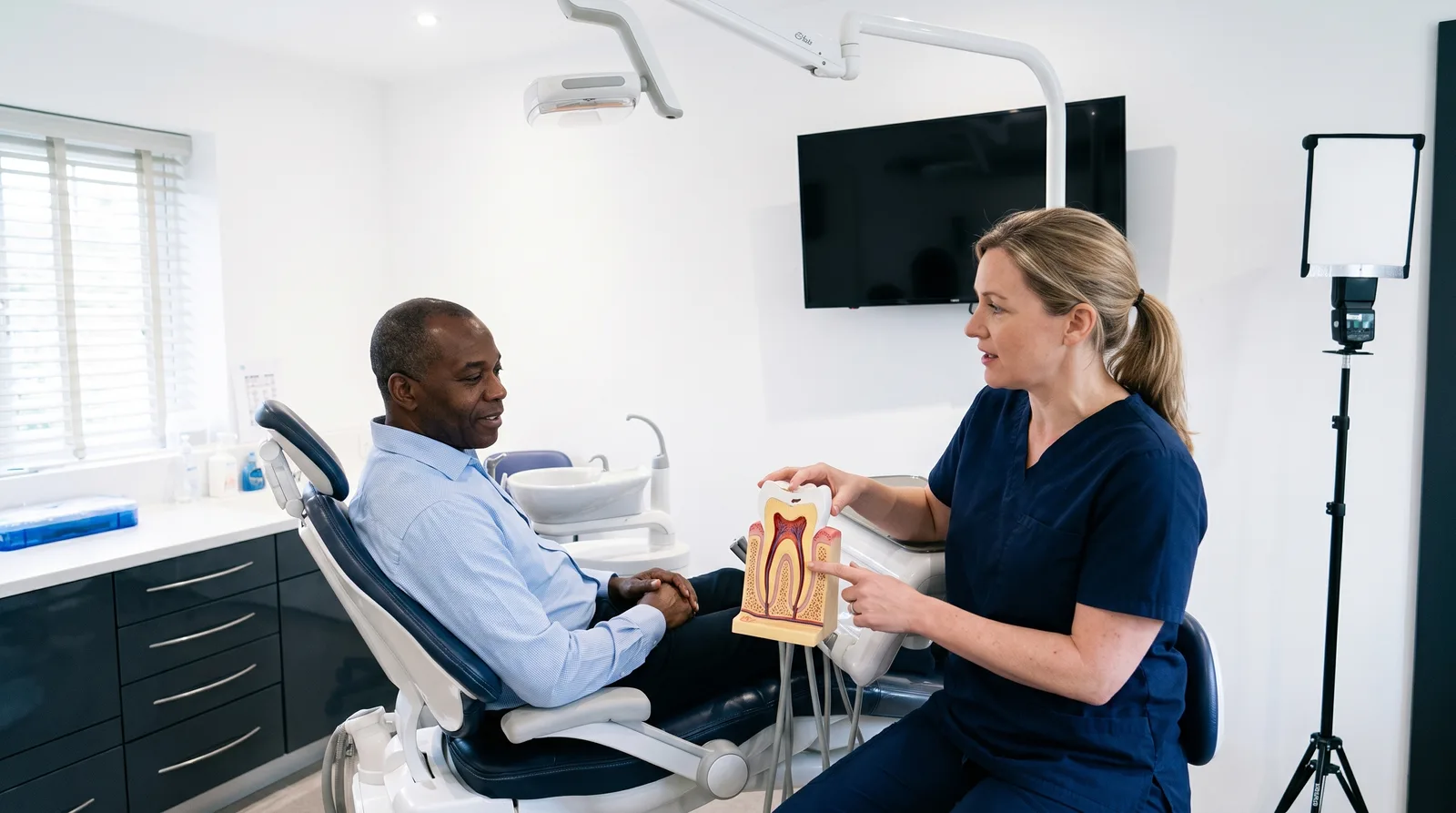
To work out where the wear is coming from, start with a new patient exam. We examine your teeth, gums and soft tissues, take small X-rays where needed, and explain any options in plain language. Your dentist can help work out whether acid, plaque, wear or a crack is behind the changes you have noticed, and talk through what to change. Our dental hygiene appointments remove plaque and tartar and include advice on your brushing and flossing.
If a tooth has chipped or cracked, your dentist can advise on the options. Depending on the size of the chip or crack, they may suggest composite bonding, which uses tooth-coloured resin. A dental crown can cover a cracked or weakened tooth. If a tooth breaks and cannot wait, our emergency dentist page explains how to reach your nearest practice.
If you have noticed wear or a chip, book a check-up and your dentist can look at the tooth.
Want us to take a look?
Book an appointment at whichever of our five practices suits you. We will check what is going on and talk you through your options.
Questions this guide answers
Can worn tooth enamel grow back?
No. Once enamel has been worn away, it does not grow back. Government guidance for dentists says enamel softened by acid can take minerals back, but only if the surface has not also been physically worn away. That is why a dentist focuses on finding the cause and reducing the risk.
Are sugar-free fizzy drinks safe for enamel?
Not necessarily. The Oral Health Foundation says even fizzy drinks without sugar can be acidic. Government guidance for dentists lists carbonated drinks, other than unflavoured sparkling water, among the drinks linked to erosion.
Should I brush my teeth after being sick?
If you are sick often, government guidance for dentists suggests not brushing after vomiting. Rinse your mouth with water instead, then apply fluoride toothpaste with a finger or use a fluoride mouthwash. Speak to your GP too, and let your dentist know.
Do I need to see a dentist every six months?
Not necessarily. NICE says the gap between check-ups should be set for each person, based on their level of disease and their risk. For adults it can be anything from 3 to 24 months, and for under 18s from 3 up to 12 months.