Toothache: causes and when to get help
Toothache can come from decay, a cracked tooth, a loose filling, infection or gum disease. See a dentist if it lasts over 2 days. Trouble breathing or swallowing, or swelling around the eye or neck, is an emergency.
On this page
A toothache can come on suddenly or build up over days, and it can be hard to tell from the pain alone what is behind it. A dentist can treat the cause, and some causes need help the same day. If you have swelling around your eye or neck, or find it hard to breathe, swallow or speak, go straight to when to get urgent help.
What causes toothache?
The NHS lists several causes of toothache. This article sorts them into three groups: problems in the tooth, problems around it, and other causes. The last group also covers sinusitis, which can feel like toothache, and, rarely, pain in the jaw that comes from the heart.
Problems in the tooth
Decay can cause no symptoms at first. Once a hole forms, it can bring toothache, or a sharp pain when you eat or drink something hot, cold or sweet, the NHS says. The tooth or gum can also become infected.
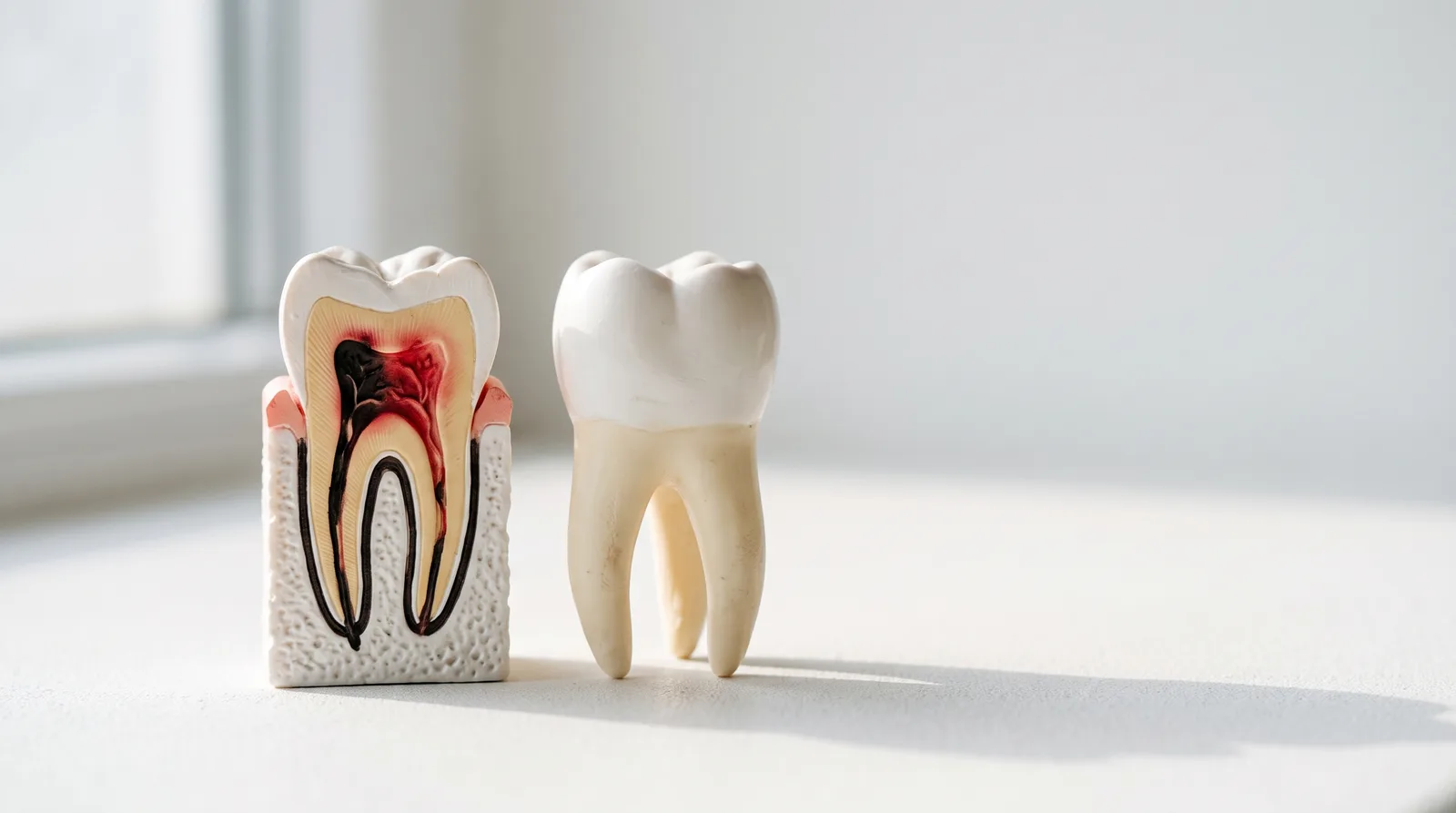
If decay reaches the pulp (the soft tissue at the centre of the tooth), the pulp can become inflamed. Guidance from the Scottish Dental Clinical Effectiveness Programme (SDCEP) describes pain that comes and goes with triggers. It can also last up to several hours and may keep you awake at night. If the pulp becomes infected, the tissue around the tip of the root can become inflamed too. The pain is then usually in one tooth, which is tender to pressure, and a pus-filled swelling called a dental abscess can form. Injury to the teeth, gums or mouth, or gum disease, can also lead to an abscess, the NHS says.
A cracked or broken tooth, or a loose or broken filling, can hurt when you bite and can make the tooth sensitive to hot, cold and sweet things. You may feel a rough edge or a gap with your tongue. If you think you have breathed in a piece of tooth or filling, SDCEP says to get emergency medical care straight away.
Sensitive teeth are a separate cause of tooth pain, the NHS says. SDCEP describes sharp, sudden, short-lived pain set off by touch or by hot or cold food and drink, often where the gum has receded and exposed the root. It still advises a dental check to rule out other causes such as decay. Our guide to why teeth feel sensitive covers this in more detail.
Around the tooth
Gum disease starts when plaque builds up and irritates the gums, leaving them red, swollen, sore and sometimes bleeding. It can lead to a dental abscess, the NHS says. SDCEP describes a gum abscess as tender, swollen gum, sometimes with a looser tooth and a fever.
A tooth that has only partly come through, such as a wisdom tooth, can hurt too. Infection can develop when a tooth has broken the skin but has no room to come through fully, the NHS says. SDCEP adds a swollen gum, a bad taste, a fever, and discomfort when you swallow. If swelling makes it hard to swallow, breathe or open your mouth, use the urgent list in the next section.
A day or two after a tooth is taken out, new pain can mean a dry socket, where there is no clot in the gap. Smokers are more at risk, SDCEP says, and it advises urgent dental care.
Problems with braces are on the NHS list as well. For a broken or loose brace, SDCEP advises contacting whoever provides your orthodontic care. If you think you have breathed in part of a brace, it says to get emergency medical care straight away.
Other causes of tooth and jaw pain
Grinding your teeth is also on the NHS list. Our guides to teeth grinding and jaw pain and TMJ problems cover the habit and the jaw joint.
Sinusitis is swelling of the sinuses, the small spaces behind your cheekbones and forehead. The NHS lists toothache among its symptoms, and SDCEP says the pain in the upper back teeth can be hard to tell from toothache. The NHS suggests seeing a pharmacist if you think you have sinusitis. If symptoms get worse, last or change, SDCEP advises a medical or dental check to rule out a tooth infection.
On rare occasions, SDCEP says, a heart attack can show up as pain in the jaw. The NHS says to call 999 if you have chest pain that feels tight or like squeezing, or that spreads to your arms, neck or jaw. It also says to call 999 for severe difficulty breathing.
What can the type of pain tell you?
Dental guidance from the Oral Health Foundation, SDCEP and the NHS links some pain patterns to particular causes. Treat the table as a guide to what to tell your dentist, not a diagnosis. Only an examination shows what is going on.
| What you feel | What it can point to | What to do |
|---|---|---|
| Sharp pain with cold things | Receding gums, a worn or lost filling, or a cracked tooth | See your dentist |
| Sharp pain with hot, cold or sweet things | A hole from decay, a cracked tooth, or a loose or broken filling | See your dentist |
| Pain when you bite | A cracked tooth, decay or a loose filling | Have it checked by a dentist |
| A dull ache that lingers or keeps coming back | A nerve inside the tooth that is irritated, damaged or dying | See your dentist |
| Severe, throbbing or constant pain that painkillers do not ease, perhaps with swelling | An infection or abscess | Contact a dentist urgently |
A tooth can also be damaged without hurting. The NHS says decay may cause no symptoms at first, and advises regular check-ups even when nothing hurts.
What can you do while you wait?
These steps come from the NHS toothache and abscess pages. They ease the pain and do not fix the cause, as the Oral Health Foundation points out.
- Take painkillers from a pharmacy, and ask a pharmacist which suit you. Children under 16 should not take aspirin, the NHS says. Taking more than the recommended dose will not work better and can be very dangerous, the NHS warns.
- Use a pain-relieving gel for the mouth, sold in pharmacies and supermarkets.
- Rinse with warm salt water and spit it out. Children should not try this, in case they swallow it.
- Eat soft foods, such as yoghurt or scrambled eggs, and chew away from the sore tooth.
- Use a soft toothbrush, and do not floss around the sore tooth.
- Avoid sweet, very hot or very cold food and drink. Smoking can make some dental problems worse, the NHS says.
How is the cause treated?
Treatment depends on the cause, so a dentist first works out what it is. For decay, the NHS says a dentist can prescribe fluoride treatments, such as a mouthwash or varnish, to reverse early decay. A hole usually needs a filling. If decay has reached the pulp you may need root canal treatment, and sometimes the tooth has to come out.
For a dental abscess, the NHS says the dentist drains the pus. If a problem with the tooth caused it, you may need root canal treatment, or the tooth may be removed. The area is numbed with a local anaesthetic first.
For a cracked tooth or a lost or broken filling, SDCEP lists several options. They include smoothing a rough edge and a temporary or permanent filling. If the break reaches the nerve, the nerve may need treatment, and a tooth that cannot be restored may be removed.
When to see a dentist
If you have toothache and any of the signs below, the NHS says to go to A&E or call 999.
- you find it hard to breathe, speak or swallow, including because of swelling in your mouth or neck
- the area around your eye or your neck is swollen
- your eye is swollen or painful, or your eyesight suddenly changes
- you have a lot of swelling in your mouth
- you find it hard to open your mouth
Do not drive yourself: ask someone to take you, or call 999 and ask for an ambulance. Bring any medicines you take.
Ask for an urgent dental appointment, the same day if you can, if:
- your face, cheek or jaw is swollen
- painkillers are not easing the pain
- pain begins a day or two after a tooth has been taken out
The Oral Health Foundation advises same-day care for facial swelling, swelling that is getting bigger, or significant pain. The NHS says a dental abscess needs urgent treatment and will not go away on its own.
- toothache that lasts more than 2 days
- toothache with a high temperature, pain when you bite, red gums or a bad taste in your mouth
The NHS says to see a dentist, not a GP, because a GP cannot give dental treatment. That applies to an abscess too. For an emergency or out of hours, call your dentist first, as the answerphone may tell you what to do. If you do not have a dentist or cannot get an emergency appointment, call NHS 111 or use 111 online, and they can advise you.
What we would do
If you have toothache, call your nearest practice and describe what has happened. The team will tell you the soonest appointment they can offer. Our emergency dentist page explains how this works, and the practice details are on our areas we serve page. Outside opening hours, your practice’s voicemail gives a mobile number for dental emergencies.
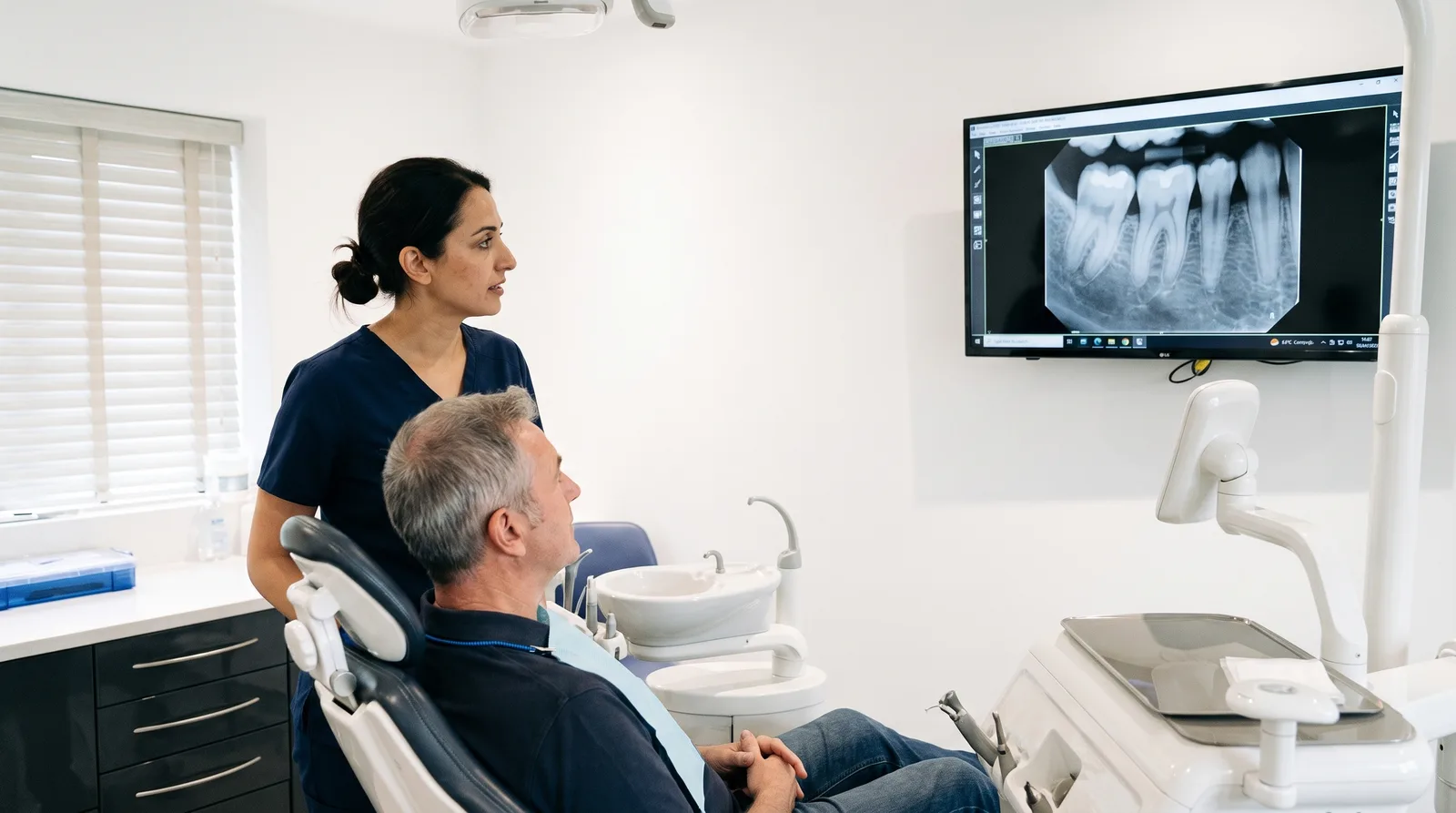
At the appointment we identify the cause of the pain, taking an X-ray if needed, and explain your options. We then treat the immediate problem, which can mean pain relief, a temporary filling or a repair, and agree any follow-up treatment with you. Depending on the cause, that can lead to a filling, root canal treatment where the tooth can be saved, or a tooth extraction when it cannot.
The Oral Health Foundation says getting dental advice early can stop small problems becoming serious. If you are unsure what is behind your pain, or it is getting worse, it recommends seeking dental care as soon as possible. You can book an appointment with us.
Want us to take a look?
Book an appointment at whichever of our five practices suits you. We will check what is going on and talk you through your options.
Questions this guide answers
Can a toothache go away on its own?
Sometimes. If sinusitis is behind it, the NHS says that usually clears up on its own. But pain relief does not fix a dental cause, as the Oral Health Foundation points out, and the NHS says a dental abscess will not go away on its own. See a dentist if toothache lasts more than 2 days.
Should I go to my GP or A&E with toothache?
The NHS says not to go to your GP, because they cannot give dental treatment. Call your dentist first; if you do not have one, call NHS 111 or use 111 online. Go to A&E or call 999 for swelling around the eye or neck, or trouble breathing, swallowing or speaking.
Why does my tooth hurt when I bite?
The Oral Health Foundation links pain on biting to a cracked tooth, decay or a loose filling, and says it should always be checked by a dentist. The NHS also says to see a dentist if you have toothache and it hurts when you bite.
What can I do for toothache until I see a dentist?
The NHS suggests painkillers from a pharmacy (a pharmacist can advise), a pain-relieving mouth gel, rinsing with warm salt water, soft foods and a soft toothbrush. Children under 16 should not take aspirin, the NHS says. These steps ease the pain but do not fix the cause. A dentist can treat the cause.
Can a sinus problem feel like toothache?
Yes. The NHS lists toothache among the symptoms of sinusitis, and dental guidance says it can cause pain in the upper back teeth that is hard to tell from toothache. The NHS suggests seeing a pharmacist if you think you have sinusitis. If symptoms get worse, last or change, the guidance advises a medical or dental check.