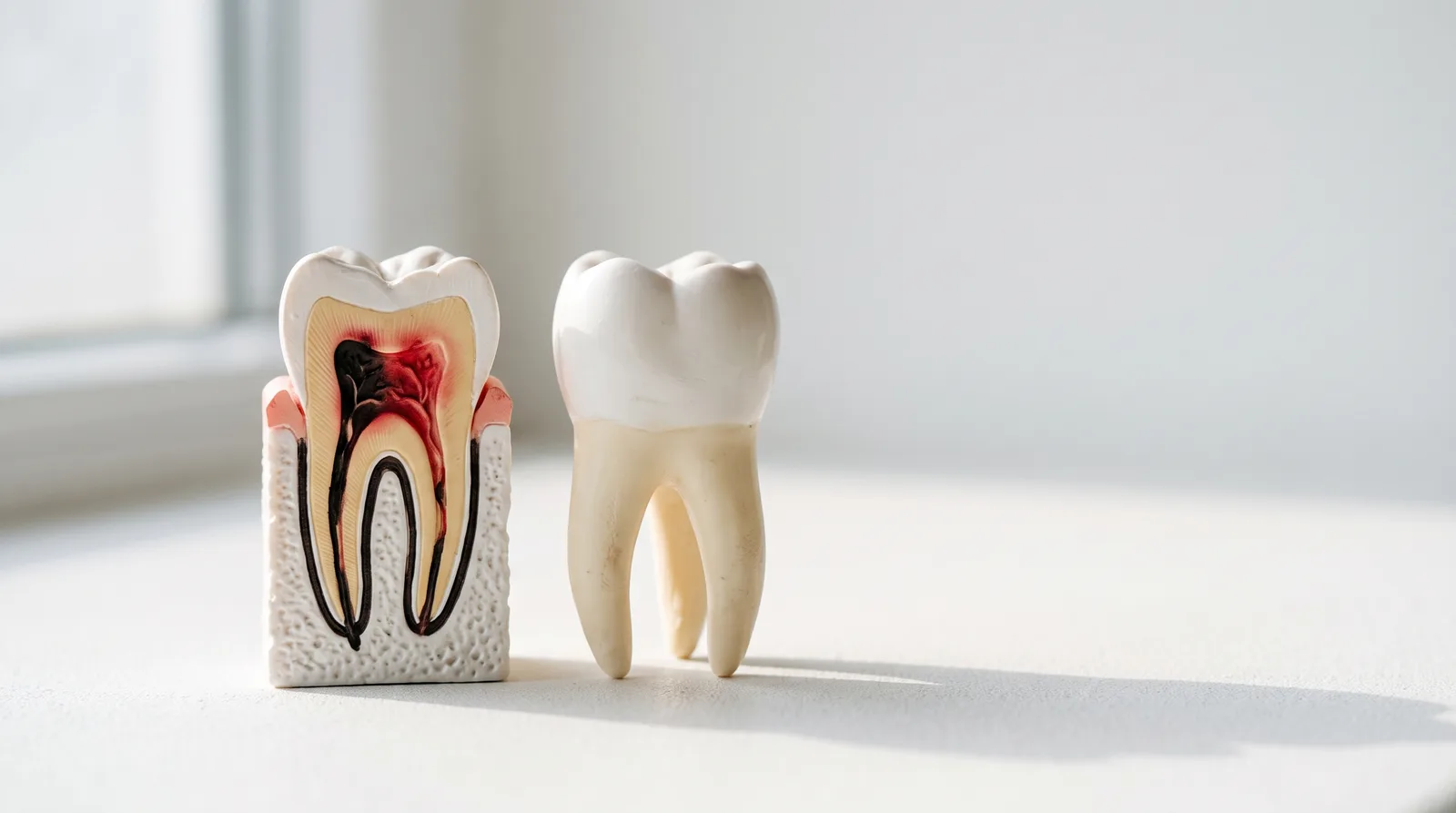
Impacted wisdom teeth: what to know
An impacted wisdom tooth has no room to come through fully. NICE and the NHS say one causing no problems is usually left and checked, but the Royal College of Surgeons says some may be better removed sooner.
On this page
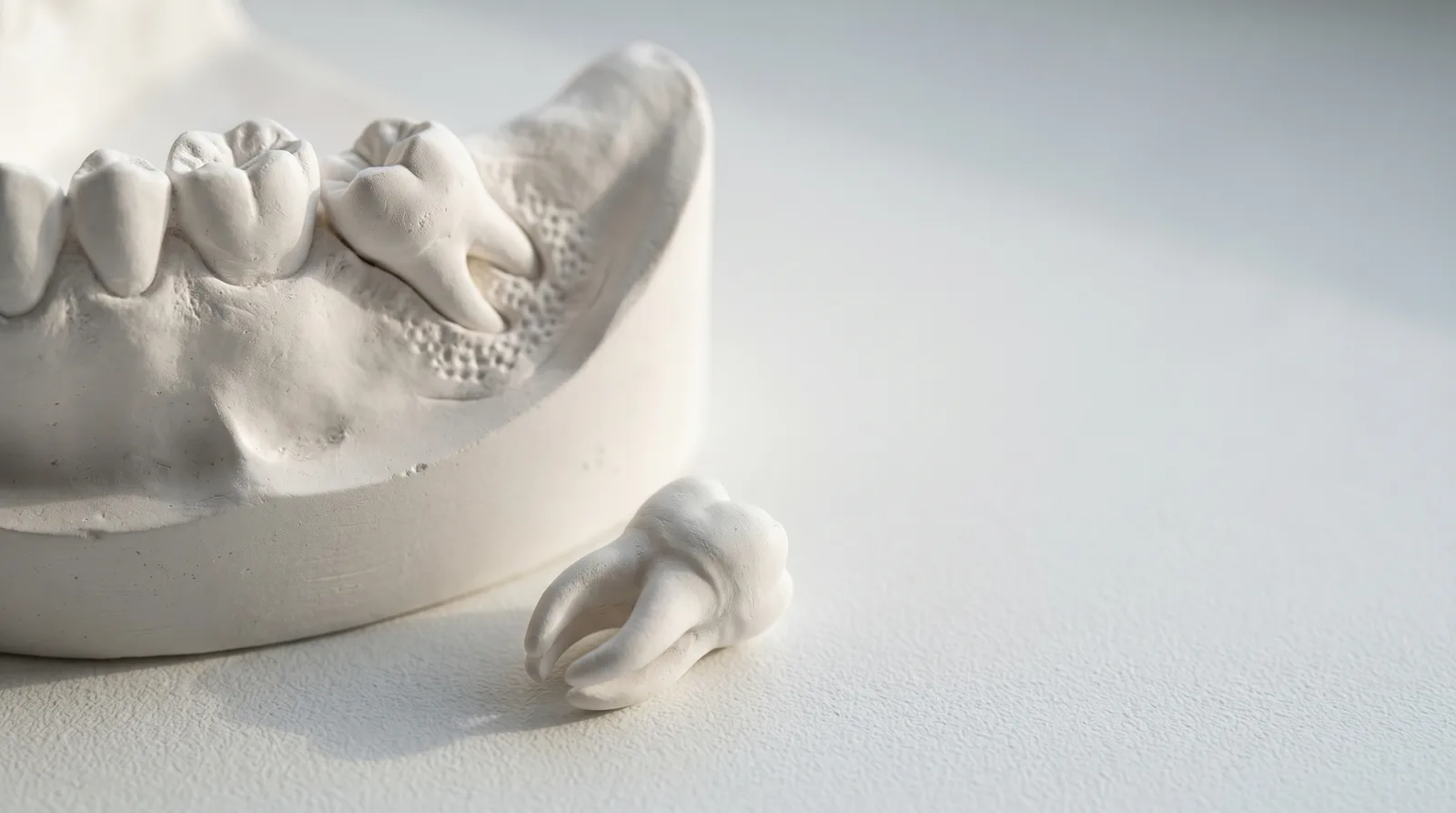
Wisdom teeth are the last to arrive, at the back of the mouth, and there is not always room for them. If a dentist or an X-ray has used the word “impacted”, the usual questions are whether the tooth has to come out and what to watch for. The NHS says a wisdom tooth that is not causing problems will usually be left where it is and checked at routine appointments.
What is an impacted wisdom tooth?
Wisdom teeth, also called third molars, usually start to come through in your teens or early 20s, according to the NHS, though they can cause problems at any age. The Oral Health Foundation adds that some people have all four, some have fewer and some never develop them.
A wisdom tooth is impacted when it cannot come through fully. The NHS gives two examples: another tooth may block it, or gum may partly cover it. NHS inform says it can come in at an angle or get stuck. The Oral Health Foundation says lower wisdom teeth are more likely to be impacted, and that an impacted tooth can be hard to clean.
Do impacted wisdom teeth have to come out?
Usually not, if there are no signs of a problem. Impacted wisdom teeth that are healthy are usually left in place and checked, although some that cause no symptoms may still be advised for removal if they are likely to cause trouble later.
NICE guidance says surgical removal of impacted wisdom teeth should be limited to people with evidence of a problem. Its patient notes say an impacted wisdom tooth causes no problems for most people, and that there is no reliable evidence that operating on one that is not causing problems helps. They advise usual check-ups instead.
Your dentist may suggest removal if the tooth is linked to a problem. The Oral Health Foundation gives these examples:
- not enough room for the tooth to come through
- repeated pain or infections
- a partly through tooth that has decay
- food trapped in a way that damages the tooth in front
On gum infection (pericoronitis, explained below), NICE says a first episode, unless particularly severe, should not be treated as a reason for surgery, but a second or later one is an appropriate reason. It also notes that how far severity or recurrence should shape the decision remains unclear. NHS inform says some of these problems can be treated first in other ways, such as with an antiseptic mouthwash or antibiotics. Repeated infection and decay that cannot be repaired are reasons your dentist may suggest removal.
Not everyone agrees on teeth that cause no symptoms. In 2020 the Royal College of Surgeons of England (RCS) published guidance on lower wisdom teeth. It says there is growing evidence that the approach NICE set out in 2000 may not be in the interests of patients, because it can delay surgery that turns out to be needed while the tooth in front is damaged. It describes a “high risk” group: a lower wisdom tooth that is partly through and tilted forward or lying on its side, which carries a higher risk of decay and gum problems in the tooth in front. For these teeth it says removal may be needed sooner rather than later. It still advises leaving a deeply buried tooth that has no disease, checking teeth at low risk, and regular follow-up where the picture is unclear and removal itself carries a higher risk. Your dentist will weigh this up with you.
The RCS also says complications and recovery time increase with age, and that leaving a wisdom tooth in place does not make later surgery easier. If you are due to have radiotherapy to the head or neck, or treatment that affects your immune system or jaw bone, tell your dentist. The RCS says wisdom teeth should be assessed before that treatment starts, and removal may be advised sooner.
NICE published this guidance in 2000 and last reviewed it in 2015. Its page says NICE is updating it, and the update page still lists the expected publication date as to be confirmed. A 2020 Cochrane review found only two eligible studies on removing or keeping impacted wisdom teeth with no symptoms and no disease, and concluded there is not enough evidence to say which is better. It says patient values and clinical expertise should guide the decision, and that a tooth that is kept should be assessed at regular intervals.
What problems can an impacted wisdom tooth cause?
Food and bacteria can collect around a tooth that is partly through or at an angle. NHS inform says that can lead to decay, gum disease that can affect the neighbouring tooth too, an abscess, cellulitis (a bacterial infection in the cheek, tongue or throat) and, very rarely, a cyst. Our guide to tooth infection and abscess covers abscesses in more detail.
Gum infection, called pericoronitis, is described by the Scottish Dental Clinical Effectiveness Programme (SDCEP), whose guidance is written for dental professionals, as infection or inflammation of the gum that covers a partly through tooth. It lists pain around the tooth, gum swelling that can spread to the face, especially with a lower back tooth, discomfort with swallowing, limited mouth opening, an unpleasant taste or smell, and fever. If a gum infection makes it hard to open your mouth or swallow, get urgent help rather than waiting for a routine appointment: the signs under “When to see a dentist” below show which route to take.
The Oral Health Foundation adds sore, tender gums at the back of the mouth and pain when chewing, and suggests cleaning the area carefully with a small-headed or single-tufted toothbrush, using warm salt water rinses, and seeing your dentist if it becomes painful or swollen.
A common worry is that wisdom teeth push other teeth out of line. The Cochrane review’s one trial on this was in adolescents who had already had orthodontic treatment and had crowded wisdom teeth. It found no evidence after 5 years that removal made a clinically significant difference to the dimensions of the dental arch (the curve of the teeth), though it was at high risk of bias. From one study of 416 men, the review found very low certainty evidence that keeping such a tooth may be linked to gum disease in the neighbouring tooth over the long term, and insufficient evidence of a difference in decay.
How are impacted teeth checked and removed?
A dentist may take X-rays to check how your wisdom teeth are positioned, according to the NHS. NHS inform says that if removal may be needed, an X-ray usually follows, and it also helps decide who should do the procedure.
Your dentist might remove the tooth themselves or refer you to a specialist at a hospital, clinic or another dental surgery. The gum is usually numbed with a local anaesthetic injection first. If the teeth are more difficult to remove or you are anxious, the NHS says there are other options, including a general anaesthetic, so ask what is available for you. You will feel pressure as the tooth is rocked loose, says NHS inform, and should tell the dentist or surgeon if you feel pain so they can give more anaesthetic. Removal often takes just a few minutes and should take no more than 40 minutes, according to the NHS.
Recovery
Most people can return to normal activities the day after, according to the NHS, though if removal was more difficult you might need 1 to 3 days off work. Some pain and swelling are usual for up to 2 weeks, starting to improve after 1 or 2 days, although NHS inform says swelling is usually worst in the first 3 days. For the first few days the NHS suggests:
- eating soft food until chewing is comfortable
- keeping the wound clean by rinsing gently with warm salt water
- pressing on any bleeding with a clean cloth or cotton wool for at least 10 minutes
- not smoking, which can increase the risk of infection
For pain, ask your pharmacist which painkiller suits you. The NHS says children under 16 should not take aspirin, and that taking more than the recommended dose does not work better and can be very dangerous.
Possible complications
Possible complications include dry socket, infection and damage to nearby nerves, according to the NHS. Dry socket is a painful condition where the blood clot over the socket does not form properly or is dislodged before the gum has healed. Nerve damage can cause numbness or tingling in the tongue, lips and chin, which the NHS says usually gets better but can last a few weeks or months. NHS inform says it can be permanent in some cases, and that dry socket is more likely if you smoke, are over 25 or the removal was complicated, among other things. Your dentist or surgeon explains the risks beforehand.
When to see a dentist
Some signs need emergency help rather than an appointment. The NHS gives these for a dental abscess, which an infected wisdom tooth can lead to. Call 999 or go to A&E if:
- you find it hard to breathe, speak or swallow
- an eye is swollen or painful, or you suddenly have problems with your eyesight
- there is a lot of swelling in your mouth
- you find it hard to open your mouth
The NHS advises against driving yourself to A&E: ask someone to drive you, or call 999 and ask for an ambulance.
For a suspected dental abscess, the NHS says to ask for an urgent dentist appointment or get help from NHS 111. Do not go to a GP surgery for an abscess: the NHS says they cannot give dental treatment. The signs it lists include intense pain in a tooth or gum, a swollen face or jaw, swollen glands in the neck and a high temperature. After a wisdom tooth has been removed, the NHS gives the same urgent route for:
- bleeding that does not stop
- pain and swelling that is severe or getting worse, with painkillers not helping
- pain with a bad taste in your mouth, a high temperature or feeling unwell
NHS inform says that for severe pain or discomfort from a wisdom tooth you should make an appointment as soon as possible, rather than waiting for your regular check-up. Signs worth having looked at include:
- a gum at the back of your mouth is sore, swollen or tender
- you have pain when chewing near a back tooth
- food keeps getting trapped around a wisdom tooth
- you have a bad taste or bad breath that seems to come from the back of your mouth
What we would do
A new patient exam is the starting point if you are not sure what is happening at the back of your mouth. We examine your teeth, gums and soft tissues, take small X-rays where needed, and set out your options in plain language. Our X-rays and scans page says a panoral radiograph (OPG) or a 3D CBCT scan can be used to assess wisdom teeth, and your dentist decides which gives the clearest picture.
We recommend tooth extraction only once other options have been ruled out or the tooth is too damaged to save, and it is carried out under local anaesthetic. An impacted tooth is a more complex extraction, booked as a planned surgical appointment, examined and priced separately from a routine extraction. Our price list shows the fees. Afterwards we explain how to care for the socket while it heals.
If the problem comes on suddenly, our emergency dentist page explains how to reach your nearest practice. If having a tooth out worries you, our page for nervous patients explains how we go at your pace. To have a tooth at the back of your mouth looked at, book an appointment.
Want us to take a look?
Book an appointment at whichever of our five practices suits you. We will check what is going on and talk you through your options.
Questions this guide answers
Do impacted wisdom teeth always need to be removed?
Not always. NICE says removal should be limited to teeth with signs of disease, and the NHS says a tooth that is not causing problems is usually left and checked at routine appointments. The Royal College of Surgeons of England says some teeth with no symptoms, such as a lower wisdom tooth that is partly through and tilted against the tooth in front, may be better removed earlier. Your dentist will talk you through the options for your own teeth.
What is pericoronitis?
It is infection or inflammation of the gum that covers a partly through tooth, according to the Scottish Dental Clinical Effectiveness Programme, whose guidance is written for dental professionals. The Oral Health Foundation says partly through wisdom teeth can trap food and plaque, which can lead to it. If it makes it hard to open your mouth or swallow, get urgent help rather than waiting for a routine appointment.
Will I need an X-ray?
The NHS says a dentist may take X-rays to check how your wisdom teeth are positioned. NHS inform says that if your dentist thinks you may need a tooth removed, they will usually take an X-ray, which also helps decide who should carry out the procedure.
How long does it take to recover after a wisdom tooth is removed?
The NHS says you can usually return to normal activities the day after, and that pain and swelling usually last for up to 2 weeks, starting to improve after 1 or 2 days. If removal was more difficult, it says you might need 1 to 3 days off work.
Can wisdom teeth push my other teeth out of line?
The Cochrane review of wisdom teeth that cause no symptoms found no evidence from its one trial on this that removal made a clinically significant difference to the dimensions of the dental arch after 5 years, though that study was at high risk of bias. Ask your dentist about your own teeth.
Sources (8)
- Guidance on the extraction of wisdom teeth
- Wisdom tooth removal
- Wisdom tooth removal
- Dental abscess
- Wisdom teeth
- Management of acute dental problems: acute pericoronitis (including erupting teeth in children)
- Surgical removal versus retention for the management of asymptomatic disease-free impacted wisdom teeth
- Parameters of care for patients undergoing mandibular third molar surgery