Mandibular tori: bony lumps in the jaw
Mandibular tori are benign (not cancer) bony lumps inside the lower jaw and usually need no treatment. Have any new lump in your mouth checked, and sooner if it grows quickly, hurts or is on one side only.
On this page
Running your tongue along the inside of your lower jaw and finding bony lumps can be unsettling, especially if you have never noticed them before. One possible explanation is mandibular tori, a type of bony growth that is benign.
What are mandibular tori?
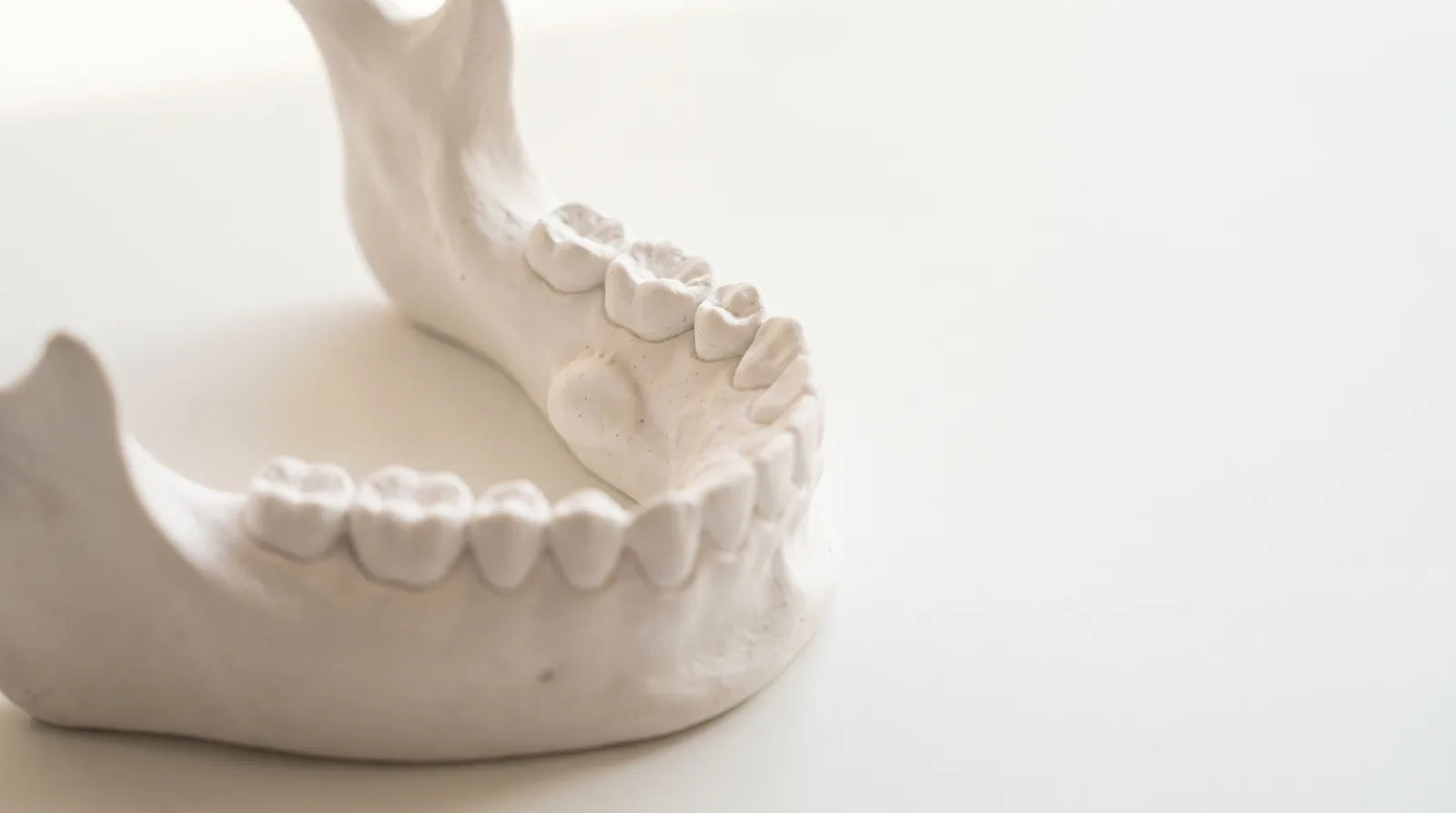
A torus (plural: tori) is an outgrowth of bone. Mandibular tori grow on the tongue side of the lower jaw, usually around the canine and premolar teeth, and the lining of the mouth covers them. You may have one lump or several. A 2013 review reports that they occur on both sides in about 80 percent of people who have them.
Tori are described as benign, meaning not cancerous. They usually grow slowly and tend to be found in adulthood, often by chance at a check-up. Many people have them without ever noticing.
How common are they?
It depends where you look. A 2025 imaging study quotes earlier figures of about 5 to 19 percent for people in Europe. A 2024 study notes that reports worldwide range much more widely, from about 1 percent to 64 percent, and vary between countries and ethnic groups. We could not find a published figure for the UK.
What causes them?
Nobody knows for certain. The 2024 study says tori are believed to come from a mix of genetic and environmental factors, and a 2021 case report also calls their origin uncertain.
One idea is that strong biting forces play a part. A 1996 study from Belfast, published in the British Dental Journal, looked at people attending a facial pain clinic. Mandibular tori were more common in those with jaw joint and jaw muscle problems (temporomandibular disorders) or migraine than in a comparison group matched for age and sex. The authors suggested a link with clenching or grinding in some people.
A 2024 study of 122 adults in Albania did not find a clear link between tori and self-reported clenching. Its authors say the sample was small and larger studies are needed. So the evidence is mixed.
Can they cause problems?
Most people have no symptoms. When tori are large, a few things can happen:
- They can make it harder to keep the teeth next to them clean.
- The covering over a torus is thin, so it can be rubbed sore and ulcerate, especially if a denture fits badly. The NHS lists badly fitting dentures among the causes of mouth ulcers.
- They can interfere with making a denture, and, when large, with speech, moving the tongue, chewing or swallowing.
Tell your dentist about any medicines you take, including medicines for bone thinning (osteoporosis). The 2024 study notes that the thin covering over tori can ulcerate more easily in people taking some of them.
Do mandibular tori need treatment?
Usually not. A 2025 imaging study says treatment is usually limited to follow-up and observation. The 2024 study says small tori have no clinical significance but should be kept under observation.
Removal is a surgical option, kept for tori that grow and cause problems. When a denture is planned and the tori are larger, the 2024 study says they may need removing first, or the denture may need designing around them.
A 2021 case report describes tori that grew back within a month of removal in one patient who showed signs of teeth grinding (bruxism). After a second operation and the use of a mouth guard, they had not returned a year later. Regrowth after surgery is rarely described. Any decision about surgery is made with a dentist or surgeon who has examined you.
When to see a dentist
Bony tori are not the only thing that causes a lump in the mouth, so a new lump deserves a proper look rather than a guess. The NHS says to see a GP if you have a lump in your mouth, on your lip, or in your neck or throat. It adds that a dentist can also help with ulcers, lumps, patches or pain in your mouth.
- a lump inside your mouth, on your lip, or in your neck or throat that you have not had looked at
- a lump that grows quickly, is on one side only, or comes with pain or a tingling or numb feeling
- a mouth ulcer that has lasted more than 3 weeks, bleeds, or becomes more painful and red
- difficulty swallowing or speaking
- lumps that make eating, speaking, cleaning your teeth or wearing a denture difficult
The NHS says symptoms like these are common and are often caused by something other than cancer. It adds that it is still important to get checked by a GP or dentist, because finding cancer early may mean it is easier to treat. Our guide to taste and tongue changes covers other signs in the mouth, including ulcers and patches that do not clear up.
What we would do
To have tori looked at, a new patient exam is the first thing we would suggest. We examine your teeth, gums and soft tissues, carry out an oral cancer screening, and take small X-rays where needed. A 2025 imaging study says mandibular tori are usually diagnosed by looking at and feeling the area. If your dentist finds tori that cause no problems, they can note them and keep an eye on them at your check-ups.
If removal were ever worth considering, your dentist would explain why, and who would carry it out. If you wear dentures, or may need them, mention your tori, because tori can affect how a denture is designed.
To have tori checked or kept under review, book a check-up.
Want us to take a look?
Book an appointment at whichever of our five practices suits you. We will check what is going on and talk you through your options.
Questions this guide answers
Are mandibular tori dangerous?
They are benign bony outgrowths, which means they are not cancer, and many people have no symptoms. A lump that is new to you, grows quickly, is painful or sits on one side only should be examined to be sure what it is.
Do mandibular tori need to be removed?
Usually not. Small ones are generally left alone and watched. Removal is an operation, considered when tori cause a problem such as sore patches, trouble cleaning, or difficulty making a denture.
Can mandibular tori make dentures harder to fit?
They can. Studies describe larger tori interfering with making a denture. Tell your dentist about them, because the denture design may need to take them into account, and removal is sometimes considered.
How do I know a lump is a torus and not something else?
Only a dentist or doctor can tell. Tori usually appear on both sides of the lower jaw, near the canine and premolar teeth. A lump on one side only, one that grows quickly, or one with pain or numbness needs a closer look.
Sources (7)
- Symptoms of mouth cancer
- Mouth ulcers
- Oral tori findings in an adult Albanian population: a single-center pilot study
- Computed tomographic analysis of mandibular tori and their relationship to remaining teeth
- The tori of the mouth and ear: a review
- Mandibular tori, migraine and temporomandibular disorders
- Early recurrence of mandibular torus following surgical resection: a case report