Replacing a missing tooth: your options
You can replace a missing tooth with a bridge, a denture or an implant, and in some cases the gap can be left alone. Which suits you depends on your teeth, gums and jawbone, so a dentist’s assessment comes first.
On this page
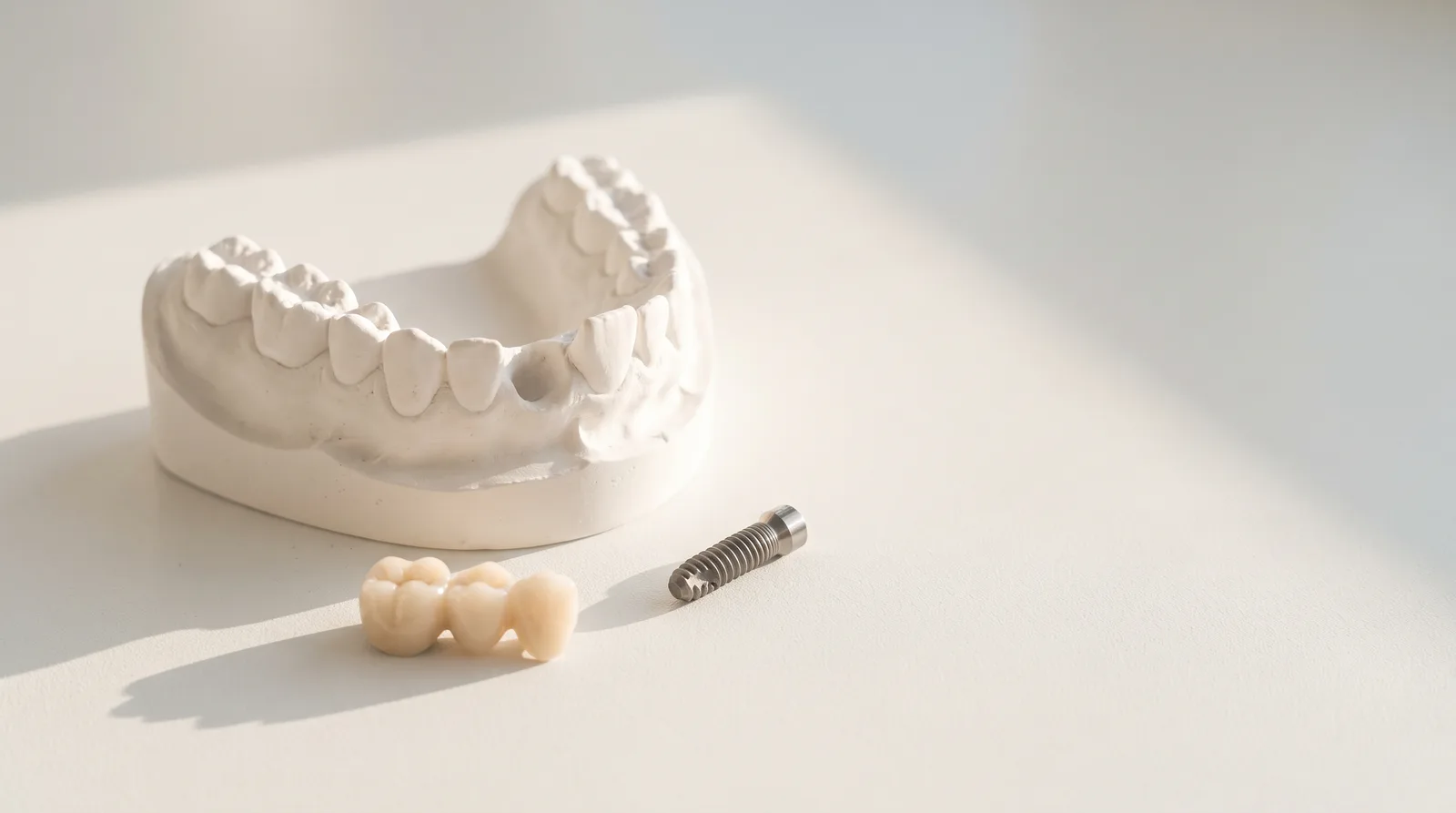
A tooth can be lost in an accident or taken out by your dentist, and then you have a gap and a decision. You can replace it with a bridge, a denture or an implant, or in some cases choose to leave the space. If an adult tooth has just been knocked out, read When to see a dentist first, because it can sometimes be saved.
What are your options?
The NHS lists bridges, dentures and dental implants as ways to replace missing teeth. They differ in how they are held in place and whether you can take them out.
| Option | Fixed or removable | Held in place by |
|---|---|---|
| Bridge | Fixed | The teeth either side of the gap |
| Denture | Removable | Your gums, with clasps on remaining teeth for some |
| Implant with a crown or bridge | Fixed | A titanium screw in the jawbone |
| Implant with an overdenture | Removable | Attachments on the implants |
Missing teeth can make eating and speaking harder, and can leave you self-conscious about how you look even when they cause no problems, the NHS says. Your dentist can tell you which of these options are open to you.
Bridges
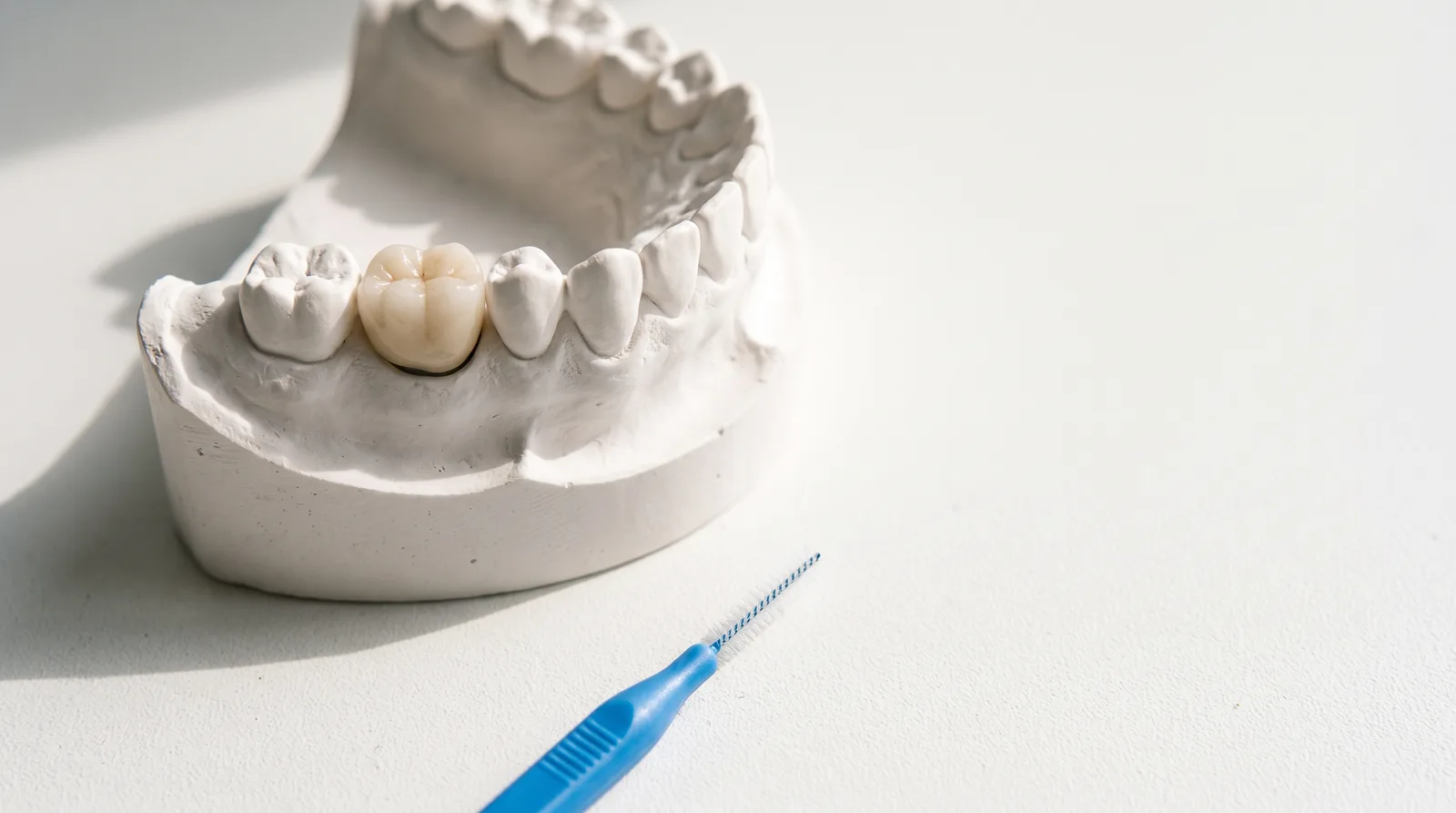
A bridge is a false tooth held by the natural teeth next to the gap. The NHS describes it as a fixed replacement: your dentist takes an impression of the surrounding teeth, which go on to support the bridge. The Oral Health Foundation says bridges can be made from porcelain bonded to metal, or from all-porcelain materials.
There are two common types, according to the Oral Health Foundation:
- A traditional bridge has crowns on the teeth either side of the gap, with a false tooth joined between them. The NHS says a tooth is shaped before a crown is fitted to it.
- An adhesive (resin-bonded) bridge has small wings bonded to the back of nearby teeth. It needs very little drilling and is often used for front teeth, where biting forces are lighter.
A bridge may suit you if the teeth beside the gap are strong and healthy and the bone and gums give good support, the Oral Health Foundation says. You cannot take a bridge out, so daily cleaning goes around it and the gumline, and under the false tooth with special floss or other cleaning aids.
Dentures
Dentures are removable false teeth. Complete dentures replace all of your upper or lower teeth, and partial dentures replace one or more missing teeth, according to the NHS. To make them, your dentist measures your mouth and takes a putty mould, or sometimes a scan.
Dentures can be made from acrylic, metal (chrome cobalt) or flexible plastic, according to the Oral Health Foundation. Metal ones are only suitable if you still have strong natural teeth to support them.
Making dentures usually takes a few weeks, with a second appointment to fit them, the NHS says. If you need teeth quickly, you may be offered immediate dentures, which can usually be made within a few days. These often need adjusting or replacing up to a year later, because your mouth can change shape as it heals after teeth are removed.
It can take a few weeks to get used to wearing dentures. The NHS suggests practising taking them in and out, and eating softer foods until you are comfortable. It advises taking dentures out every night unless your dentist says otherwise. They can last for years with good care, but may loosen as your gums and jawbone shrink or change shape, or wear and become damaged.
Implants
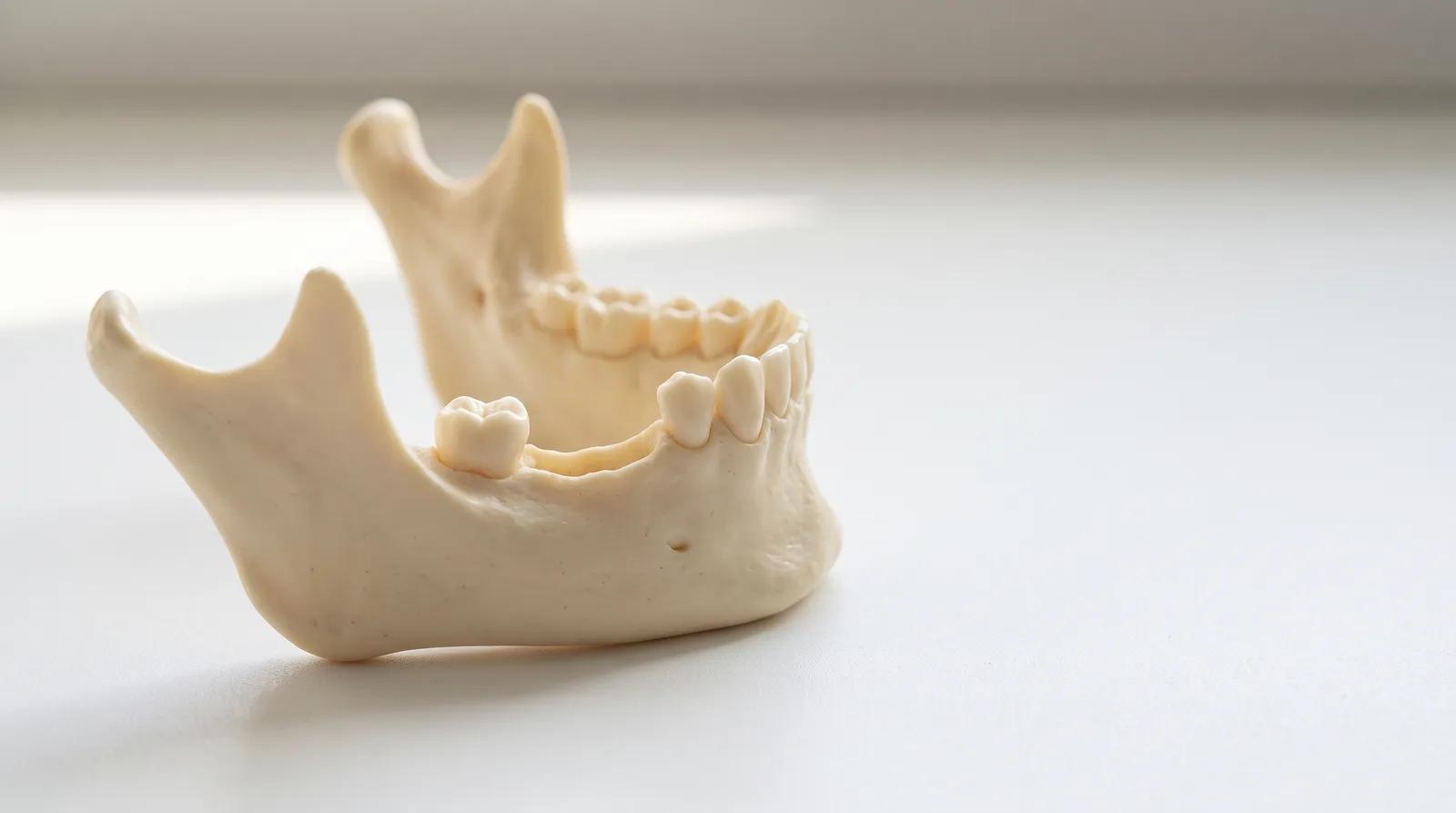
A dental implant is a titanium screw placed in the jawbone. It can support a crown, bridge or denture, and can replace a single tooth or as many as you need, the NHS says. The Leeds Teaching Hospitals NHS Trust says there is no need to cut down the neighbouring teeth to support bridgework.
Treatment means surgery and several appointments over some months, and the Leeds leaflet says implants are not the right option for everyone. Your general health, whether you smoke, your age, the health of your teeth and gums, and the amount of bone all count. Our guide to dental implants: what to know first covers the stages, the risks and how long they last, and our guides to looking after dental implants and what implants cost at our practices cover aftercare and price.
Do you have to replace a missing tooth?
Not always. The Leeds leaflet says that in some cases it is better to accept the space, especially if there is little effect on how you look or how your mouth works. Your dentist can tell you whether that applies to you.
None of the pages above gives a deadline for replacing a lost tooth. The Oral Health Foundation does say that leaving a gap can cause problems over time, so it is worth talking it through with your dentist.
The worry behind the question is that the teeth next to a gap lean or drift into it. The Oral Health Foundation lists stopping nearby teeth from drifting into the gap as a reason to fit a bridge or a denture. It also says a bridge can keep your bite balanced and reduce the chance of food getting trapped, which can lead to decay and gum disease.
How far teeth move is less certain. A 2011 systematic review looked at gaps among the back teeth that have a tooth on each side. It found that in most cases the teeth beside and opposite the gap might move only a little, up to 2 mm on average. Its authors said replacement should not necessarily be the main treatment for such gaps. They rated the evidence as very low quality and called for stronger studies of what happens in the long term.
A 2017 review in the British Dental Journal looked at the shortened dental arch, which it describes as a simplified approach. It sets this against the view that missing back teeth should be replaced. The review says evidence that the approach causes disease is lacking, and that it remains a reasonable choice, particularly for people who are medically compromised or for whom restorations are unsuitable. It also notes that more studies have come out against the approach in recent decades, and that some are dissatisfied with it.
Both reviews are about missing back teeth. They do not tell you what to do about a missing front tooth.
What happens after a tooth comes out?
The timings below come from different sources describing different set-ups, so treat them as examples, not a schedule.
- Denture: usually a few weeks to make, or a few days for an immediate denture (NHS).
- Bridge: the gum usually needs time to heal first, which the Oral Health Foundation says can take around six months. You may be offered a temporary solution meanwhile.
- Implant: the Leeds leaflet says extraction is often done 6 to 10 weeks before implant surgery, with a removable partial denture fitted in the meantime. After surgery, most implants are left 2 to 6 months to bond to the bone before use.
When to see a dentist
If an adult tooth has been knocked out or badly broken, the NHS says to call your dental practice or get advice from NHS 111, online or by phone. It says such a tooth needs treating as soon as possible, within 30 minutes to 1 hour if possible.
If a knocked-out tooth is still whole, the NHS says you can try to put it back into the gum. Hold it by the crown, not the root, and make sure it is clean. If it does not go in easily, store it in milk or hold it in your mouth between your cheek and gum, if you can. Do not put a baby tooth back in, because it could damage the tooth growing underneath. The NHS page on knocked-out teeth says to ask for an emergency dentist appointment even if you cannot find the tooth.
For a denture, bridge or implant, the signs below come from the NHS (dentures) and the Leeds leaflet (implants). The Oral Health Foundation says regular check-ups help spot problems early with a bridge.
- your denture clicks when you talk, slips, no longer fits properly or is causing pain
- your denture is worn or damaged, in which case the NHS says to bring any broken parts with you
- your gums are very red or bleeding, or you have bad breath, which the NHS says can be signs of gum disease, a fungal infection or tooth decay
- the porcelain on a crown or bridge fitted to an implant chips or comes off, which the Leeds leaflet says may mean it needs repairing or replacing
- the gum around an implant is inflamed, because the Leeds leaflet says gum inflammation and bone loss can develop around an implant over time
What we would do
We start with a consultation. At our practices we assess your bone density and gum health and talk through whether an implant, a bridge or a denture fits your case. Where we need more detail for planning, we can use X-rays and 3D scans.
These are the replacement options we offer:
- Dental bridges. Sometimes the teeth either side of the gap are prepared for crowns and the bridge is cemented onto them. In other cases we use a resin-bonded bridge, which attaches to your natural teeth instead.
- Dentures, complete or partial. We take impressions, fit them, then review the fit and adjust it.
- Dental implants, placed under local anaesthetic. If you are anxious, say so at your consultation.
- All-on-4, for a full arch of missing or failing teeth: four implants support a fixed bridge.
If a tooth cannot be saved, we talk through replacement options such as a bridge, denture or implant as part of a tooth extraction. We are a private practice and do not take NHS patients.
If you have a gap and are not sure what to do about it, book an appointment and bring your questions, including whether the gap needs replacing at all.
Want us to take a look?
Book an appointment at whichever of our five practices suits you. We will check what is going on and talk you through your options.
Questions this guide answers
Do I have to replace a missing tooth?
Not always. A patient leaflet from Leeds Teaching Hospitals NHS Trust says that in some cases it is better to accept the space, especially if it makes little difference to how you look or how your mouth works. The Oral Health Foundation says that leaving a gap can cause problems over time. A 2017 review of one approach to missing back teeth says evidence that it causes disease is lacking, although more studies have come out against it in recent decades. Your dentist can tell you what applies to you.
What is the difference between a bridge and a denture?
A bridge is fixed in place and supported by the teeth either side of the gap, so you cannot take it out. A denture is removable and rests on your gums, and some partial dentures also clip onto your remaining teeth. You take a denture out to clean it.
Can I get a missing tooth replaced on the NHS?
The NHS says bridges and dentures are usually available on the NHS, but implants are usually only available privately. It adds that, rarely, implants are available on the NHS for people who cannot wear dentures for certain reasons, such as mouth cancer or an accident. TG’s Dental Suite is a private practice and does not take NHS patients.
How long does it take to replace a missing tooth?
It depends on the option. The NHS says dentures usually take a few weeks to make, and immediate dentures can be made within a few days. The Oral Health Foundation says the gum can take around six months to heal after a tooth is removed before a bridge is fitted. A Leeds hospital leaflet says most implants are left 2 to 6 months to bond to the bone. That comes after any extraction has healed, which is often 6 to 10 weeks, and before the final crown or bridge is made over several more visits. Your dentist will give you a plan for your own mouth.
Sources (8)
- Dental treatments
- Dentures (false teeth)
- Dental bridge
- Dentures
- Dental implants: information for patients
- Is the shortened dental arch still a satisfactory option?
- How strong is the evidence for the need to restore posterior bounded edentulous spaces in adults? Grading the quality of evidence and the strength of recommendations
- Knocked-out tooth