Dental implants: what to know first
A dental implant is a titanium post placed in the jawbone to hold a crown, bridge or denture. It means surgery and months of treatment, and it is not right for everyone, so a full assessment comes first.
On this page
If you are missing a tooth, or have been told one cannot be saved, an implant is one of the options you will hear about. It involves surgery and several months of treatment.
What is a dental implant?
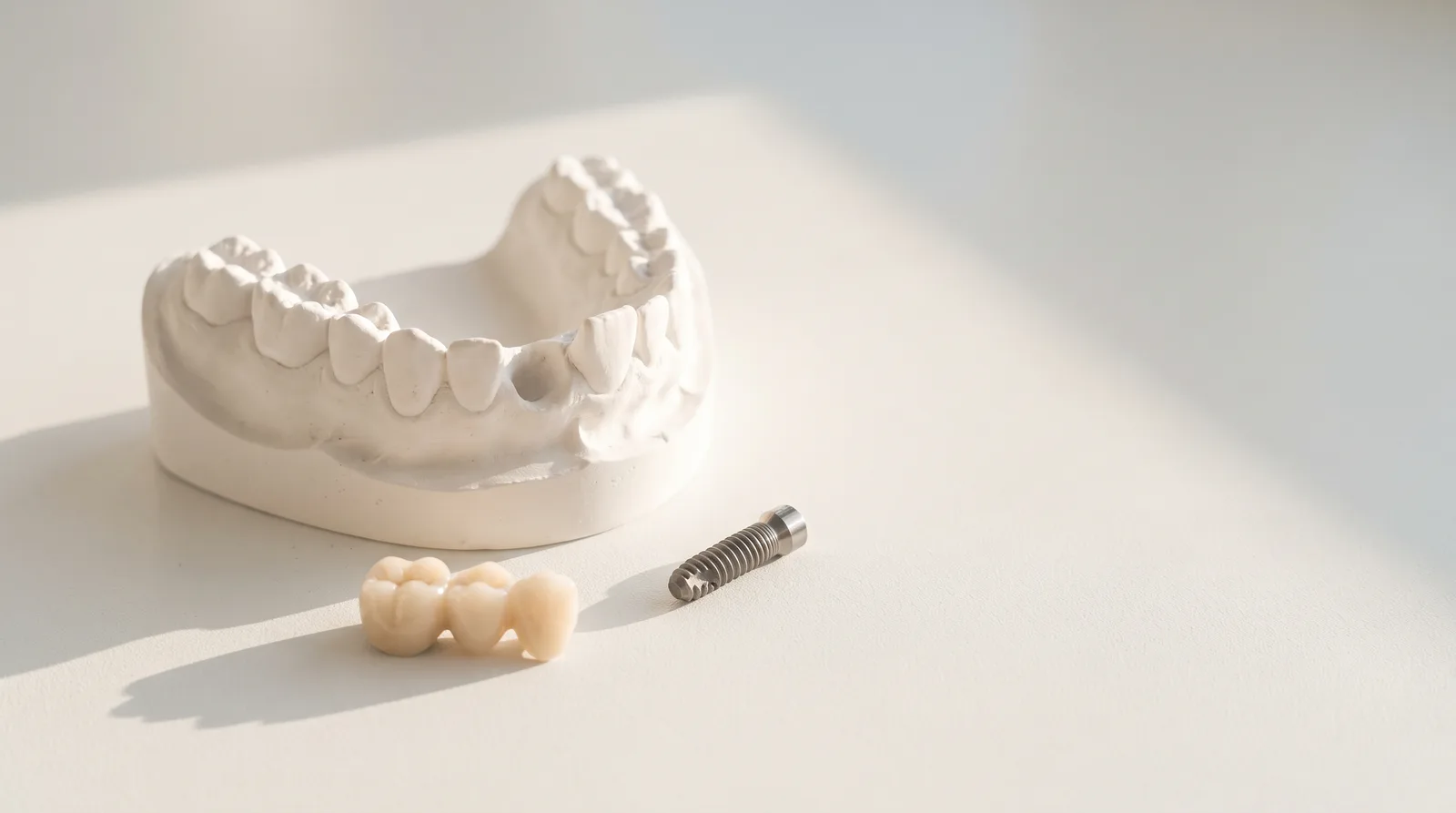
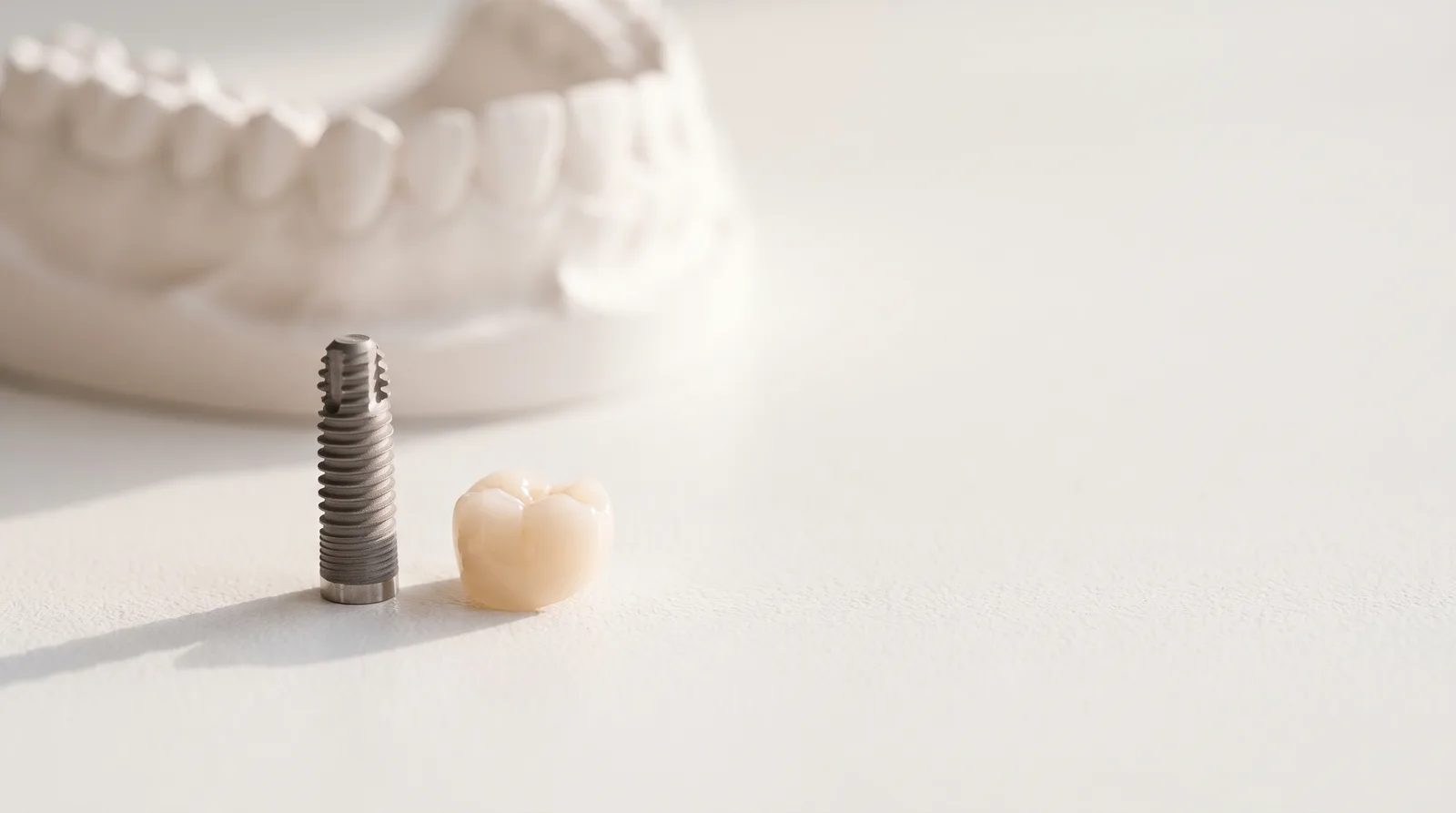
A dental implant is a screw, usually made of titanium, that is placed into the jawbone. It does the job of a tooth root and holds something above the gum: a single crown, a bridge or a denture. The NHS describes implants as a fixed alternative to removable dentures, and says they can replace one tooth or as many as you need.
The new teeth can be attached in two ways. A crown or bridge is fixed in place, and you cannot take it out to clean it. An overdenture clips onto the implants and can be removed, and the Leeds Teaching Hospitals NHS Trust says this makes it much more stable and better held in place.
What does treatment involve?
Every case is different. The stages below follow a patient leaflet from the Leeds Teaching Hospitals NHS Trust, where implants are placed in a hospital dental institute. Your own dentist will explain your plan.
| Stage | What happens | Timing |
|---|---|---|
| Assessment | Examination, X-rays, impressions and usually a 3D scan | Before treatment starts |
| Tooth removal, if needed | The tooth comes out and the gum heals. A removable partial denture is fitted straight away and worn until the implants are ready | Often 6 to 10 weeks before. Occasionally at the same visit, if conditions suit |
| Bone grafting, if needed | Bone or bone substitute is added where there is too little | A little bone: same visit. More bone: several months before |
| Implant surgery | Usually local anaesthetic, and you go home afterwards | One visit, or two if the implant is covered over to heal |
| Healing | The gum heals, then the bone bonds to the implant | Gum 1 to 2 weeks, bone 2 to 6 months |
| Making the teeth | Impressions, then a crown, bridge or overdenture is made and fitted | Several visits, a few weeks apart |
Bone grafting adds complexity and time to treatment. Our guide to jawbone loss covers how bone can be lost. For a large amount of missing bone, the Leeds leaflet says a block of bone is taken from the chin or the hip, which generally needs a general anaesthetic and a stay in hospital.
The Oral Health Foundation gives about four months for the implant to heal. It says the replacement tooth can sometimes be fitted on the same day, if your dentist judges it suitable.
Is everyone suitable?
No. The Leeds leaflet says implants are not the right option for everyone with missing teeth. It lists what decides it:
- your general health, including whether you smoke
- how you feel about several appointments over some months, and at least one operation
- your age, because implants are usually placed once you have stopped growing
- the health of your teeth and gums, and how much bone there is where the implant would go
It adds that you need to be committed to looking after your mouth in the long term: daily cleaning, regular dental visits and not smoking. A dentist weighs these up case by case, and only an assessment can tell you which apply to you.
What can go wrong?
Surgery has the usual short-term effects. The Leeds leaflet lists discomfort, swelling and bruising. It says swelling and bruising are usually worst 24 to 48 hours afterwards, and how much you get depends on the surgery and on you. It also lists infection, which it calls a low risk if the rest of your mouth is kept clean, and says antibiotics are only given in certain cases.
Two later problems are worth knowing about:
- An implant that never bonds. The leaflet calls this early failure and says it is rare. Your dentist would then talk through other ways to replace the tooth.
- Inflammation around an implant. Gum inflammation (peri-implant mucositis) can spread to the bone (peri-implantitis), which over time can lead to the implant being lost.
A 2025 review that combined 102 studies, covering 13,030 patients, found that about 46 in 100 people with implants had mucositis, the earlier stage that stays in the gum, and about 21 in 100 had peri-implantitis. Results varied widely between studies.
The review linked gum disease and smoking with both conditions. It also found possible links between obesity and mucositis, and between diabetes and peri-implantitis. It flagged alcohol too, though it describes the evidence on alcohol as limited. These are risk indicators, meaning links rather than proven causes. The Leeds leaflet also lists a history of radiotherapy to the jaws and certain medicines, and gives bisphosphonates as an example. Tell your dentist about your health history and any medicines you take. Do not stop any medicine without talking to the doctor who prescribed it.
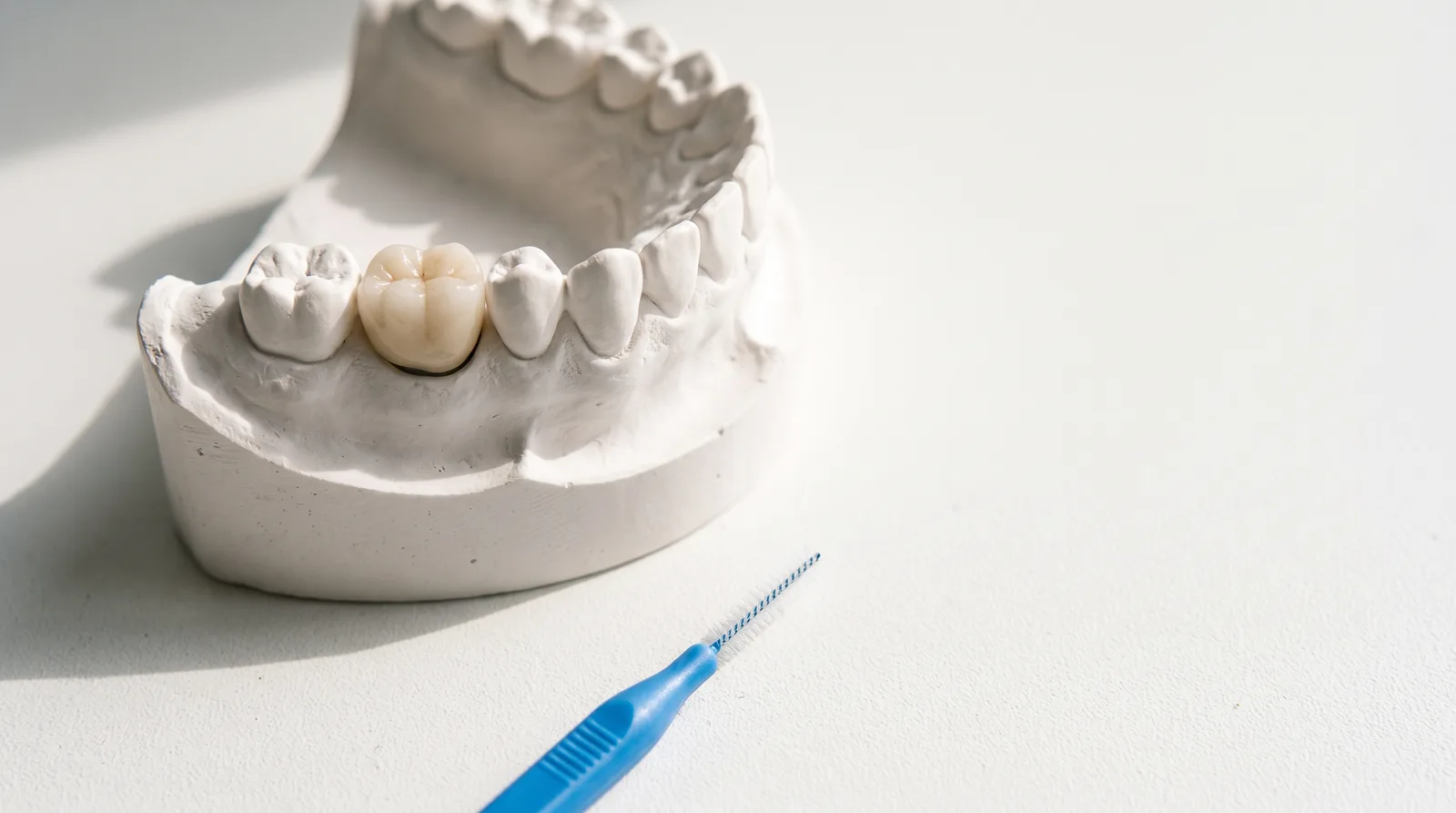
According to the Oral Health Foundation, plaque building up around an implant can lead to peri-implantitis. It says cleaning an implant is much like cleaning natural teeth. Brush for two minutes last thing at night and at least once more in the day, using fluoride toothpaste. Clean around the implant every day with interdental brushes, and keep your regular dental and hygiene appointments. Our guide to looking after dental implants covers daily care. Crowns and bridges can chip, and overdenture clips can wear and need replacing, the Leeds leaflet adds.
How long do dental implants last?
Nobody can tell you for certain. The Oral Health Foundation calls implants a well-established treatment that can last many years with good care, and says there is no lifetime guarantee. The Leeds leaflet (2025) says studies show about 90 in 100 implants placed 10 years ago are still in place and working.
A 2024 review combined the results of eight studies that followed implants for 20 years. It found that 92 in 100 implants were still in place in the studies that followed people forward, and 88 in 100 in the studies that looked back at records. When it made a cautious allowance for people who dropped out of follow-up, the figure for the studies that followed people forward fell to 78 in 100.
The authors of the 2024 analysis rated the quality of this evidence as very low. They also point out that an implant still being in place is not the same as the treatment being a success, and say that studies using an agreed definition of success would tell us more.
Treat these figures as a guide to what happened in studies. They cannot forecast what will happen in your mouth.
Other ways to replace a missing tooth
| Option | What it is | Points from the sources |
|---|---|---|
| Implant | A screw in the jaw holding a crown, bridge or denture | Surgery and several appointments. No cutting down of neighbouring teeth. |
| Bridge | A replacement tooth fixed to the teeth beside the gap | Cannot be removed |
| Denture | Removable false teeth, partial or full | Made from impressions of your gums. Cleaned out of the mouth. |
Our guide to replacing a missing tooth sets the options side by side. The Leeds leaflet also says that in some cases it is better to accept the space. That applies especially when the gap makes little difference to how you look or chew.
Can you get implants on the NHS?
The NHS says implants are usually only available privately and are expensive. It adds that, although it is rare, they are sometimes available on the NHS for people who cannot wear dentures for certain reasons, such as mouth cancer or an accident. The Leeds leaflet names the priority groups: people with oral cancer, people whose teeth did not develop or are severely malformed, and people who have had facial or dental trauma. Even then, it says, conventional options are normally tried first. Our guide to what implants cost at our practices explains what the guide price covers.
Questions to ask before you decide
The General Dental Council suggests asking yourself a few things before you agree to any dental treatment, and you can ask for a written treatment plan. For implants, those questions and a few more might look like this:
- Is this treatment NHS or private, and what is the likely cost?
- What does each stage involve, and how long will it take? The Oral Health Foundation says you should always receive a clear plan that explains each stage and the costs.
- What other options are there for my mouth?
- Given my health, my gums and whether I smoke, what are the risks for me?
- What training and experience do you have in placing implants? The College of General Dentistry publishes a document summarising the training that should be undertaken to carry out implant dentistry safely.
When to see a dentist
If you have an implant, contact your dentist if you notice any of these. The Oral Health Foundation links the first three to peri-implantitis, and the Leeds leaflet says crowns and bridges can chip.
- red, sore or swollen gums around an implant
- bleeding around an implant
- an implant that feels loose
- a crown or bridge on an implant that chips or comes off
After surgery, follow the aftercare instructions your dental team gives you. If you are worried afterwards, ask your dental team, or call NHS 111 if the practice is closed. Call 999 or go to A&E if you find it hard to breathe, speak or swallow, or have a lot of swelling in your mouth. The NHS lists these among its emergency signs for a dental abscess.
What we would do
A consultation comes first. At our practices we assess your bone density and gum health and talk through whether an implant, a bridge or a denture suits your case. Where more detail is needed for planning, we can use X-rays and 3D scans.
If you go ahead, the implant is a titanium post placed under local anaesthetic, which our dental implants page describes as usually taking around an hour. After roughly three months of healing we take impressions, and a laboratory makes your crown or bridge to fit onto the implant. Treatment usually takes three to six months from placement to final fitting. If you feel nervous, tell us at your consultation, and our nervous patients page explains how we help. Our implant work is covered by a three-year guarantee, with terms available in practice.
Not every case is simple, and implants are not right for everyone. If you would like to talk it through, book a consultation and bring the questions above.
Want us to take a look?
Book an appointment at whichever of our five practices suits you. We will check what is going on and talk you through your options.
Questions this guide answers
Does having a dental implant hurt?
The Leeds Teaching Hospitals NHS Trust says implant surgery is usually done under local anaesthetic, so you are awake and go home afterwards. Discomfort, swelling and bruising are common side effects, and it says the discomfort is usually managed with over-the-counter painkillers. Your pharmacist can advise what suits you.
How long do dental implants last?
Nobody can say for certain. The Oral Health Foundation says implants can last many years with good care but come with no lifetime guarantee. The Leeds leaflet (2025) says studies show about 90 in 100 implants placed 10 years ago are still in place and working. A 2024 review of 20-year studies found between about 78 and 92 in 100 still in place, depending on how the studies were run and how people who dropped out were counted, and rated that evidence as very low quality.
Can anyone have a dental implant?
No. The Leeds leaflet says implants are not the right option for everyone. It points to your general health, whether you smoke, the health of your teeth, gums and jawbone, your age (implants are usually placed once you have stopped growing) and how you feel about surgery and several appointments.
Can I get a dental implant on the NHS?
Rarely. The NHS says implants are usually only available privately. They are sometimes available on the NHS for people who cannot wear dentures for certain reasons, such as mouth cancer or an accident.
How do implants compare with a bridge or a denture?
None of the guidance we read ranks them. A bridge is fixed to neighbouring teeth, a denture can be taken out, and an implant is fixed in the jaw but needs surgery and several appointments. The Leeds leaflet adds that in some cases leaving the gap is the better choice.
Sources (8)
- Dental treatments
- Dental implants: information for patients
- Understanding dental implants
- What you can expect from your dental professional
- How far can we go? A 20-year meta-analysis of dental implant survival rates
- Prevalence, incidence, systemic, behavioral, and patient-related risk factors and indicators for peri-implant diseases: an AO/AAP systematic review and meta-analysis
- Training standards in implant dentistry
- Dental abscess