How long do dental veneers last?
Veneers are not permanent. In studies, about 95 in 100 porcelain veneers had not failed after 10 years, and composite ones failed more often. Daily cleaning and regular check-ups help them last longer.
On this page
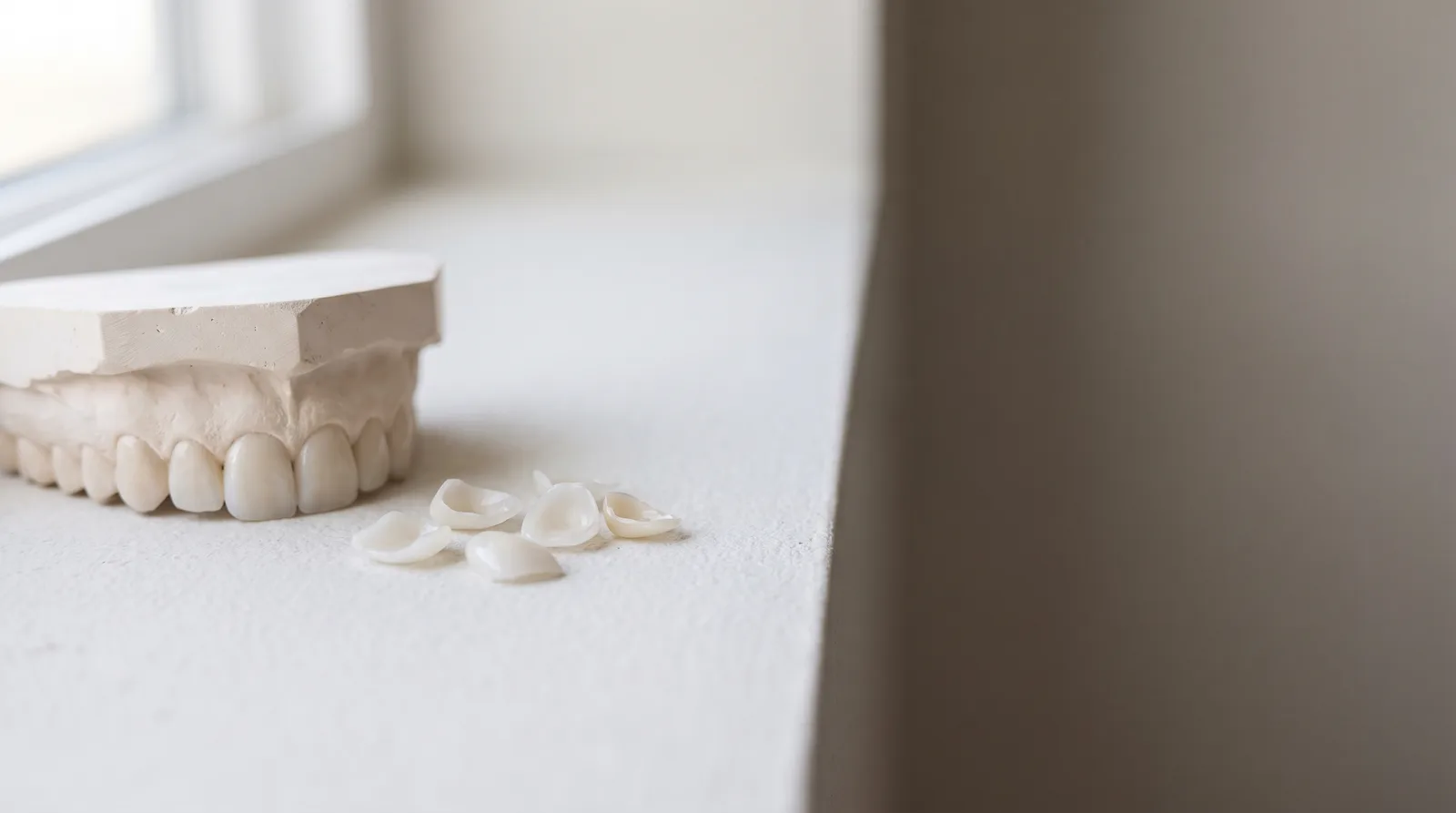
The Oral Health Foundation calls veneers a long-term treatment, but long-term is not the same as permanent. A veneer can serve you for many years, yet some chip, crack or come loose, and some are replaced.
Are dental veneers permanent?
No. The Oral Health Foundation says veneers can last many years if they are looked after properly. They can also chip, crack or come loose. Small chips may be repaired, and sometimes a new veneer is needed.
The tooth underneath is a separate matter. The NHS says some veneers need the front of the tooth drilled away a little, and that not all do. At TG’s Dental Suite, preparing a tooth for a porcelain veneer involves removing a small amount of enamel, and our veneers page says a bonded veneer cannot be removed without affecting the tooth underneath.
The NHS adds that veneers are generally only available privately, unless you can show a clinical need for them.
How long do veneers last?
Studies can tell us how veneers did on average. They cannot say how long yours will last.
| Evidence | What it found |
|---|---|
| 25 studies of porcelain veneers (2021) | About 95 in 100 had not failed at 10 years |
| 3 trials of composite veneers (2023) | About 88 in 100 had not failed, followed for 2 to 8 years on average |
| One practice’s records, 1,459 veneers (2022) | Composite needed replacing about 4% a year, ceramic about 1% |
Porcelain veneers
A 2021 systematic review pooled 25 studies covering 6,500 porcelain veneers. It estimated that 95.5% had not failed at 10 years. It counted a fracture, a veneer coming unbonded, decay and a later need for root canal treatment as failures. It did not count slight edge defects or slight discolouration, which can be repolished or repaired. Most of those studies looked back over patient records, and most failures happened in the first years after bonding.
A separate systematic review, in the European Journal of Dentistry, found that most studies reported high success rates. It also said a conclusive estimate beyond 20 years is lacking, because the evidence is limited in sample size and length of follow-up.
Composite veneers
Composite veneers are built from tooth-coloured filling material. A 2023 review found only seven studies that met its criteria. In the three randomised trials among them, the pooled survival rate was 88%, with average follow-up between about 2 and 8 years. The most reported problems were a rough surface, a colour mismatch and staining along the edges. The authors judged most of these acceptable, with or without further treatment.
One 2022 study looked at the records of a single private practice in Brazil: 1,459 veneers placed between 2008 and 2014, about seven in ten of them direct composite. Over 10 years, composite veneers had to be replaced at about 4% a year on average, against about 1% a year for ceramic. The authors concluded that ceramic veneers lasted longer. Across all the veneers, about 17 in 100 had failed and been replaced, and about the same number had been repaired and were still in place.
These figures come from different studies, with different definitions of failure and different follow-up, so do not set one line against another. Of the studies listed here, only the 2022 one compares the two materials directly, and it comes from one practice.
What can shorten a veneer’s life?
In the 2021 review of porcelain veneers, fracture was the most common problem, followed by veneers coming unbonded. Decay and a later need for root canal treatment were less common reasons for failure. Two other factors come up in the research.
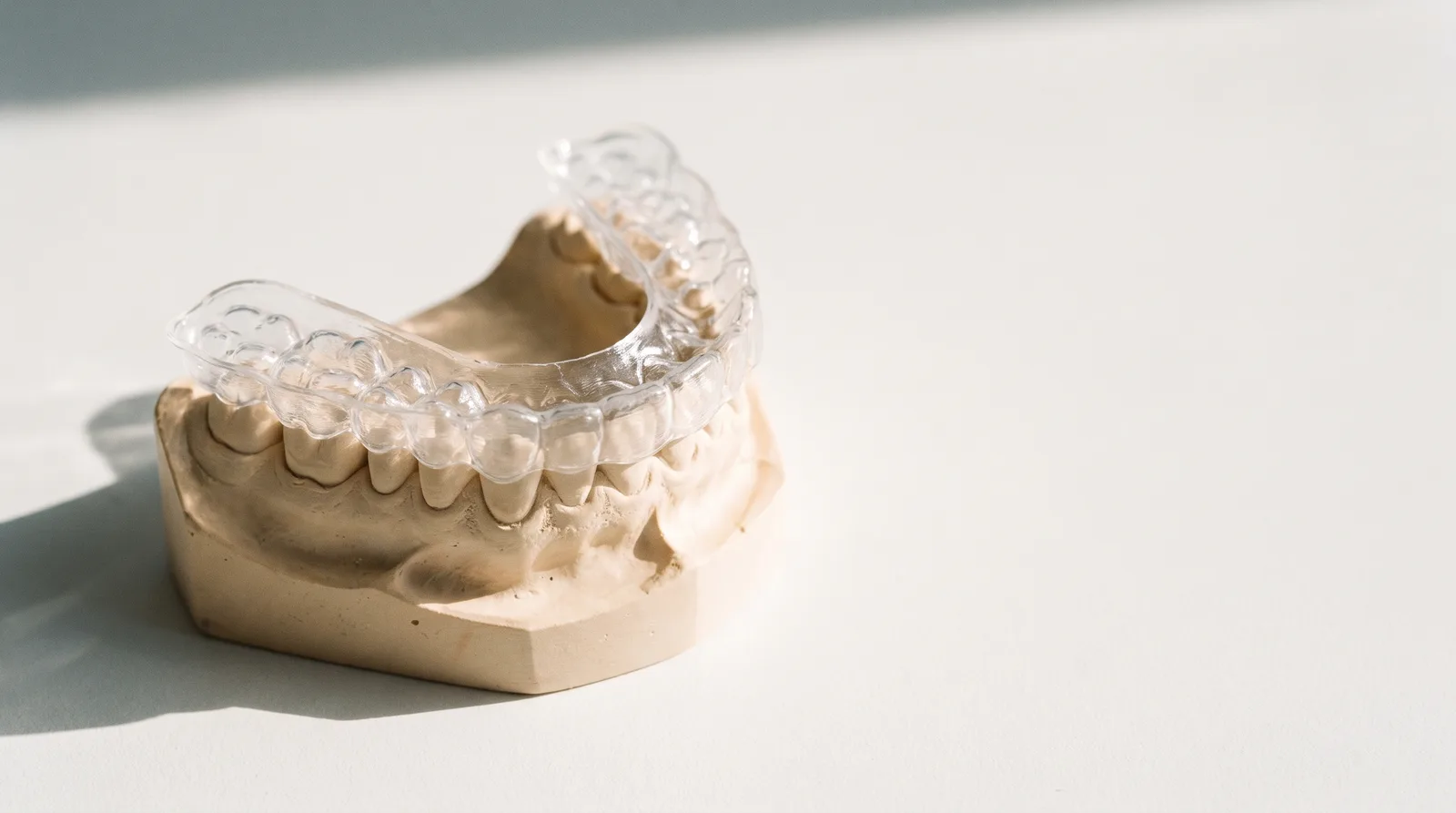
- Grinding or clenching (bruxism). The review reports one study in which veneers failed significantly more often in people who grind their teeth. The NHS says grinding can wear down or break teeth, and that a dentist may recommend a mouth guard or splint worn at night to protect them. One small study of porcelain veneers found that people who grind their teeth and wore a night splint did better: about 89 in 100 of their veneers were still in place at 7 years, against about 64 in 100 for those who did not wear one. It looked at one type of porcelain, so ask your dentist whether a splint would help you.
- Design. In the 2021 review, veneers that stopped short of the tooth’s biting edge failed more often than those that covered it, although an earlier review found no clear difference. The same review found that one type of porcelain, called feldspathic, did worse than other types. Your dentist makes these choices, so it is fair to ask about them.
Looking after your veneers
The Oral Health Foundation says healthy teeth and gums, and good oral hygiene, matter before and after having veneers, and that daily cleaning and regular check-ups help them last longer. The UK guidance we found gives no separate cleaning routine for veneers, so the NHS advice for natural teeth is the starting point.
- Brush for about 2 minutes twice a day with fluoride toothpaste, then spit out and do not rinse straight away, so the fluoride stays on your teeth.
- A toothbrush with medium or soft bristles suits most people, according to the NHS.
- Clean between your teeth with floss or interdental brushes. The NHS does not advise wooden toothpicks, which can damage the gums.
- Keep your regular check-ups.
- Tell your dentist if you grind your teeth, or if your partner hears you at night.
- Our veneers page also advises against biting hard things such as ice or boiled sweets, and against using your teeth to open packaging.
Whitening is worth planning ahead. Veneers will not lighten the way natural teeth do, so a shade difference can appear. We usually suggest whitening before any new veneer, so it can be colour-matched.
One study described in the European Journal of Dentistry review found more staining along the edges of veneers among smokers. That affects how veneers look rather than how long they last.
If a veneer chips, cracks or comes loose
The Oral Health Foundation says small chips may be repaired and that sometimes a new veneer is needed. For a chipped tooth, the NHS advises a non-emergency dental appointment. A knocked-out or badly broken adult tooth is different: the NHS says to call your dental practice or get advice from NHS 111, because it needs treating as soon as possible, within 30 minutes to 1 hour if possible. None of the sources we read say what to do if a veneer comes off, so contact your dental practice and ask what they advise. Our emergency dentist page covers how we see a broken tooth.
When to see a dentist
- a veneer chips, cracks or comes loose
- you grind your teeth and have tooth damage, sensitive teeth or pain in your jaw, face or ear, which the NHS lists as reasons to see a dentist
- a tooth has been knocked out or badly broken (contact your dental practice or NHS 111)
What we would do
At a veneer consultation we examine your teeth, discuss what you want to change and talk through whether a porcelain or a composite veneer suits you. Your dentist checks that your teeth and gums are healthy enough to prepare before going ahead. Our veneers page sets out the steps.
Porcelain veneers are milled in the practice with our CEREC system, so there is no temporary restoration and no wait for a laboratory. Composite veneers follow the same steps as composite bonding. Your veneer is bonded, adjusted for fit and colour, and followed up if anything needs checking.
A new patient exam looks at your teeth, gums and soft tissues, and is the first step if you are new to us. Our veneer pricing is on the price list.
If a veneer has chipped, loosened or you are unsure whether grinding is affecting yours, book an appointment and your dentist can take a look.
Want us to take a look?
Book an appointment at whichever of our five practices suits you. We will check what is going on and talk you through your options.
Questions this guide answers
Are dental veneers permanent?
No. The Oral Health Foundation says veneers can last many years if they are looked after properly, but they can chip, crack or come loose. Small chips may be repaired, and sometimes a new veneer is needed.
Do composite veneers last as long as porcelain ones?
The studies we read suggest not. In a 2022 study of one private practice, composite veneers needed replacing at about 4% a year on average over 10 years, against about 1% a year for ceramic. Your dentist can explain which suits your teeth.
Can I whiten teeth that have veneers?
You can, but veneers will not lighten the way natural teeth do, so a shade difference can appear. We usually suggest whitening before any new veneer so it can be colour-matched. Ask your dentist before starting.
How should I clean my veneers?
The Oral Health Foundation says good daily cleaning and regular check-ups help veneers last longer. The NHS advises brushing for about 2 minutes twice a day with fluoride toothpaste and cleaning between your teeth.
Sources (9)
- Dental treatments
- Veneers
- Teeth grinding (bruxism)
- How to keep your teeth clean
- Long-term survival and complication rates of porcelain laminate veneers in clinical studies: a systematic review
- Survival rates for porcelain laminate veneers: a systematic review
- Survival and complication rates of resin composite laminate veneers: a systematic review and meta-analysis
- 10-year practice-based evaluation of ceramic and direct composite veneers
- An 8-year prospective clinical investigation on the survival rate of feldspathic veneers: influence of occlusal splint in patients with bruxism