Fluoride and your teeth
Fluoride helps protect teeth against decay. UK guidance is to brush twice a day with fluoride toothpaste, using a smear for under 3s and a pea-sized amount from 3 to 6, and to spit out rather than rinse.
On this page
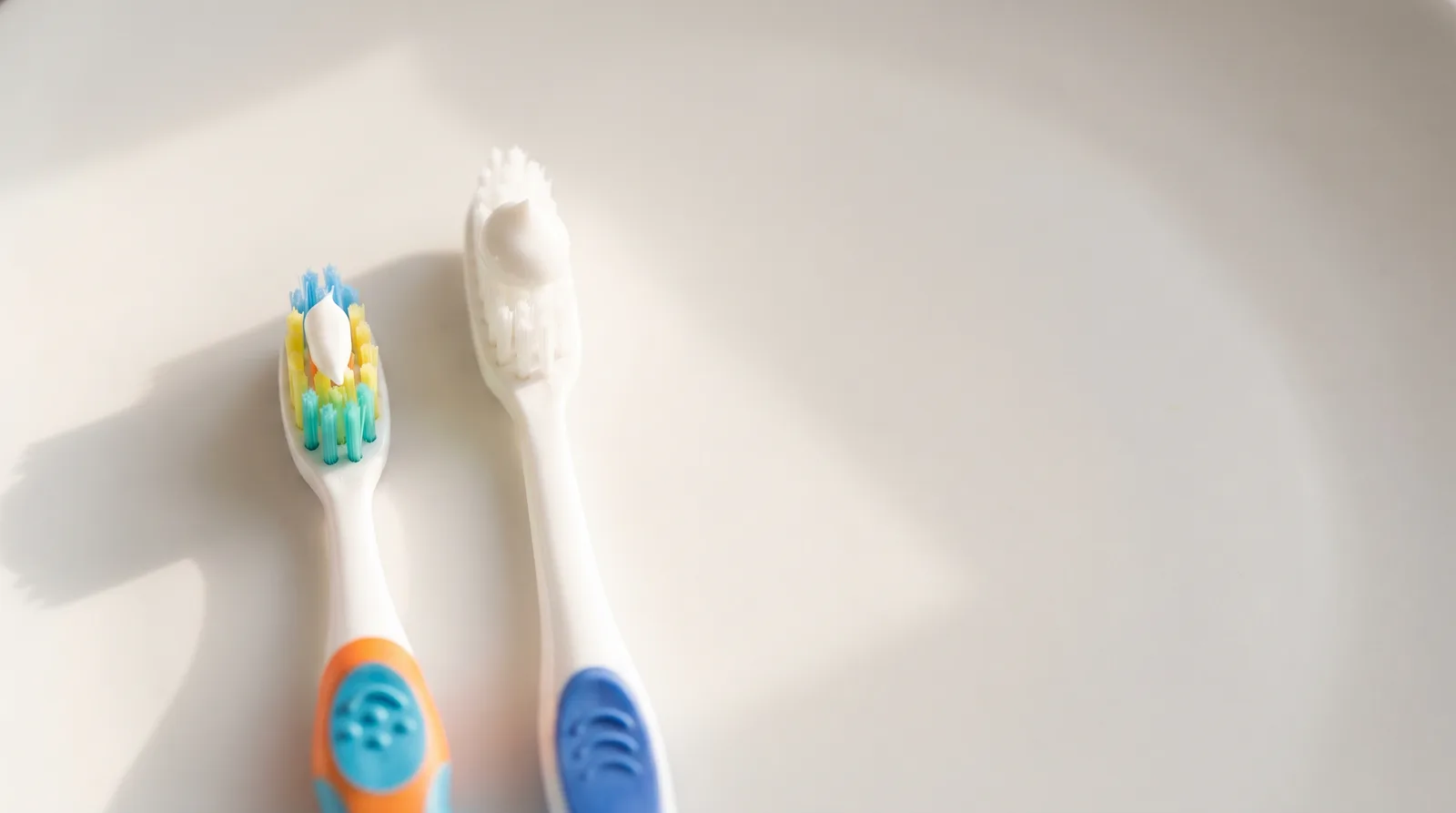
Fluoride is added to many toothpastes, and it is also found in some mouthwashes, in a treatment applied at the dentist and, in a few places, in tap water.
How does fluoride protect teeth?
Fluoride is a mineral found in tea, fish and some natural water supplies, according to the government’s Delivering better oral health toolkit. A 2019 Cochrane review, which pools the results of many trials, describes decay as developing over time from an imbalance between the bacteria in plaque and the sugars in food and drink. The toolkit says that regular contact with fluoride keeps a level of it in the plaque that encourages minerals to return to the surface of the tooth, which is called remineralisation.
The NHS says a dentist can prescribe fluoride treatments, such as a mouthwash or varnish, to reverse early decay. Once a hole has formed in a tooth, you will probably need a filling.
For toothpaste, the toolkit says the worldwide fall in decay over recent decades is largely put down to daily use of fluoride toothpaste. The Cochrane review included 96 trials, each lasting at least a year, and found less new decay with fluoride toothpaste than with toothpaste without it. It rated the evidence as high certainty for toothpaste of 1,000 to 1,250ppm in the adult teeth of children and teenagers, and moderate certainty for adults.
Where does fluoride come from?
| Source | What UK guidance says |
|---|---|
| Toothpaste | The most common way people get fluoride, in a range of strengths. The packaging shows the fluoride content. |
| Mouthwash | The NHS says a fluoride mouthwash can help prevent decay. Use it at a different time from brushing. |
| Varnish | Painted onto the teeth at the dentist. The NHS says children should be offered it at least twice a year from age 3. |
| Tap water | In England about 10 percent of people have fluoridated water. There are no schemes in Scotland, Wales or Northern Ireland. |
To find out whether your own tap water is fluoridated, the toolkit says to ask your local water supplier, quoting your postcode.
Choosing and using toothpaste
The toolkit says there is not enough evidence to recommend one type of fluoride over another. What matters is the strength, in parts per million (ppm), printed on the packaging. In its list of toothpastes on sale in the UK (January 2020), almost a third contained no fluoride, and it says toothpaste tablets may contain none and have limited or no evidence behind them. A toothpaste without fluoride loses the protection against decay, which makes cutting down on sugar even more important. Our guide to sugar and your teeth explains how.
The NHS gives these amounts and strengths:
| Age | NHS guidance |
|---|---|
| Under 3 | A smear, at least 1,000ppm (see below if your child has tooth decay). A parent or carer brushes. |
| 3 to 6 | A pea-sized amount, 1,000 to 1,500ppm. Help and supervise. |
| 7 and over | 1,350 to 1,500ppm. Keep watching, to check they brush for about 2 minutes. |
| Adults | At least 1,350ppm. |
The two NHS pages are worded differently. One says children of any age can use a family toothpaste of 1,350 to 1,500ppm, and that children aged 3 and under who do not have tooth decay can use a lower-strength children’s toothpaste of at least 1,000ppm. The other recommends a children’s toothpaste of 1,000 to 1,500ppm up to age 6, unless a dentist advises a family toothpaste for the youngest. Both say a dentist may advise a higher strength, so ask your dentist what suits your child, particularly if they have tooth decay.
How you use it matters too, according to the NHS:
- Brush for about 2 minutes twice a day, last thing at night and on one other occasion.
- Spit out the excess and do not rinse, because rinsing dilutes the fluoride left on your teeth.
- Help or supervise children until they are at least 7, and do not let them lick or eat toothpaste from the tube.
Our guide to oral health and your children covers the rest of their routine.
Mouthwash, varnish and stronger toothpaste
Mouthwash
Do not use a fluoride mouthwash straight after brushing, the NHS says, because it washes away the concentrated fluoride left by the toothpaste. It suggests a different time, such as after lunch, and not eating or drinking for 30 minutes afterwards. The toolkit says a daily fluoride mouthwash can be considered from age 8 as well as brushing, and is likely to be most useful for people at higher risk of decay.
Varnish
The NHS says children should be offered fluoride varnish at least twice a year from the age of 3, and that younger children may be offered it if the dentist thinks they need it. The toolkit cites several systematic reviews that found twice-yearly varnish cut new decay by an average of 37 percent in baby teeth and 43 percent in adult teeth.
Stronger toothpaste
The toolkit says a dentist may consider a higher-strength toothpaste for some people who are more prone to decay. Examples it gives of higher risk include existing decay, a diet high in sugar and a dry mouth, which our guide to dry mouth covers. These are prescribed by a dentist. The toolkit says the evidence for them is limited, and that they should ideally be a short-term step while the sugar in the diet is reduced. It is a conversation to have with your dentist.
Is fluoride safe?
Fluorosis
Fluoride toothpaste has few reported side effects. Only a minority of the trials in the Cochrane review measured them, and those that did found them minimal. The side effect to know about is dental fluorosis, which can develop when too much fluoride is swallowed while teeth are forming. The UK Health Security Agency (UKHSA) says that in England it is usually seen as paper-white flecks or lines on the tooth, from barely visible to patches that may be of aesthetic concern, and that it cannot develop once the teeth have formed.
The toolkit sets out the window. Fluoride can affect the look of the front adult teeth only if it is swallowed before age 3, and the premolars only before age 6. That is why the toolkit advises only a very small amount of toothpaste for children aged 6 and under: a smear up to 3 and a pea-sized amount from 3 to 6. Our guide to white spots on teeth covers fluorosis alongside other causes of white marks.
Water fluoridation
Water fluoridation is monitored by law, with a report at least every 4 years. UKHSA’s 2026 report found a 20 percent lower rate of hospital admissions for decay-related tooth extractions (April 2021 to March 2024) among children aged 0 to 19 in areas with a fluoridation scheme than in areas with neither a scheme nor much natural fluoride.
The report did not find an association with children’s scores on cognitive ability tests at ages 5 and 7, and found no convincing evidence of an association with hip fractures. Its summary of earlier reports says that fluorosis of at least mild aesthetic concern was more common in fluoridated areas, without a significant difference in how satisfied children were with how their teeth looked.
UKHSA is clear about the limits. Most of the study compares areas rather than individuals, and the report says it cannot by itself show whether a link is a cause, or prove that no link exists. It asks for the findings to be read with caution.
When to see a dentist
The NHS poisoning page does not mention toothpaste, so it gives no toothpaste-specific advice. If a child has swallowed a large amount of toothpaste, ask a pharmacist, call NHS 111 or ask your dentist. For anything else that might be harmful, follow the NHS advice below.
- You think a child has swallowed something harmful: call 999 or go to A&E. If you can, ask someone else to drive, or call 999 for an ambulance.
- A child has lost consciousness, has stopped breathing, has severe difficulty breathing, or is having a seizure (fit): call 999.
- You are not sure whether what a child swallowed is harmful: the NHS says to call NHS 111.
While you wait for help, the NHS says not to try to make the person sick and not to give them anything to eat or drink. Take the packaging with you if you can.
Decay may cause no symptoms at first, according to the NHS, so regular check-ups matter even when nothing hurts.
- toothache, or a sharp pain when eating or drinking hot, cold or sweet things
- gums that are painful, swollen, or bleed when you brush
- a visible hole in a tooth
- no check-up for 2 years, or for 1 year if you are under 18
- a baby’s first tooth has come through, or their first birthday is near, and they have not seen a dentist yet
If a painful tooth comes with swelling, our guides to toothache causes and tooth infection and abscess explain the signs and where to get help.
What we would do
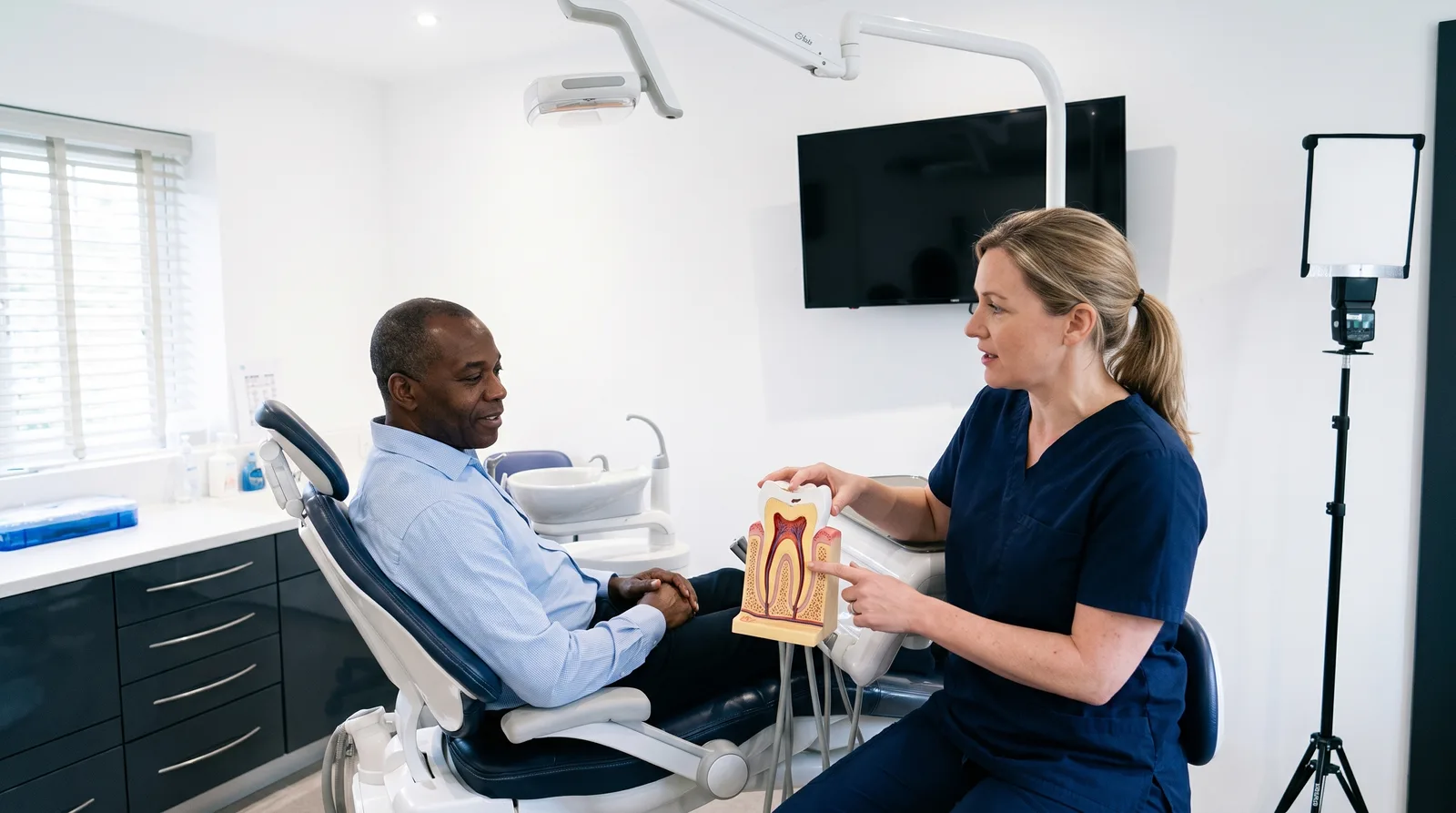
A new patient exam looks at your teeth, gums and soft tissues, with small X-rays where needed, and your dentist explains any plan in plain language. A hygiene appointment includes a scale and polish and advice on your own brushing and flossing routine. For younger patients, our children’s dentistry page explains the short, unhurried first visit and the regular check-ups that follow.
Ask your dentist whether varnish would help your child. The twice-yearly varnish offer described above is part of NHS care. We are a private practice and are not accepting NHS patients.
If you would like your toothpaste routine, or your child’s, looked at, book a check-up.
Want us to take a look?
Book an appointment at whichever of our five practices suits you. We will check what is going on and talk you through your options.
Questions this guide answers
Do I need to use fluoride toothpaste?
The NHS says to brush for about 2 minutes twice a day with fluoride toothpaste. A 2019 Cochrane review found that fluoride toothpaste prevents more decay than toothpaste without it, and government guidance says a toothpaste with no fluoride loses that protection. The packaging shows how much fluoride a toothpaste contains.
How much toothpaste should my child use?
The NHS advises a smear of toothpaste for children under 3 and a pea-sized amount from 3 to 6. Children need help or supervision with brushing until at least 7, and should spit out afterwards rather than rinse. They should not lick or eat toothpaste from the tube.
Should I rinse my mouth after brushing?
No. The NHS says to spit out the excess and not rinse straight away, because rinsing washes away the concentrated fluoride left on your teeth and reduces its protective effect. If you use a mouthwash, choose a different time, such as after lunch.
Is fluoride safe?
The 2019 Cochrane review found that the side effects reported for fluoride toothpaste were minimal, although only a minority of trials measured them. Swallowing too much while teeth are forming can cause fluorosis, usually seen in England as faint white flecks or lines, which is why young children use only a smear or a pea-sized amount.
Can fluoride fix a cavity?
The NHS says a dentist can prescribe fluoride treatments, such as a mouthwash or varnish, to reverse early tooth decay. Once a hole has formed in a tooth, you will probably need a filling.
Is my tap water fluoridated?
In England about one person in ten has fluoridated water, and there are no fluoridation schemes in Scotland, Wales or Northern Ireland. Government guidance says to ask your local water supplier, quoting your postcode.
Sources (7)
- How to keep your teeth clean
- Children’s teeth
- Tooth decay
- Poisoning
- Delivering better oral health: an evidence-based toolkit for prevention, chapter 9: fluoride
- Water fluoridation: health monitoring report for England 2026
- Fluoride toothpastes of different concentrations for preventing dental caries