Extra teeth: when are they a problem?
Extra teeth are uncommon, and many cause no trouble. A dentist may advise action if one blocks or pushes aside an adult tooth, crowds its neighbours or affects gum health. Otherwise, watching it can be reasonable.
On this page
Being told that you or your child has an extra tooth can come as a surprise, especially if it only showed up on an X-ray. Many cause no trouble at all. Some get in the way of the teeth around them, and the dentist’s task is to tell which kind yours is.
What are extra teeth?
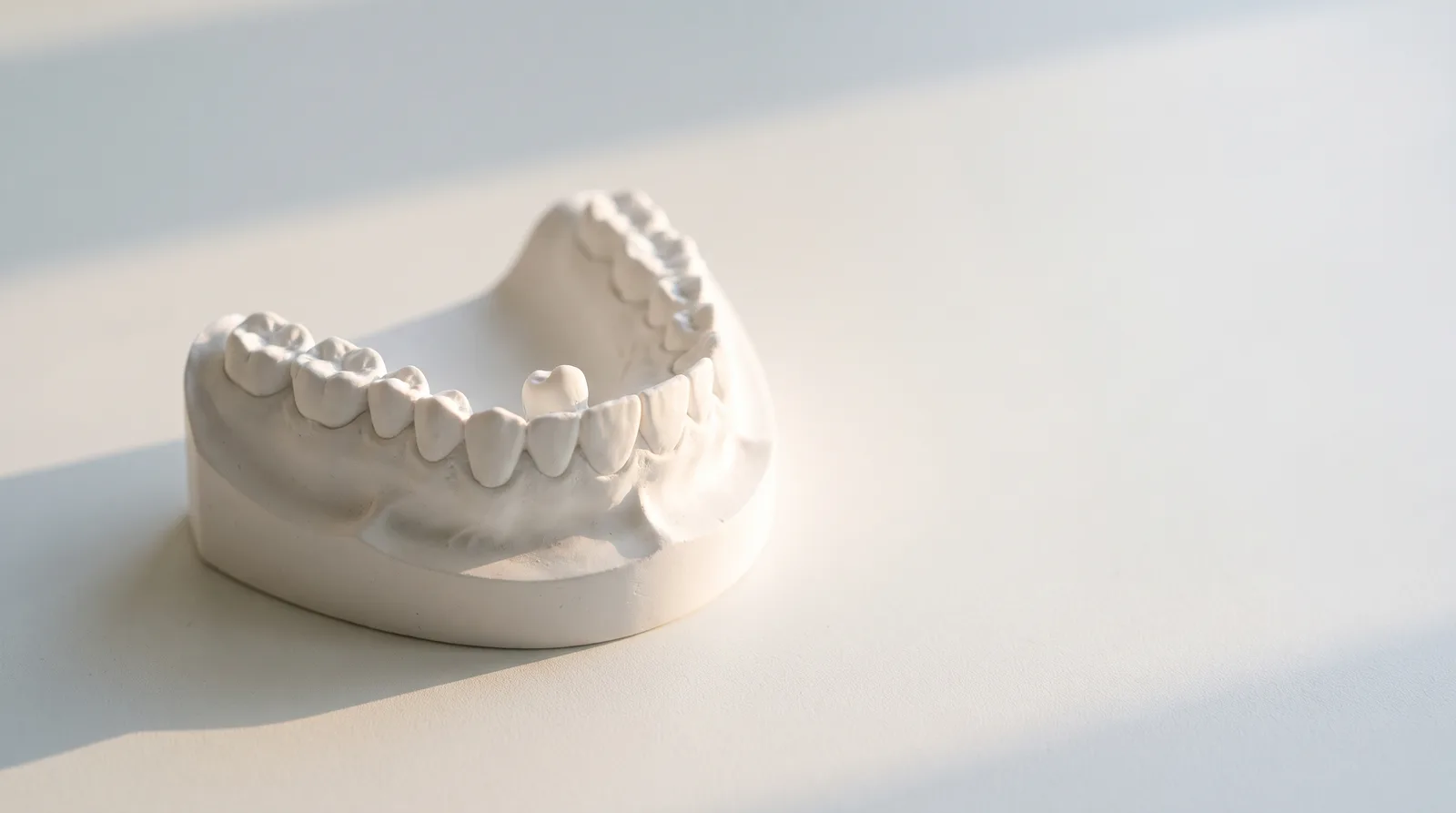
Dentists call an extra tooth a supernumerary tooth, and having one or more is called hyperdontia. A full set is 20 baby teeth and 32 adult teeth, counting wisdom teeth, so a mouth that develops more than this full set has extra teeth. An extra tooth can look like an ordinary tooth, or be small and cone-shaped. Most are single and many stay buried in the gum or bone, so counting teeth in the mirror will not find them.
Where it sits gives it a name. A mesiodens grows between the two upper front teeth, a paramolar beside a molar, and a distomolar behind the last molar.
They are uncommon. A 2025 review reports rates from about 0.1 to 3.6 percent of people, depending on the population studied. They are found most often in the upper jaw, usually at the front. One extra tooth is the usual pattern. Several are less common, and can be linked to a wider condition that a dentist or doctor would look into.
The exact cause is not fully understood. The most widely accepted idea is that the tissue that makes teeth is overactive, and genes and other factors may play a part.
Do extra teeth always cause problems?
No. They are often found by chance, for example on an X-ray taken for another reason, and they often cause no symptoms. Even so, in one 2022 school survey in India, 22 of the 56 children found to have an extra tooth also had a complication. Depending on where they are, extra teeth can:
- stop an adult tooth coming through, or push it out of position
- crowd or twist the teeth next to them, or leave gaps
- sometimes contribute to gum problems
- sometimes lead to a cyst, a fluid-filled sac, forming
Where extra teeth make a mouth crowded, StatPearls says careful cleaning and regular follow-up appointments are important.
An upper front tooth that has not come through can also change how a child’s smile looks. The Royal College of Surgeons of England’s guideline on unerupted upper front teeth notes it may affect confidence.
What do dentists look for in children?
Most upper middle front adult teeth come through at around 7 to 7.5 years, and problems with them are often noticed between 7 and 9. The guideline lists an extra tooth among the most common causes when one of them fails to appear. It lists injury to the baby teeth alongside it, so tell your dentist if your child ever had a knock to their baby front teeth.
The guideline says an upper front tooth can be considered late if the matching tooth on the other side came through more than six months earlier. It may also be late if the upper front teeth are still missing more than a year after the lower ones. An unusual order is another sign, for example the side front teeth coming through before the middle ones. It also asks the dentist to check for baby teeth that have stayed in much longer than expected. If a tooth is late, X-rays can show why.
When a dentist suspects an upper front tooth is stuck, the British Dental Journal authors say prompt referral to a local orthodontic unit is justified. An orthodontic unit is a specialist team that guides teeth into position. The authors say earlier referral gives better outcomes. One reason is that a younger tooth is more able to come through. Another is that nearby teeth have less time to drift into the gap.
The NHS advises taking a child to the dentist when their first baby teeth appear, or before they are 12 months old. It says the dentist can identify oral health problems at an early stage. Our guide to oral health and your children has more for parents.
Should an extra tooth be watched or removed?
There is no single rule. It depends on the tooth, where it sits and the person’s age.
Watching can be reasonable when:
- there is enough space in the dental arch and no complications arise, according to StatPearls, a medical reference
- taking it out could harm the nearby teeth, a reason listed in a 2022 paediatric dentistry paper
If a buried extra tooth is left in place, StatPearls says it should be checked on X-rays from time to time, to pick up any problem early.
Removal is more likely to be advised when:
- the tooth contributes to gum problems, interferes with function or makes other dental work harder, which StatPearls lists as common reasons to extract
- it blocks an adult tooth from coming through, since the Royal College of Surgeons of England guideline lists removing any obstruction to eruption among its general principles
What removal can involve for a child
The Royal College of Surgeons of England guideline describes taking out the extra tooth and, sometimes, uncovering the buried adult tooth and giving it a small fitting, so it can be guided into place later. Where removal is done under a general anaesthetic, the guideline says it is prudent to consider doing this at the same time. That can avoid a second general anaesthetic.
Retrospective studies, which look back at past cases, from 1981 to 2006 are summarised in the guideline. They found that between 49 and 91 percent of these adult teeth came through on their own after the extra tooth was removed. Some took up to 18 months. Across different studies, between 30 and 54 percent still needed further surgery. The guideline says there are no high-quality randomised trials, and that the right age for removal is not known.
The guideline also says the possible risks of treatment should be carefully explained to the patient and parents. These include the tooth failing to come through. It adds that in most cases treatment is successful.
The British Dental Journal authors say that where removal is done under a general anaesthetic, a full treatment plan should be made first. This will usually involve an orthodontic or paediatric dentistry assessment.
When to see a dentist
- you can see a tooth that looks extra, such as a small pointed one between or behind the upper front teeth
- an upper front adult tooth has not appeared more than six months after the matching tooth on the other side
- the side front teeth have come through before the middle ones
- a baby front tooth is still firmly in place long after the matching one on the other side fell out
- an adult tooth is coming through in the wrong place, or teeth look crowded, twisted or gapped
- you find it hard to keep one area clean
Some signs need a faster response. The NHS lists intense toothache or gum pain, a swollen face or jaw, and a bad taste in your mouth among the signs of a dental abscess. It says a tooth that has not grown out of the gum properly (an impacted tooth) is one cause of an abscess.
The NHS says a dental abscess needs urgent treatment by a dentist. It advises asking for an urgent dentist appointment, or getting help from NHS 111, if you think you have one. It says to call 999 or go to A&E if you find it hard to breathe, speak or swallow. It gives the same advice if you have a swollen or painful eye, or suddenly have problems with your eyesight. It also says to call 999 or go to A&E if you have a lot of swelling in your mouth, or find it hard to open your mouth.
What we would do
If you are new to TG’s Dental Suite and an extra tooth is on your mind, a new patient exam is the first step. We examine your teeth, gums and soft tissues, and take small X-rays where needed to check what a visual exam cannot show. If your dentist needs a wider view of the jaw, they may suggest a panoral X-ray, known as an OPG, one of the dental X-rays and scans we offer.
For younger patients, our children’s dentistry appointments include two examinations a year, which keep track of how a child’s teeth and jaw are developing.
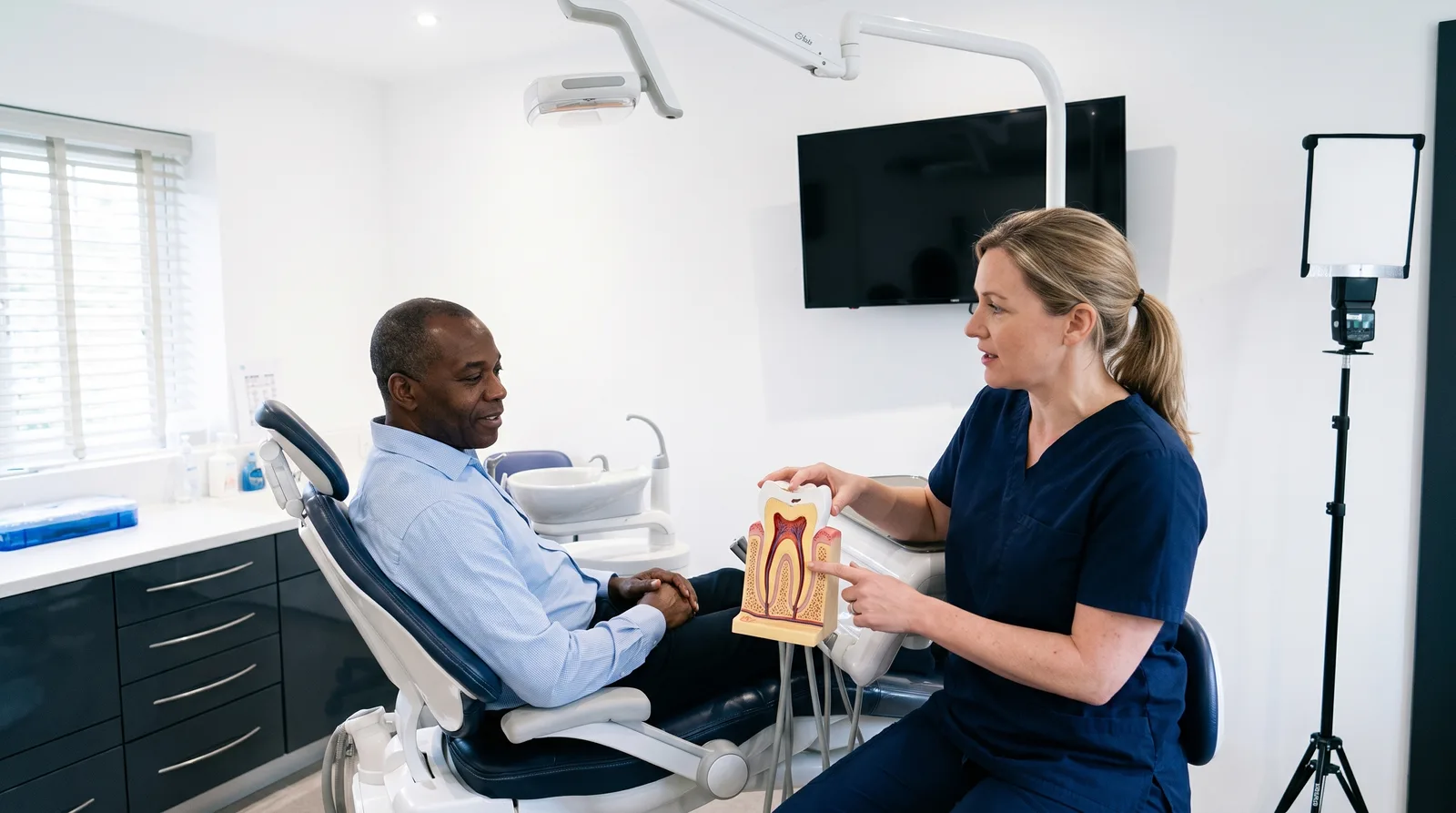
At a check-up, a dentist can look at an extra tooth, or an adult tooth that seems late. They can explain whether it can simply be watched or needs more attention.
Want us to take a look?
Book an appointment at whichever of our five practices suits you. We will check what is going on and talk you through your options.
Questions this guide answers
Do extra teeth always need to be removed?
No. A dentist may suggest watching an extra tooth when there is enough space and it is causing no problems. A buried one left in place is checked on X-rays from time to time. Removal is more likely to be advised when it affects gum health, gets in the way of normal function, or blocks an adult tooth.
How are extra teeth found?
Often by chance, on an X-ray taken for another reason. They are also found when an adult tooth is late arriving, and the dentist takes X-rays to see why.
Can an extra tooth stop my child’s adult tooth coming through?
Yes, it can. The Royal College of Surgeons of England lists extra teeth among the most common causes of an upper front adult tooth failing to come through. If a tooth is late, your dentist can take X-rays to see why, and explain what they advise next.
Can adults have extra teeth, or only children?
Both. Extra teeth can form among baby teeth or among adult (permanent) teeth, so adults can have them too. They are often found by chance, for example on an X-ray taken for another reason.
Sources (7)
- Dental abscess
- Children’s teeth
- Management of unerupted maxillary incisors (2022 update)
- What to spot and what not to miss: key anomalies during the developing dentition
- Supernumerary teeth: a pictorial review and revised classification
- Developmental disturbances of the teeth, anomalies of number
- Prevalence of supernumerary teeth and its associated complications among school-going children between the ages of 6 and 15 years of Jamshedpur, Jharkhand, India