Why do I have white spots on my teeth?
Many white spots are early decay, often around braces, where plaque has drawn minerals out of the enamel. Others come from too much fluoride in early childhood or from enamel that did not form fully. A dentist can tell which.
On this page
Noticing chalky white marks on your teeth, or on your child’s, usually raises one question: is this serious? Some marks only affect how teeth look, but others are an early sign of decay, and the two can look alike.
What causes white spots on teeth?
There is no single cause. A dentist works out which one applies first, because the cause changes what helps.
Early enamel damage from plaque
Plaque is a film of bacteria that coats teeth. If it stays put, the enamel just beneath the surface loses minerals and becomes slightly porous, which makes it look chalky, especially when dry. This early stage is known as a white spot lesion, and a 2025 expert consensus describes it as an early sign of decay. The NHS lists white, brown or black spots among the symptoms once decay has gone further, and says a dentist can prescribe fluoride treatments to reverse early decay. Acid wear is a different problem, covered in our guide to enamel erosion.
Braces
Brackets and wires make teeth harder to clean, so plaque collects around them. The same 2025 consensus reports that rates of white marks after braces range widely, from about a quarter to three quarters of people, depending on how they are measured. It names poor cleaning before and during treatment, and braces worn for more than three years, among the risk factors.
Fluorosis
Fluoride protects teeth from decay, and it is found in most toothpaste and some public water supplies. If a young child swallows too much while their adult teeth are forming, the enamel can develop fluorosis. The UK Health Security Agency says that in England it usually looks like paper-white flecks or lines, from barely visible to patches that some people dislike. It can only develop while the teeth are forming in the jaw, so it does not appear later on teeth that have already formed.
Enamel that did not form fully
Sometimes enamel is softer than usual (hypomineralisation) or thinner than usual (hypoplasia). One common form is molar incisor hypomineralisation (MIH), which affects the first adult molars and often the front teeth, leaving white, yellow or brownish patches. The British Society of Paediatric Dentistry estimates that about one child in eight in the UK has it, and says its cause is not fully understood. It also says affected back teeth are more likely to crumble or decay and may be sensitive, so they are worth having checked.
What can you do yourself?
Home care is about protecting enamel and preventing new marks. If you already have one, a dentist can tell you whether it needs anything more.
- Brush for about 2 minutes twice a day with fluoride toothpaste, last thing at night and once more, then spit and do not rinse.
- Clean between your teeth every day with floss or interdental brushes.
- Go easy on sugary food and drink.
- With braces, the NHS also advises brushing after meals and using an interdental brush under the wires daily.
- Leave whitening to a registered dental professional. The NHS says whitening at beauty salons, or with kits bought from a pharmacy or online, may not work as well and could harm your teeth and gums.
For children, the NHS advises a smear of toothpaste under 3 and a pea-sized amount from 3 to 6, with supervised brushing until at least 7. Government guidance for dentists says the front adult teeth are only at risk of noticeable fluorosis from fluoride swallowed before about age 3, and the premolars before about 6. It also says daily fluoride mouthwash, used at a different time from brushing, can be considered from age 8, so ask your dentist before giving it to a younger child. Our guide to oral health and your children is written for parents.
Do white spots go away?
It depends on the cause. The NHS says a dentist can prescribe fluoride treatments such as a mouthwash or varnish to reverse early decay. The British Society of Paediatric Dentistry says MIH patches on front teeth can become less obvious over time, though sometimes they still bother people.
For marks on the front teeth from fluorosis or MIH, treatment is usually about appearance, and only if they bother you. Back teeth affected by MIH are different: the enamel is more likely to crumble, decay or feel sensitive, so your dentist may suggest extra protection or a filling.
What can make them less noticeable?
A dentist may talk you through a few routes, depending on the cause and your age.
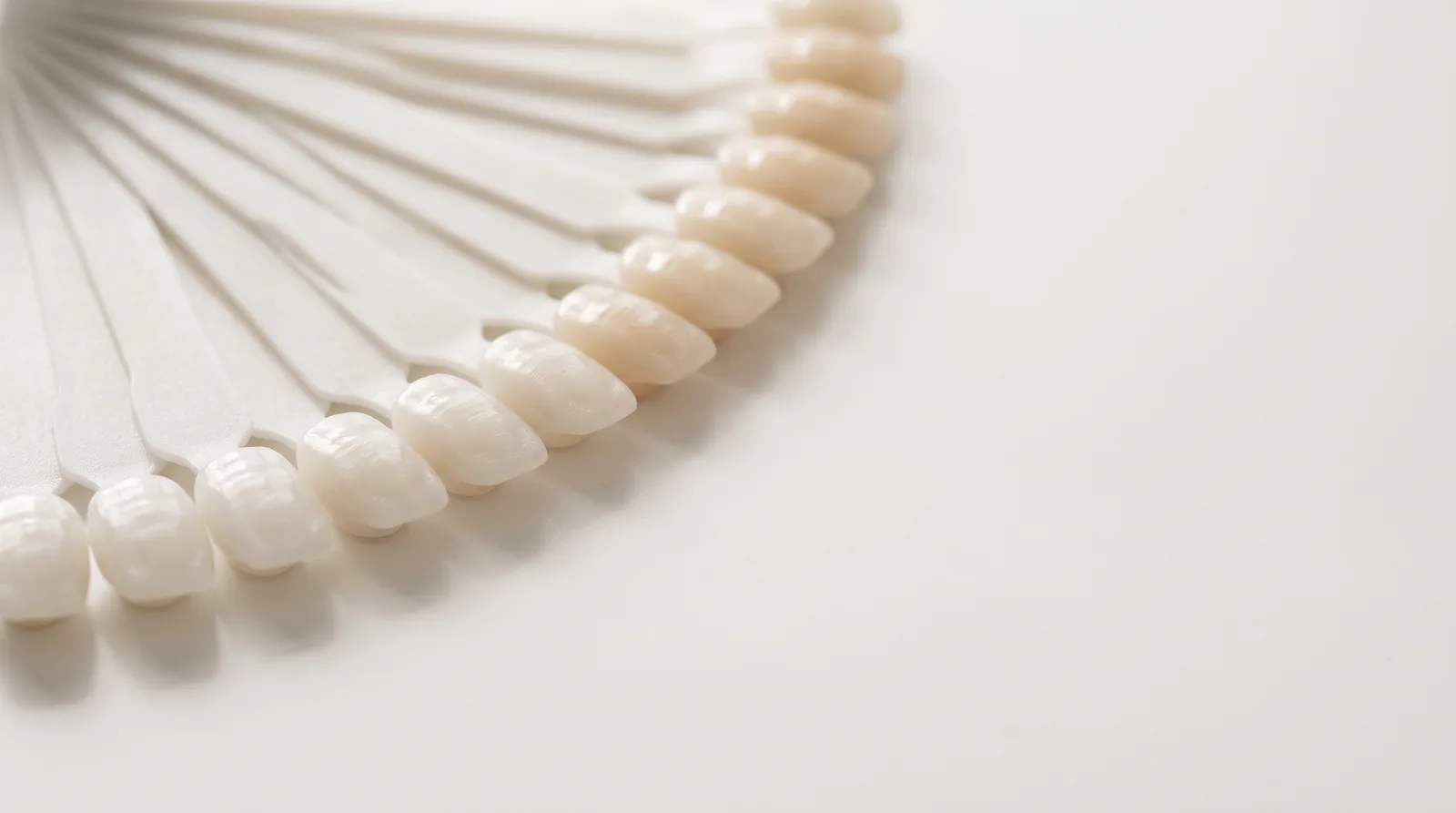
- Whitening lightens natural teeth overall. The expert consensus says it can disguise white spot lesions but does not treat them, and that there is still no clear evidence for its clinical use on them, because the encouraging results so far come from laboratory studies. The NHS says a dentist should check your teeth and gums first, and that it is not done for anyone aged 17 or under.
- Tooth-coloured filling material, as used in composite bonding, can mask marks on front teeth. The British Society of Paediatric Dentistry describes it as masking with a veneer of special plastic filling material.
- Veneers are thin shells over the front of a tooth. They are a bigger step, because a small amount of enamel is removed and the change cannot be undone.
For young permanent teeth, the British Society of Paediatric Dentistry says the risks and benefits of early cosmetic treatment need careful thought.
When to see a dentist
Early decay can cause no symptoms at all, according to the NHS, so a mark that does not hurt can still be worth checking.
- a white mark is new, or changes colour or texture
- a tooth is sensitive or painful
- a child finds brushing their back teeth uncomfortable, which the British Society of Paediatric Dentistry says can be one of the first signs of MIH
- a child’s new adult teeth come through with white or yellow patches
- you have braces and notice chalky marks around the brackets
What we would do
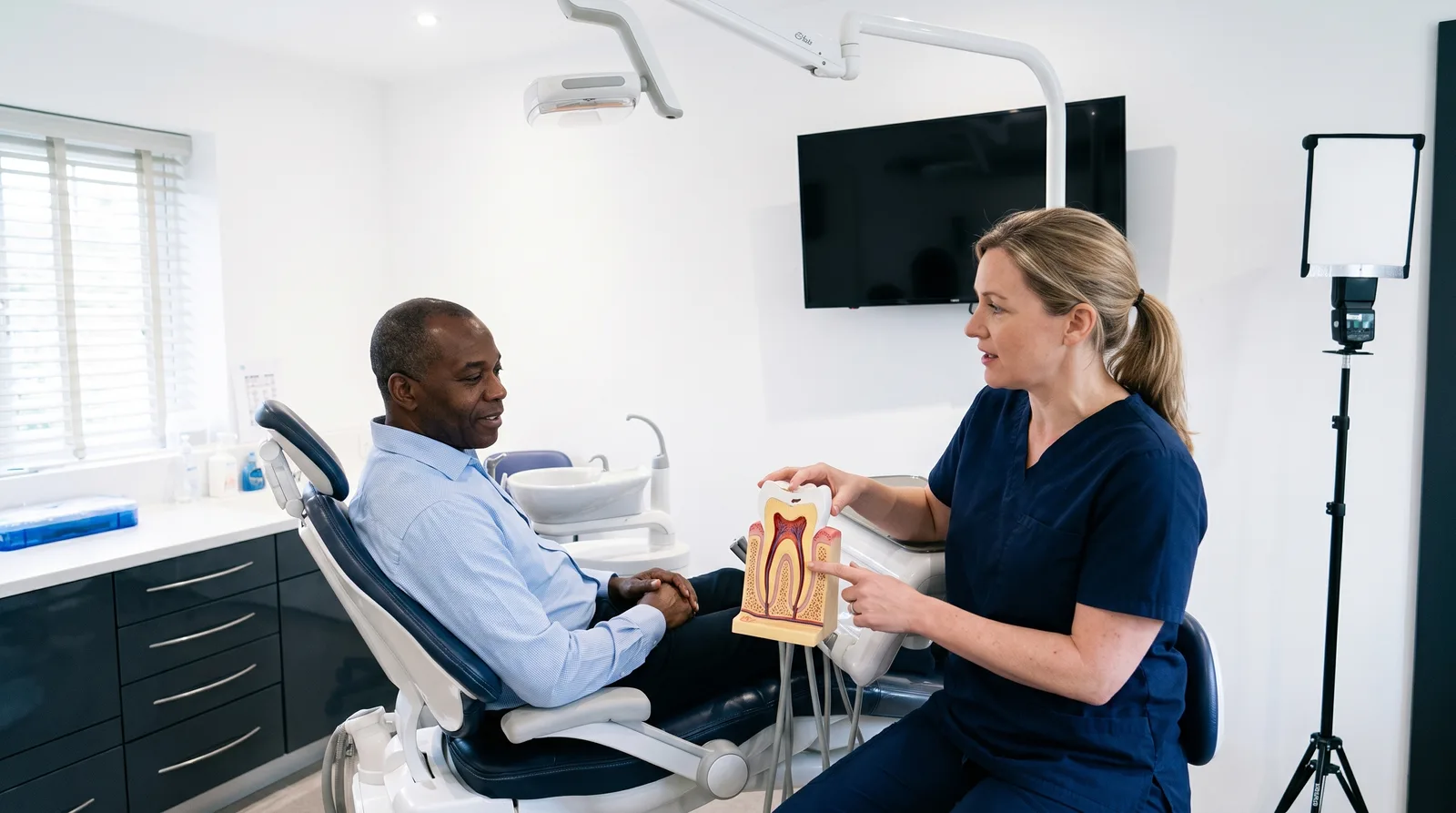
To find out what is behind the marks, a new patient exam comes first. We examine your teeth, gums and soft tissues, take small X-rays where needed, and explain any options in plain language. Our hygiene appointments remove plaque and tartar and include advice on brushing and flossing. For younger patients, our children’s dentistry page explains how we look after them.
If a mark bothers you, composite bonding uses tooth-coloured resin and is usually finished in one visit. Teeth whitening is assessed by your dentist first, and veneers are the larger step described above. Which one suits you, if any, depends on the cause.
If a white mark worries you, book an appointment and your dentist can look at it.
Want us to take a look?
Book an appointment at whichever of our five practices suits you. We will check what is going on and talk you through your options.
Questions this guide answers
Are white spots on teeth always a sign of decay?
No. Many are early decay, including the chalky marks that can form around braces. Others come from fluorosis or from enamel that formed weakly. Only a dentist can tell which you have, so it is sensible to have new marks checked.
Can teeth whitening remove white spots?
One expert consensus says whitening can disguise white marks but does not treat them, and that there is no clear evidence yet that it helps them in patients. A dentist checks your teeth and gums first to see whether whitening suits you.
Will white marks from braces go away?
It depends on the cause and how early it is caught. The NHS says fluoride treatments from a dentist can reverse early decay. Your dentist or orthodontist can tell you what kind of mark you have and what to expect.
Can my child get white spots from too much fluoride toothpaste?
Fluorosis can develop if a young child swallows too much fluoride while their adult teeth are forming. The NHS advises a smear of toothpaste under 3 and a pea-sized amount from 3 to 6, with spitting out rather than rinsing.
Sources (8)
- Tooth decay
- How to keep your teeth clean
- Braces
- Teeth whitening
- Delivering better oral health: an evidence-based toolkit for prevention, chapter 9: fluoride
- Water fluoridation: health monitoring report for England 2026
- Molar Incisor Hypomineralisation (MIH): a BSPD position paper on the dental condition affecting 1m UK children
- Expert consensus on the prevention and treatment of enamel demineralization in orthodontic treatment