Your child’s teeth: tips for parents
Brush with fluoride toothpaste from the first tooth, twice a day, and keep helping, usually until at least 7. Keep sugary food and drink to mealtimes, and take your child to a dentist by their first birthday.
On this page
Looking after your child’s teeth sounds simple until a toddler clamps their mouth shut at bedtime. If brushing is a daily negotiation in your house, you are far from alone. A 2021 review of 68 studies on brushing for children under 8 looked at what makes it hard. Refusal, a child who wants to do it alone, a tired child at night and busy schedules were among the barriers it listed. Milk teeth are worth the effort: the NHS says they hold space for the adult teeth that come later, and our guide to loose baby teeth covers what happens when they start to wobble.
How much toothpaste, how often and who brushes
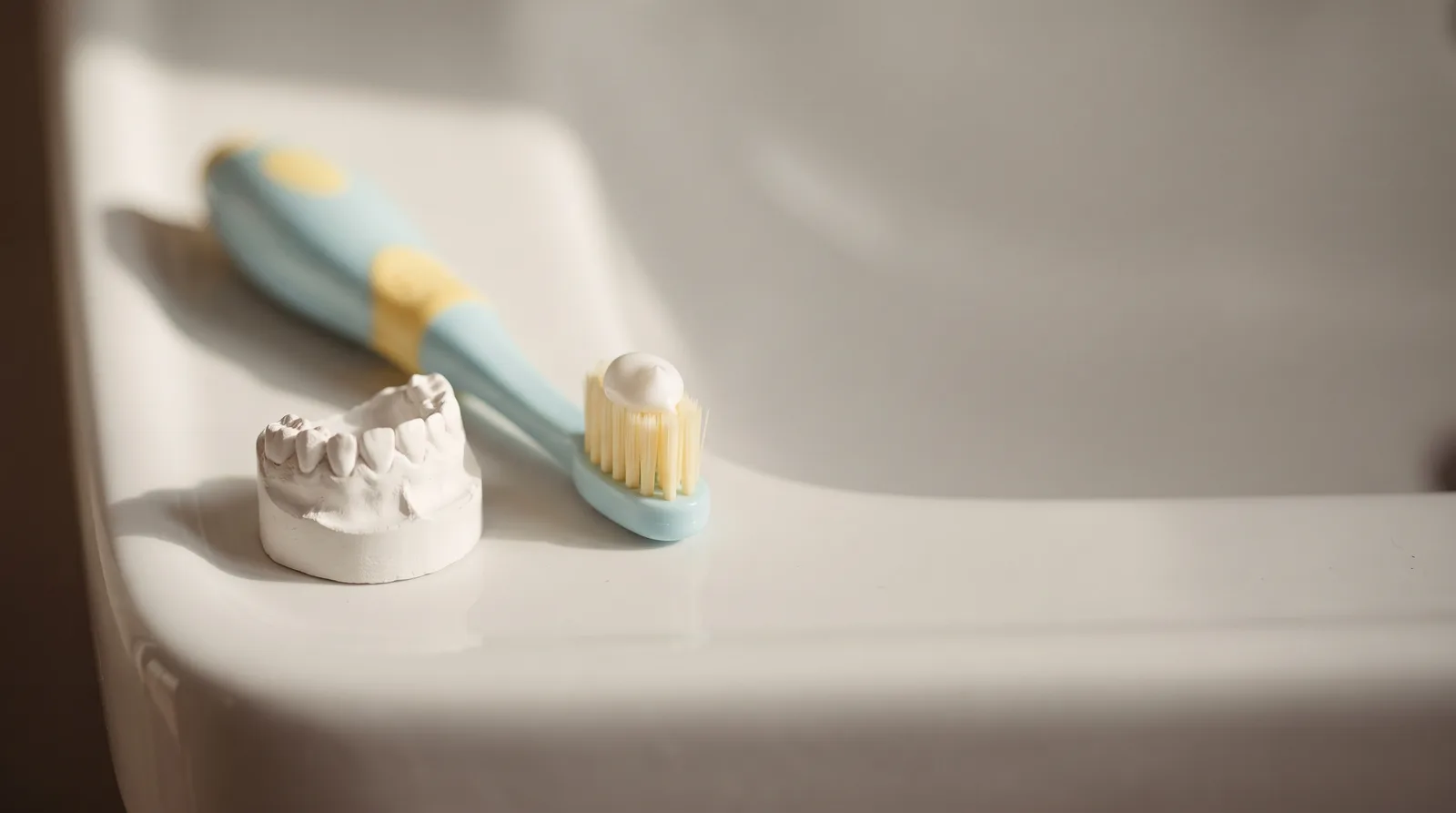
The NHS says to start as soon as the first milk tooth breaks through, usually at around 6 months but sometimes earlier or later. Choose a fluoride toothpaste, because fluoride helps prevent and control decay. Brush twice a day for about 2 minutes: last thing at night, and once more at a time that suits you.
| Age | What UK guidance says |
|---|---|
| Up to 3 | A smear of toothpaste. A parent or carer brushes. |
| 3 to 6 | A pea-sized amount. Help your child brush, usually until at least 7. |
| 7 and over | Your child should be able to brush alone, but it is still worth watching. |
From 3 to 6, most UK guidance says to keep helping your child brush until they are at least 7, and the government toolkit for dental teams says a parent or carer should brush. One NHS page puts it more lightly and says to encourage your child to brush while you supervise. If you are unsure how much to help, your dentist can advise.
Habits for every age:
- Spit out afterwards and skip the rinse. The NHS says rinsing with water washes the fluoride away.
- Do not let your child eat or lick toothpaste from the tube, and keep it out of reach.
- Use a small, soft brush made for their age. The NHS advises replacing it every 3 months, or sooner if the bristles are damaged.
Toothpaste boxes show the fluoride strength in parts per million (ppm). The NHS gives at least 1,000ppm up to age 3, 1,000 to 1,500ppm from 3 to 6, and 1,350 to 1,500ppm from 7. For children up to 3 it adds that a dentist may advise a family toothpaste with more fluoride, between 1,350 and 1,500ppm. If you are not sure which suits your child, ask your dentist. Our guide to fluoride and your teeth explains more about toothpaste strengths.
Making brushing easier
Not every child likes brushing, and the NHS says you may have to keep trying. Managing only a little at first is fine: the aim is to make it part of the daily routine. If the routine is a struggle, the NHS says you can talk to your midwife, health visitor or other health professional.
- Make it a game, or brush together. The NHS suggests brushing your own teeth at the same time, then helping your child finish theirs.
- Use a timer or a song. An egg timer makes about 2 minutes easier to judge, and an NHS page on baby and toddler tooth care links a two-minute toothbrushing song.
- Let them see and feel. A mirror shows your child where the brush is working, and guiding their hand lets them feel the movement.
- Get comfortable. Sit a baby on your knee with their head resting against your chest.
- Brush gently, and keep still. The NHS advises small circles over every surface, including the gums and behind the teeth. It warns against letting children run around with a toothbrush in their mouth, in case of an accident.
The 2021 review found that what gets in the way of brushing differs between families. A child’s temperament and a parent’s time were among the factors, and its authors call for support that fits each family. Treat these as ideas to try, and keep what works.
Food, drink and teeth
The NHS says sugar causes decay, and that it is not only the amount that counts but how long and how often teeth are in contact with it. Our guide to sugar and your teeth covers daily limits by age.
- Drinks. The NHS recommends plain milk and water for young children, and says fizzy drinks, juice drinks and sugary squash can all lead to decay. If you give fruit juice, it advises mealtimes only, 1 part juice to 10 parts water, and no more than one 150ml drink a day.
- Timing. Keep sugary food and drink to mealtimes, and avoid sugary snacks between meals and at bedtime.
- Baby pouches. Food sucked straight from a pouch can cause decay, the NHS says, as it can hold natural sugars that are not always labelled clearly.
- Bottles. Only breast milk, formula or cooled boiled water belongs in one, and the NHS says water can be given from around 6 months. It says to offer a free-flowing cup without a valve from 6 months, and not to encourage bottles after age 1.
- Dummies. If your child uses a dummy, the NHS says never to dip it in anything sweet, such as sugar or jam (see our guide to dummies and thumb sucking).
- Bedtime. At bedtime or overnight, give only breast milk, formula or cooled boiled water, says the NHS.
- Treats. Instead of sweets or biscuits, the NHS suggests stickers, crayons, colouring books or bubbles, and asking relatives and friends to do the same.
- Medicines. If your child needs medicine, ask a pharmacist or GP whether there is a sugar-free option.
Going to the dentist
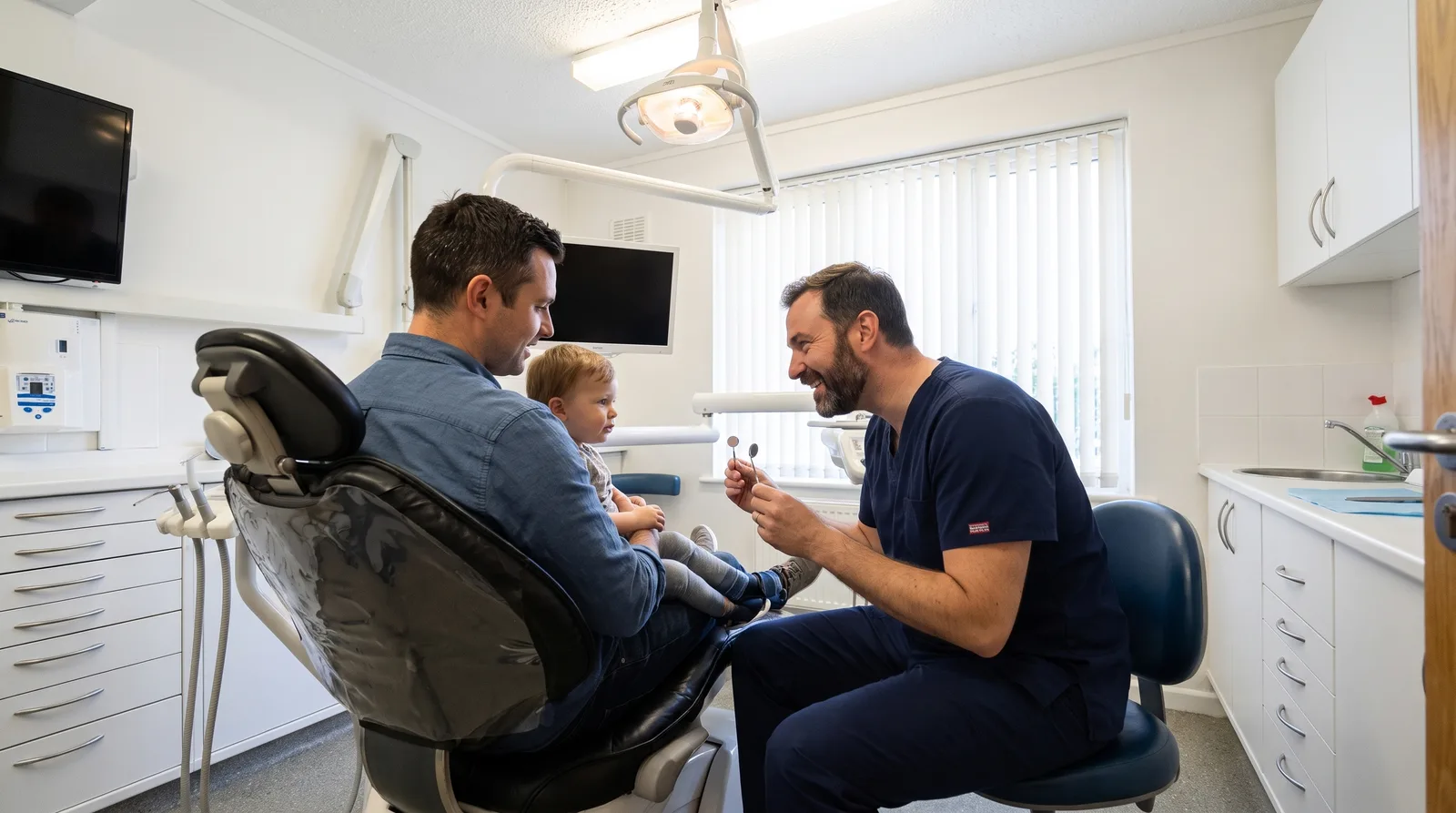
The NHS advises taking your child when their first milk teeth appear, or before they are 12 months old, so they become familiar with the place and get to know the dentist. The dentist can advise on preventing decay and spot problems early, and just opening their mouth for a look is useful practice. Our guide to your child’s first dental visit covers what to expect.
Your own attitude helps. The NHS says to be positive about the visit and make the trip fun, which stops your child worrying about future visits. Taking your child to your own appointments helps too, says the NHS.
Your dentist sets how often to come back. The government toolkit for dental teams gives a range of 3 to 12 months, based on your child’s needs and risk of decay. The NHS says NHS dental care for children is free, and that from age 3 children should be offered fluoride varnish at least twice a year. Fissure sealants, a thin plastic coating on the chewing surfaces of the back teeth, can be applied once the adult back teeth start to come through, usually at about 6 or 7.
When to see a dentist
The NHS says decay may cause no symptoms at first, so check-ups matter when nothing hurts.
- white, brown or black spots on a tooth
- toothache, or a sharp pain when eating or drinking something hot, cold or sweet (see our guide to toothache causes)
- gums that are painful, swollen or bleed when brushing
- no check-up in the past year (the NHS says anyone under 18 should see a dentist at that point)
- a first tooth through, or a first birthday near, and no dentist visit yet
Intense toothache, a swollen face or jaw, or a high temperature can be signs of a dental abscess (see our guide to tooth infection and abscess). The NHS says an abscess will not clear up by itself and needs urgent treatment from a dentist. It advises asking for an urgent dentist appointment or getting help from NHS 111, and not going to a GP surgery, because a GP cannot give dental treatment.
The NHS says to call 999 or go to A&E if your child:
- finds it hard to breathe, speak or swallow
- has a swollen or painful eye, or their eyesight suddenly changes
- has a lot of swelling in their mouth
- finds it hard to open their mouth
If your child knocks out a tooth, ask for an emergency dentist appointment straight away, or call NHS 111 if you cannot get one. Never put a baby tooth back in, as it could damage the tooth growing underneath. An adult tooth can often be saved: hold it by the white part, not the root, and put it back in the gum, or keep it in milk, until you see a dentist.
What we would do
Our children’s dentistry page explains how we look after younger patients from their first visit, with appointments kept short, unhurried and paced to how your child is feeling.
Our children’s membership plans cover two dental examinations a year and general dentistry, including scale and polish, with fillings and extractions where the dentist judges them necessary. Dentally fit children under 6 are seen free where an older sibling, parent or guardian holds an existing membership plan at the practice.
We are a private practice and are not accepting NHS patients, so you would look to an NHS dentist for the free NHS dental care that children can get. Ask your dentist at your child’s check-up whether fluoride varnish or fissure sealants would help.
If you would like to arrange a first visit or a check-up for your child, book an appointment at whichever of our five practices suits you.
Want us to take a look?
Book an appointment at whichever of our five practices suits you. We will check what is going on and talk you through your options.
Questions this guide answers
When should I start brushing my baby’s teeth?
The NHS says to start as soon as the first milk tooth comes through, usually at around 6 months but sometimes earlier or later. Use a smear of fluoride toothpaste up to age 3, then a pea-sized amount from 3 to 6.
What can I do if my child will not let me brush their teeth?
Refusal is a common barrier, according to a 2021 review of 68 studies. The NHS suggests making it a game, brushing your own teeth at the same time, or timing it with an egg timer. It also says not to worry if you manage only a little at first: the daily routine is what matters.
Can my child drink fruit juice?
The NHS recommends plain milk and water for young children. If you give fruit juice, keep it to mealtimes, dilute 1 part juice with 10 parts water, and give no more than one 150ml drink in a day.
How often should my child see a dentist?
Your dentist sets this by your child’s needs and risk of decay. The government toolkit for dental teams gives a range of 3 to 12 months, and the NHS says to see a dentist if someone under 18 has not had a check-up for a year.
Sources (8)
- Children’s teeth
- Looking after your baby’s teeth
- How to take care of your baby or toddler’s teeth
- Tooth decay
- Dental abscess
- Knocked-out tooth
- Delivering better oral health: an evidence-based toolkit for prevention, chapter 2: summary guidance tables for dental teams
- Facilitators and barriers to home-based toothbrushing practices by parents of young children to reduce tooth decay: a systematic review