Looking after your dental crowns
A crown covers a tooth, but plaque can still build up where it meets the gum, so daily brushing, cleaning between your teeth and regular check-ups still matter. See a dentist if a crown feels loose or comes off.
On this page
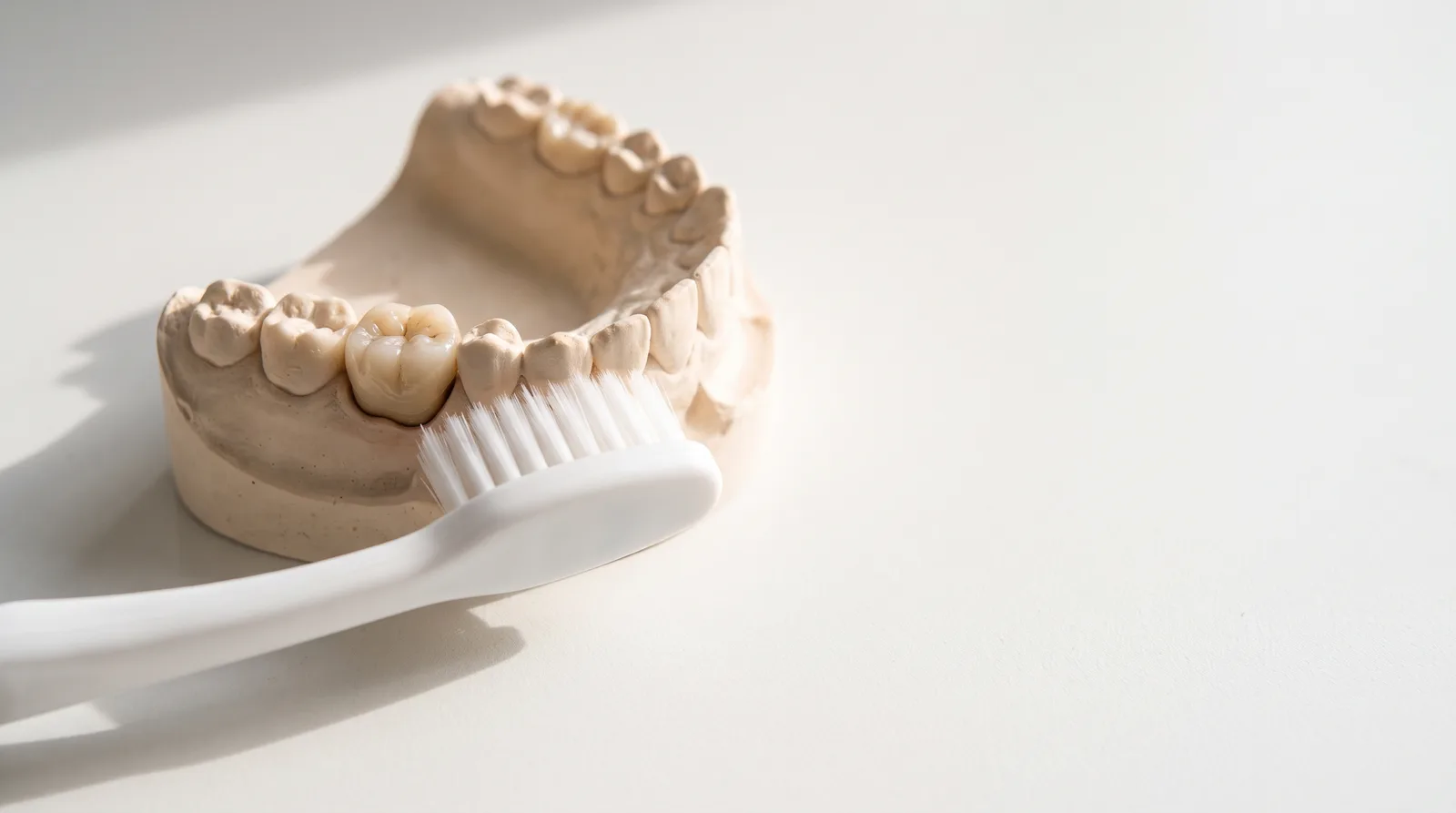
The Oral Health Foundation describes a crown as a custom-made cover that fits over a tooth and restores its shape, strength and appearance. Once yours is fitted, the usual questions are how to clean around it and how long it will last. Nobody can promise a figure for the second.
What a crown covers, and what it does not
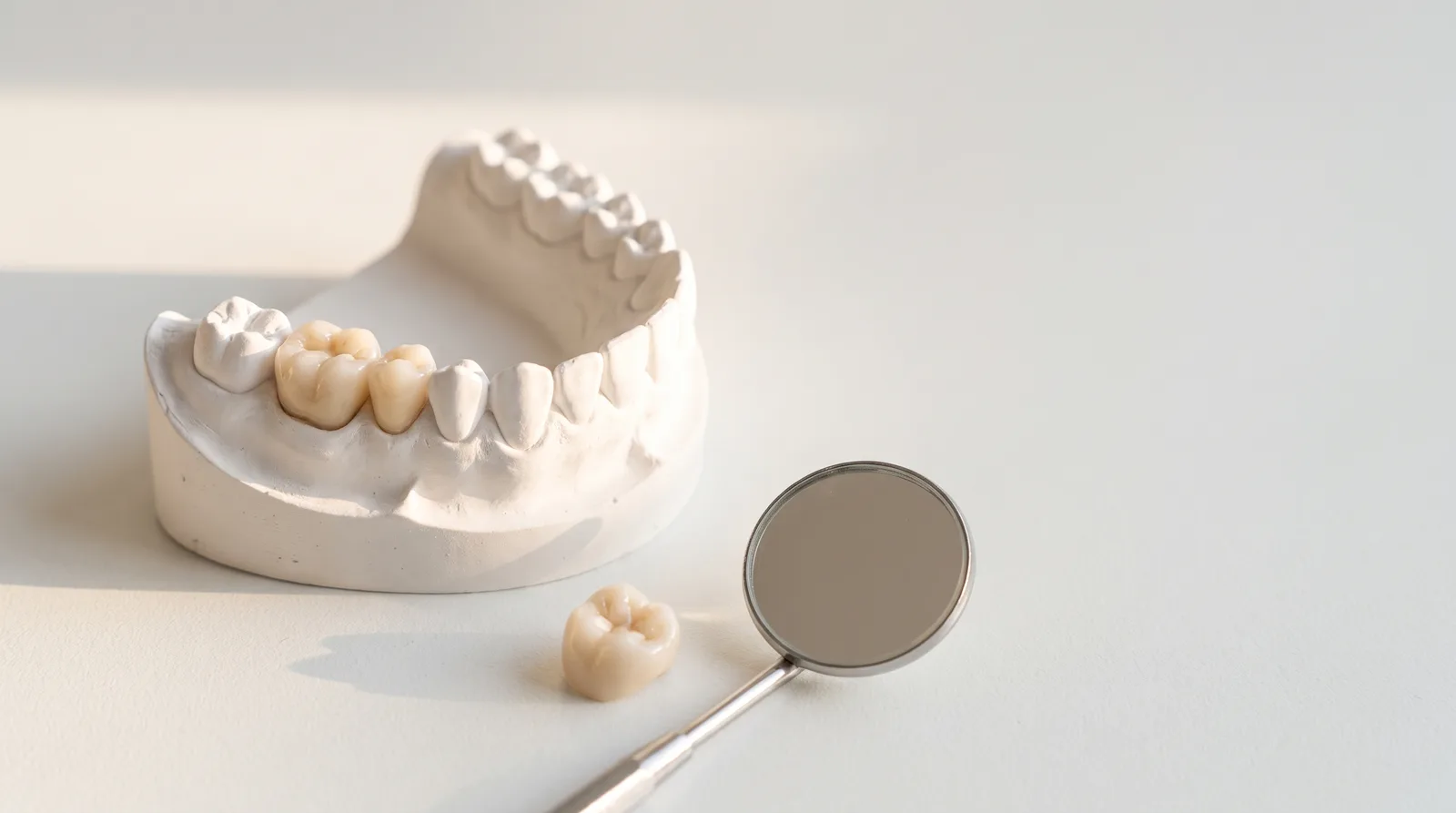
A crown fits over the remaining part of a tooth and is fixed in place, so you cannot take it out, according to the Oral Health Foundation. Dentists recommend crowns for several reasons, among them a badly broken tooth, a weakened tooth with a large filling, and a tooth that has had root canal treatment.
Underneath the crown is still your own tooth, and around its edge is still your gum. The NHS describes plaque as a film of bacteria that coats teeth and says it contributes to gum disease and tooth decay. A 2022 review looked at fixed restorations such as crowns and bridges. It says a gap or poor fit at the crown edge can lead to more plaque, decay coming back and gum problems. The same review says crown edges under the gum are harder to keep clean than edges above it. That makes daily cleaning and regular check-ups matter more. It is a narrative review, which summarises earlier research rather than pooling it, so treat it as background.
Cleaning around a crown
The routine for a crown is the one the NHS gives for natural teeth, and the Oral Health Foundation’s crown advice matches it. Your dentist or hygienist can show you how to reach the gum line around yours.
- Brush for about 2 minutes with fluoride toothpaste, last thing at night and once more during the day.
- Spit out afterwards and do not rinse straight away, so the fluoride stays on your teeth, the NHS says.
- Clean between your teeth once a day with floss or interdental brushes. The NHS does not advise wooden toothpicks, which can damage the gums. Our guide to cleaning between your teeth explains the options.
- Cut down how often you have sugar. A Leeds Teaching Hospitals NHS Trust leaflet says this, with brushing and cleaning between your teeth, helps to preserve your crown and your natural teeth. See sugar and your teeth.
- Keep your check-ups. The same leaflet says regular visits to your dentist and hygienist help maintain your oral health.
- Avoid biting hard objects such as ice, the Oral Health Foundation advises.
With a laboratory-made crown you usually have a temporary one first. The Leeds leaflet says the dentist fixes it with temporary cement while the laboratory makes the permanent crown, and that it is easily removed when the permanent crown is ready. Ask what to avoid while it is in place.
Grinding, clenching and knocks
Grinding or clenching can lead to worn-down or broken teeth and to the loss of teeth and fillings, the NHS says. It does not single out crowns. A dentist may recommend a mouth guard or splint, worn at night, to protect your teeth. The Leeds leaflet lists clenching or grinding among the situations where a crown may not be suitable. Tell your dentist if you grind before a crown is made, and afterwards if you start. Our guide to teeth grinding goes into more detail.
If you play contact sports, ask about a mouthguard. Our sports mouthguard page explains that ours is made from an impression of your own teeth and cushions your teeth, lips and jaw.
Can you whiten a crown?
No. The NHS says whitening can only lighten natural teeth, and does not recommend it if you have crowns, dentures or implants. A crown does not lighten the way natural teeth do, so a difference in shade can appear. We usually suggest whitening before a new crown is made so the crown can be matched, and our teeth whitening guide covers the rest.
How long does a crown last?
The sources give general ranges, and none can speak for your tooth. The Oral Health Foundation says crowns can last many years if they are well cared for, and that your dentist can give you an idea for yours. The 2025 Leeds leaflet, from the trust’s restorative dentistry department, gives around 8 to 10 years for a crown or veneer that is properly cared for. It says this depends on regular check-ups, careful brushing and flossing, and a low-sugar diet. Our crowns page says a well-fitted crown can last many years, depending on the material and how it is cared for.
Material also plays a part. The Oral Health Foundation describes gold crowns as very durable and usually used on back teeth, and all-porcelain crowns as very natural-looking but not as strong as some other options. Your dentist will talk through which suits the tooth.
If a crown feels loose, chips or comes off
The Scottish Dental Clinical Effectiveness Programme (SDCEP) publishes guidance for health professionals, with UK-wide relevance, on acute dental problems. It groups loose or displaced crowns with cracked teeth and lost fillings. The signs it lists for the group include pain, tenderness when biting and sensitivity to hot, cold or sweet things or to chewing. They also include a sharp edge on a tooth, inflamed gum and decay coming back.
SDCEP lists three options for a dentist to consider: recementing the crown, covering the tooth temporarily or making a new crown. It says recementing depends on how sound the tooth underneath is and whether a new crown is needed. The sources we read give no steps for a loose crown at home, so contact your dental practice and ask what they advise.
SDCEP also says that if someone has, or may have, breathed in a piece of tooth, a filling or another restoration, they need emergency care through NHS 111. The NHS dental abscess page says to call 999 or go to A&E if you find it hard to breathe, speak or swallow. Its full list is below.
When to see a dentist
Some signs need emergency help rather than a routine appointment. A crowned tooth can still get decay or gum disease, which the NHS lists among the causes of a dental abscess, a build-up of pus caused by infection. The NHS dental abscess page says to call 999 or go to A&E if:
- you find it hard to breathe, speak or swallow
- you have a swollen or painful eye, or suddenly have problems with your eyesight
- you have a lot of swelling in your mouth
- you find it hard to open your mouth
Do not drive yourself to A&E, the NHS says: ask someone to drive you, or call 999 and ask for an ambulance. The NHS lists signs of an abscess that include intense toothache or gum pain, a swollen face or jaw, a bad taste in your mouth and a high temperature. If you think you have one, it says to ask for an urgent dentist appointment or get help from NHS 111. It says not to go to a GP surgery, because a GP cannot give dental treatment. Our guide to tooth infection and abscess covers the signs in detail.
For other problems with a crown, SDCEP says pain that painkillers do not relieve needs urgent dental care. Pain that has eased, or is not a big part of the problem, calls for non-urgent dental care. Ask your pharmacist about pain relief.
- a crown feels loose, has come off or has chipped
- a crowned tooth is sore, tender to bite, or sensitive to hot, cold or sweet things
- the gum around a crown looks inflamed
- an edge on the crown or tooth feels sharp
- you grind or clench your teeth and have tooth damage or sensitive teeth
What we would do
If a crown has loosened or come off, call your nearest practice. Our emergency dentist page lists a lost crown among the problems we see urgently, and the team will tell you the soonest appointment they can offer.
For routine care, a new patient exam looks at your teeth, gums and soft tissues. Where needed, small X-rays check for things a visual exam cannot show, such as decay between teeth or below the gum line. Our dental hygiene appointments remove plaque and tartar your toothbrush cannot reach and include brushing and flossing advice.
If you are thinking about a crown, our dental crowns page describes the options. Crowns are custom-made in porcelain, all-porcelain or gold in a dental laboratory and fitted over two visits, with a temporary crown in between. Our CEREC system can instead design and mill a ceramic crown in the practice in a single visit. Which suits a tooth depends on the tooth, and your dentist will explain the choice.
If a crown feels different, or it is a while since anyone looked at it, book an appointment and tell us what you have noticed.
Want us to take a look?
Book an appointment at whichever of our five practices suits you. We will check what is going on and talk you through your options.
Questions this guide answers
Can the tooth under a crown still get decay?
Yes. A crown covers the tooth, but plaque can still collect where it meets the gum. A 2022 review says a poor fit at the crown edge can lead to more plaque, decay coming back and gum problems. Daily cleaning removes plaque, and your dentist can check the crown at your regular check-ups.
How should I clean around a crown?
The Oral Health Foundation advises brushing for 2 minutes with fluoride toothpaste, last thing at night and once more in the day, and cleaning between your teeth once a day. Your dentist or hygienist can show you how to reach the gum line.
Can I whiten a crown?
No. The NHS says whitening only lightens natural teeth and does not recommend it if you have crowns. If you are thinking about whitening, talk to your dentist first.
What should I do if my crown comes off?
Contact your dental practice. SDCEP guidance lists recementing the crown, covering the tooth temporarily or making a new crown as options, and says recementing depends on the tooth underneath. If you may have breathed in the crown, get emergency care through NHS 111. The NHS says to call 999 or go to A&E if you find it hard to breathe.
How long will a crown last?
Nobody can promise a figure. The Oral Health Foundation says crowns can last many years if well cared for. One NHS hospital leaflet gives around 8 to 10 years for a crown or veneer that is properly looked after. Your dentist can tell you more for your tooth.
Sources (8)
- Crowns
- Crowns: information for patients
- Management of acute dental problems: cracked, fractured, loose or displaced tooth fragments and restorations
- How to keep your teeth clean
- Dental abscess
- Teeth grinding (bruxism)
- Teeth whitening
- Fixed prosthetic restorations and periodontal health: a narrative review