Looking after your teeth with braces
Fixed braces make plaque harder to clean away, so the NHS advises fluoride toothpaste, a daily interdental brush under the wires, less sugary food and drink, and regular dental check-ups as well as brace appointments.
On this page
Braces make teeth harder to clean, and plaque left around them can mark the enamel. The routine is mostly the one you already know, with extra steps where brackets and wires get in the way.
Why cleaning takes more care with braces
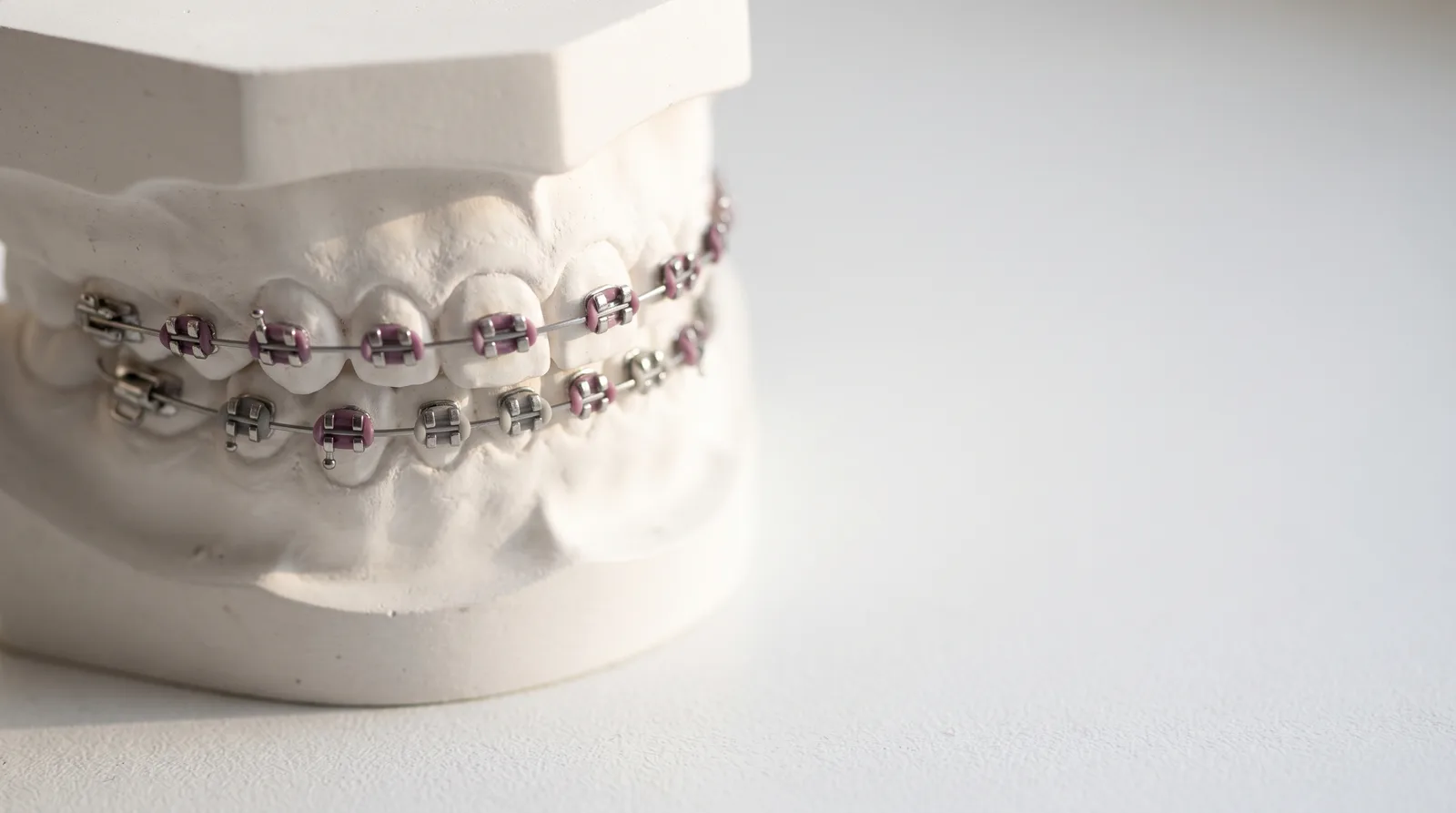
Brackets, bands and wires add edges and gaps where plaque can collect, and a 2025 expert consensus from dental specialists in China says they make the teeth around them harder to clean. It describes white spot lesions, the chalky marks that can follow, as early signs of tooth decay. A 2019 Cochrane review of fluoride and fixed braces says the same marks usually occur with fixed, glued-on braces. Our guide to white spots on teeth covers the other causes.
The 2025 consensus gives a wide range for how common they are, from 23.4% to 75.6%, depending on how they are detected and why the study was done. The strongest risk factor it names is already having white marks before treatment starts, followed by cleaning that slips during treatment and poor cleaning beforehand. Treatment lasting more than 36 months also adds to the risk. If you already have white marks, tell your orthodontist before treatment starts.
A patient leaflet from the orthodontics unit at Queen Victoria Hospital NHS Foundation Trust says it is food and plaque left around the brace, rather than the brace itself, that can cause decay and gum disease. It says healthy gums are light pink, not bright red or swollen. The same leaflet lists minor changes to the roots of teeth among the risks of braces, and says these changes can sometimes be more serious. Your orthodontist can tell you what applies to you.
A daily cleaning routine
The NHS says it is very important to keep your teeth and braces clean, and that your orthodontist will give you advice. The NHS and the hospital leaflet set out these steps.
- Brush with fluoride toothpaste for about 2 minutes, covering every surface of every tooth. The hospital leaflet suggests angling the bristles so they also reach under the wire and around the brackets.
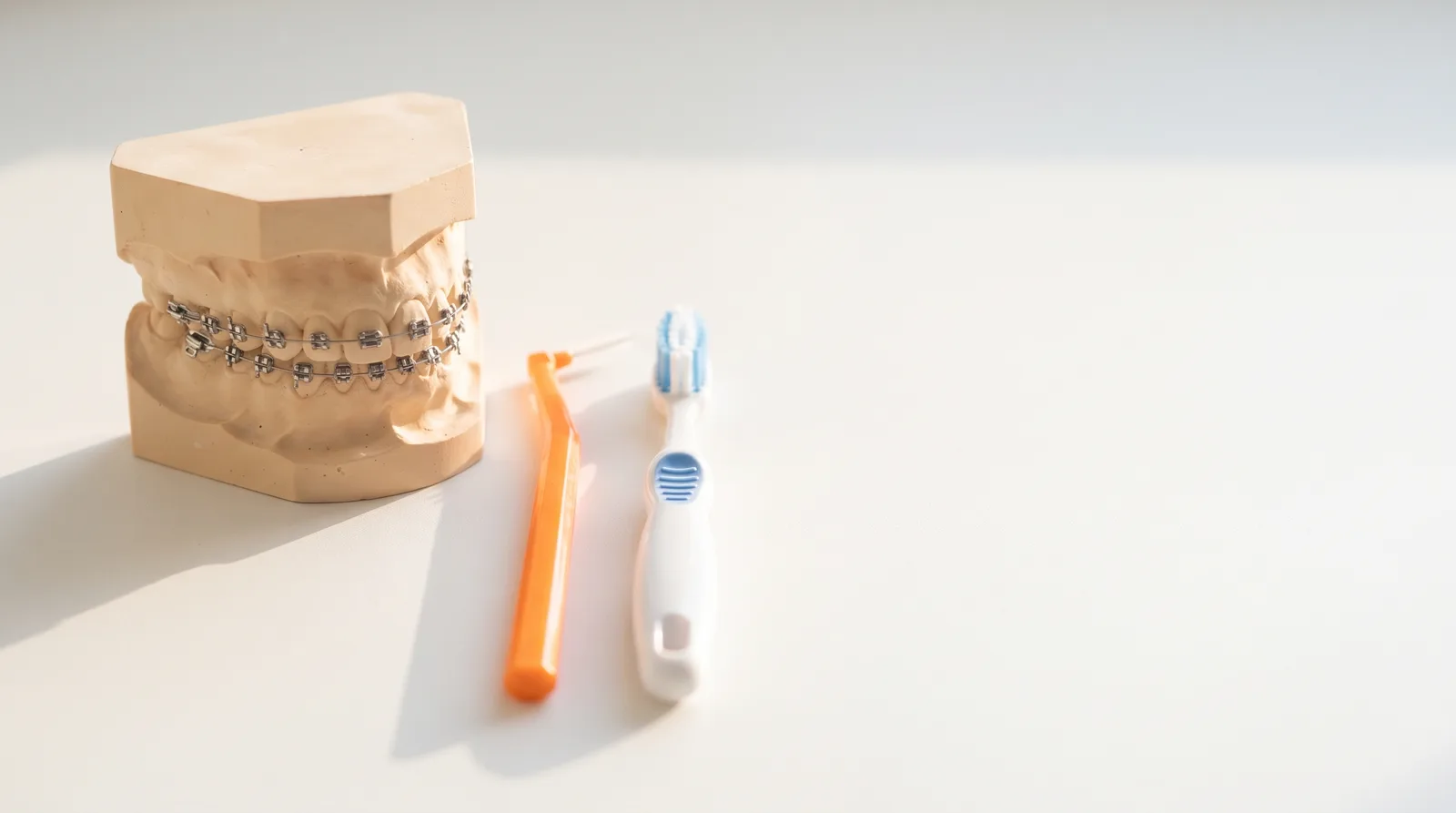
- Use an interdental brush every day to clean between your teeth and underneath the braces, says the NHS. An interdental brush is a small brush that fits between the teeth. The NHS says it should fit snugly, and advises against wooden toothpicks, which can damage the gums.
- Spit, then do not rinse. The NHS says rinsing straight after brushing washes away the concentrated fluoride left on your teeth.
- Check in a mirror, and change your toothbrush regularly. The leaflet says teeth, bands, brackets and wires should look clean and shiny, and that a well-used brush may clean less well.
Sources differ on how often to brush. The NHS braces page says morning, night and after meals. Its general advice, and the Oral Health Foundation’s, is twice a day, with one of those times last thing at night. The hospital leaflet says after each meal and before bed. Follow what your orthodontist tells you. Our guide to cleaning between your teeth has more.
Mouthwash and extra fluoride
A fluoride mouthwash can help prevent tooth decay, says the NHS. It should not be used straight after brushing, because it washes away the fluoride left from your toothpaste, so choose another time, such as after lunch. The NHS also says not to eat or drink for 30 minutes afterwards. The British Orthodontic Society (BOS) 2019 leaflet also says to use an alcohol-free fluoride mouthrinse daily, at a different time from brushing.
Some people are advised to go further. The Oral Health Foundation says your orthodontist may recommend a high-fluoride toothpaste, and the NHS says a dentist may advise a higher-strength toothpaste if you need it. The Cochrane review looked at extra fluoride in people with fixed braces. In one study, a high-fluoride foam applied by the dentist at each visit might reduce new marks, and in another a higher-strength toothpaste might. The one trial of a fluoride mouthrinse found no difference in new decay compared with a dummy rinse, and it had problems because many people dropped out. No study showed that other ways of adding fluoride reduced new decay. The reviewers rated their confidence as low, because no finding has been repeated in other studies. Ask your dentist or orthodontist whether any of this suits you. Our guide to fluoride and your teeth covers fluoride more generally.
Electric toothbrushes and water flossers
It makes no difference whether you use an electric or a manual toothbrush, the NHS says, as long as you clean every surface of every tooth with fluoride toothpaste. Some people find it easier to clean thoroughly with an electric one. That advice is general, not specific to braces.
A 2025 systematic review pooled randomised trials of water flossers, including trials in people with fixed braces. Added to brushing, a water flosser gave a slight extra benefit for plaque at about four weeks, though the difference had faded by two to three months. Only one trial measured gum bleeding in this comparison, and it found less bleeding at one and two months. Compared with floss, any advantage had mostly gone by four to six weeks. Certainty ranged from very low to moderate, and the authors say the differences may be too small to matter clinically. They stress that a water flosser does not replace brushing. The trials compared water flossers with floss and with brushing alone, not with the interdental brushes the NHS names.
Food and drink
The NHS, BOS and the hospital leaflet name these.
| Avoid or limit | What the sources name | Why |
|---|---|---|
| Sticky, chewy or hard sweets | Toffees, mints | Can damage teeth and braces (BOS) |
| Hard or crunchy foods | Crusty bread, pizza crusts, apples, carrots | Can break braces (NHS). Cut small, chew on the back teeth |
| Fizzy drinks | Fizzy drinks, diet ones too, and a lot of fruit juice | Can damage teeth and brace, and leave marks (BOS, hospital leaflet). Sugary ones can also cause decay (NHS) |
| Chewing gum | Chewing gum | Can get stuck in braces (NHS) |
The British Orthodontic Society also advises avoiding sugary snacks and drinks between meals and at bedtime. Our guide to sugar and your teeth explains why the timing matters.
The first days, and everyday problems
Teeth may be sore for a few days after braces are fitted, the NHS says, and soft food can help. The British Orthodontic Society says soreness can last 3 to 5 days after fitting and after each adjustment. Ask your pharmacist or GP which pain relief suits you. If the brace rubs on your lips, cheeks or tongue, the hospital leaflet says patients are shown how to use soft wax, so ask your orthodontist.
The British Orthodontic Society says you can still play contact sports, but it recommends a mouthguard, and the same goes for activities that need a protective helmet, such as skateboarding or horse riding. Our guide to custom and shop-bought mouthguards covers the types made for braces.
The hospital leaflet suggests checking each day that your brace is not broken or damaged. If it is, contact your orthodontist as soon as is reasonably possible, says the British Orthodontic Society, because repeated breakages slow treatment. The NHS also says to tell your orthodontist before braces are fitted if you have ever knocked or damaged a front tooth, as it may need further treatment while you wear them.
Clear aligners
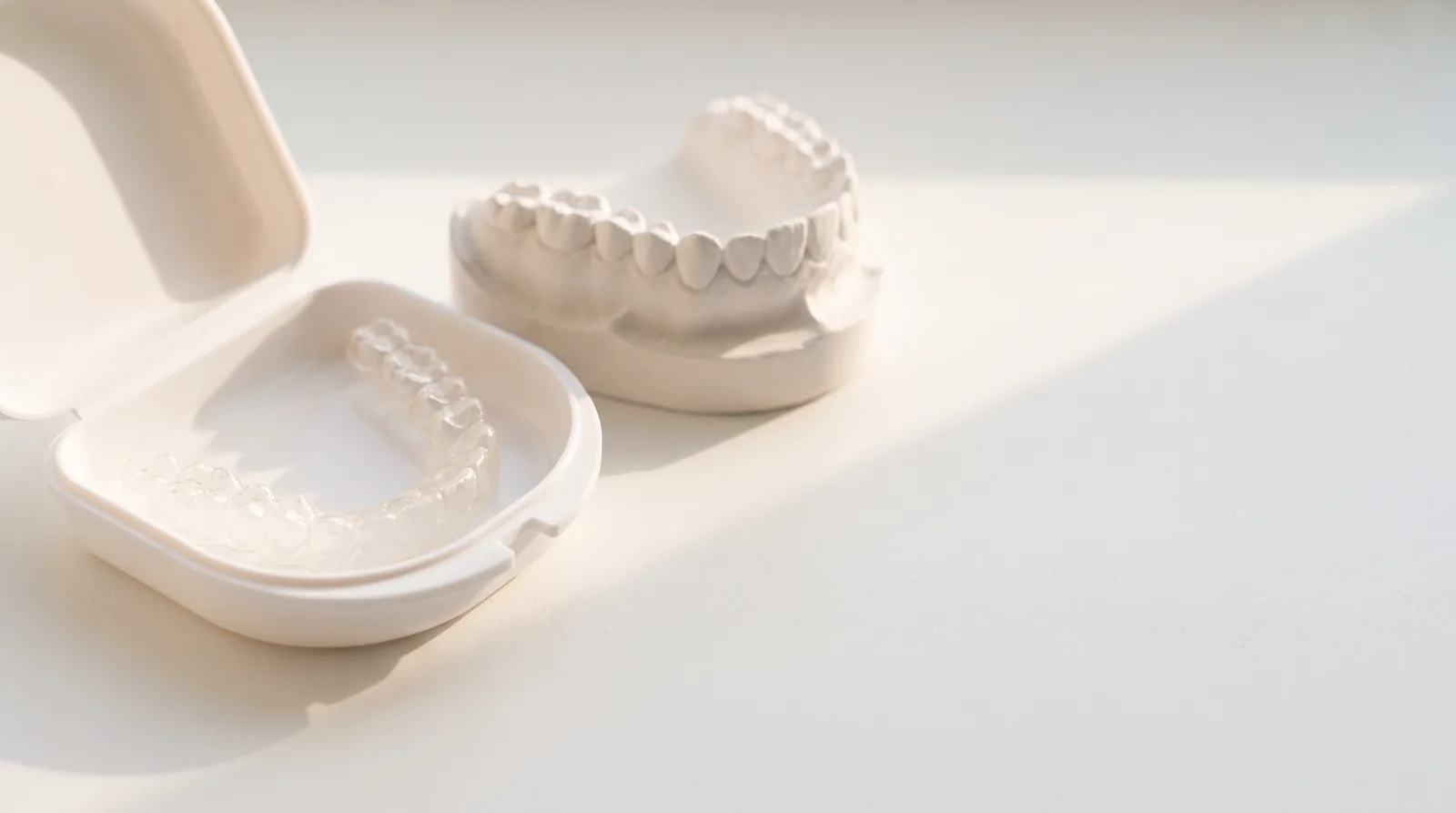
Clear aligners come out for cleaning, but the 2025 consensus, written by specialists in China rather than as UK guidance, says they are worn for most of the day, and that poor cleaning under them can still lead to enamel demineralisation, the loss of minerals from the enamel. It advises cleaning your teeth before putting them in, and rinsing promptly after a sugary drink while wearing them. Our guide to what to expect with Invisalign and clear aligners covers a typical course.
After the braces come off
You will need to wear a retainer once your braces are removed, says the NHS, and your orthodontist will tell you for how long. Our guide to retainers after braces has more.
When to contact your orthodontist or dentist
Contact your orthodontist, or your dentist, if you notice any of these.
- your teeth are still painful more than a few days after braces are fitted or adjusted
- your gums are very red, swollen or painful
- your brace is broken, or a band, bracket or wire has come loose
- white or brown marks appear around the brackets
The NHS puts the first three in its list for contacting your orthodontist, and the hospital leaflet adds loose parts. The Cochrane review describes white or brown marks as early decay, and the 2025 consensus says finding them early matters, so mention them to your orthodontist or dentist. The Cochrane review adds that if early decay is left to progress, it can cause holes, which are sometimes bad enough to need fillings. The British Orthodontic Society says your regular dentist should keep checking your teeth for decay throughout treatment.
What we would do
Teeth straightening at our practices covers clear aligners (Invisalign, Spark or SureSmile, depending on the practice) and fixed braces, with regular reviews to track how your teeth are moving. A dental hygiene appointment includes a clean and scale to remove plaque and tartar, then a polish, and advice on your own brushing and flossing routine. The NHS says your dentist or hygienist can advise you on how to clean between your teeth.
A new patient exam looks at your teeth, gums and soft tissues, with small X-rays where needed, so any new marks or gum changes can be checked. If you would like your teeth and gums checked while you wear braces, book an appointment at whichever of our five practices suits you.
Want us to take a look?
Book an appointment at whichever of our five practices suits you. We will check what is going on and talk you through your options.
Questions this guide answers
Do I need to brush after every meal with braces?
Sources differ. The NHS braces page says to brush in the morning, at night and after meals, while its general advice is twice a day, one of them last thing at night. Follow what your orthodontist tells you.
Is an electric toothbrush better for braces?
The NHS says electric and manual toothbrushes are equally good, as long as you clean every surface of every tooth with fluoride toothpaste. It adds that some people find an electric one easier for cleaning thoroughly. That advice is general, not specific to braces.
Should I use mouthwash with braces?
The NHS says a fluoride mouthwash can help prevent decay, but not straight after brushing, because it washes away the fluoride left from your toothpaste. The British Orthodontic Society also says to use it at a different time from brushing. Ask your orthodontist or dentist what suits you.
Do I still need to see my own dentist while I have braces?
Yes. The NHS says to keep having regular dental check-ups while you wear braces, and the British Orthodontic Society says your teeth need checking for decay throughout treatment. The hospital leaflet says visiting your own dentist is your responsibility.
What should I do if my brace breaks?
The NHS says to contact your orthodontist if a brace is broken. The British Orthodontic Society says to do so as soon as is reasonably possible, because repeated breakages slow treatment and add to its overall length.
Sources (8)
- Braces and orthodontic treatment (NHS)
- How to keep your teeth clean
- Orthodontic treatment: patient information leaflet (February 2019)
- Orthodontic treatment with fixed appliances: patient information leaflet (2023)
- Orthodontic treatment (braces)
- Fluorides for preventing early tooth decay (demineralised lesions) during fixed brace treatment
- Expert consensus on the prevention and treatment of enamel demineralization in orthodontic treatment
- Alleviation of plaque and gingivitis with dental water jet in regular and orthodontic patients: a systematic review and meta-analysis