How long do I need to wear a retainer?
The NHS says your orthodontist will tell you how long. Some plans start with day and night wear, others with nights only. The British Orthodontic Society advises continuing some form of retention for the long term.
On this page
Taking your braces off feels like the finish line. Then you are handed a retainer and a case, and the real question starts: how long do you have to wear it, and what happens if you stop? There is no single number, but UK orthodontic guidance agrees on why retention carries on well after the braces are gone.
Why do teeth move back after braces?
When braces have moved your teeth, the bone and gum tissue around them need time to adjust. The British Orthodontic Society (BOS) says there is a particular risk of teeth drifting back, known as relapse, in the early months after the brace comes off, and that the jawbone and gums can take at least a year to settle. A 2019 NHS England regional bulletin for dentists adds that the periodontal ligament, which anchors each tooth in the jaw, typically takes about 18 months to reorganise. It also says that slower changes in the jaws over the years can shift teeth.
Teeth can also move for reasons that have nothing to do with braces. The BOS retention guideline, last revised in 2013, says the lower front teeth become more crooked through life in a large proportion of people, whether or not they have had treatment. A 2023 Cochrane review lists gum disease, teeth grinding, tooth loss and ageing among the things that can move teeth. Our guides to gum disease, teeth grinding and replacing a missing tooth cover each of those.
How long will I need to wear a retainer?
Your own orthodontist’s instructions come first: the NHS says the orthodontist will tell you how long. Beyond that, the UK sources describe a pattern rather than a fixed duration.
- Removable retainers may be worn full time at first and then at night only, or at night only from the start, according to the BOS.
- The Oral Health Foundation describes day and night wear at first, then usually nights in the long term.
- One NHS hospital orthodontic department asks most patients to wear retainers every night for the first year. From the second year it is alternate nights, carried on for as long as they want their teeth to stay straight.
- The BOS says the risk of relapse remains in the long term, and its advice is to continue retention for the long term.
The BOS also advises that orthodontists explain, at the start of treatment, the likely need for lifelong wear if teeth are to stay in their new place. Before any orthodontic treatment starts, it suggests asking your orthodontist or dentist whether you will need retainers and for how long, and whether the total cost includes retainers and any breakages.
The evidence behind these plans is thinner than the advice sounds. A 2023 Cochrane review of retainers after braces found 47 studies with 4,377 people. It rated the evidence low or very low certainty, meaning the researchers had little confidence in it, and noted that most studies followed people for less than a year. It says no duration of wear is recognised. Its background section says earlier research has shown a risk of long-term relapse if people stop after one to two years. The review only covered people who had braces, not clear aligners such as Invisalign.
A 2019 NHS England regional bulletin says that if you had NHS-funded braces, the NHS pays for at least 12 months of supervised retention, after which you are normally discharged to your own dentist. Because that is regional guidance from 2019, ask your orthodontist what applies to you now. From then on, it is up to you to tell your dentist or orthodontist if a problem arises.
Which types of retainer are there?
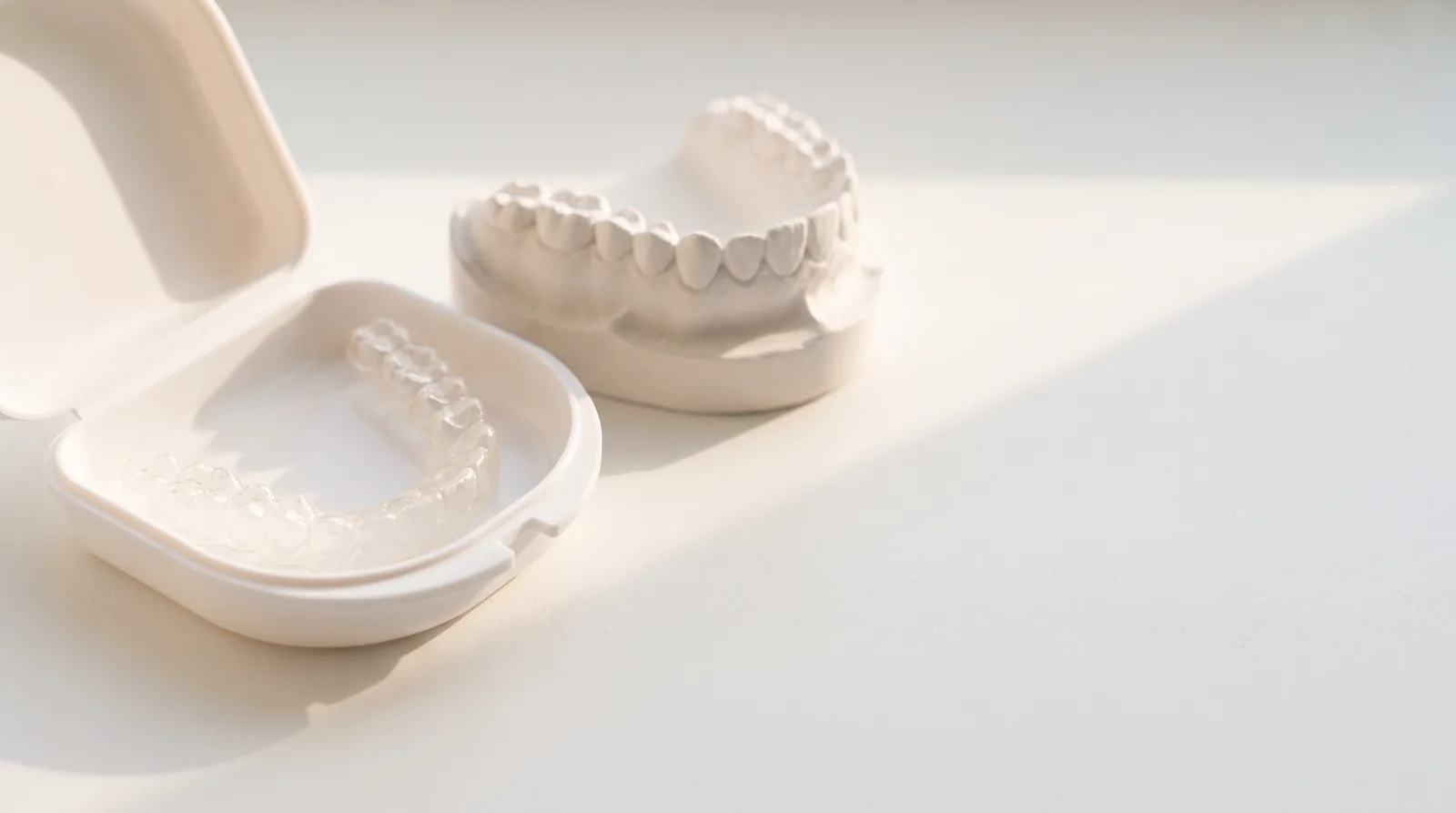
Orthodontists use removable and fixed retainers, and the NHS hospital department above says the type depends on your individual needs.
| Type | What it is | Worth knowing |
|---|---|---|
| Clear plastic (Essix) | Removable, fits over the teeth | Most orthodontists prefer it to the older wire-and-acrylic type, says the 2019 NHS England bulletin |
| Hawley | Removable, acrylic with a metal wire | Studies disagree on whether it lasts longer than clear plastic, and the evidence is weak. Single small studies in the Cochrane review favoured the Hawley for durability but found it less comfortable, while a trial cited by the BOS found clear plastic needed repair or replacement less often |
| Fixed (bonded) | A wire glued to the back of the teeth | Needs careful cleaning and regular checks; a tooth can drift if the glue fails, says the BOS |
Removable retainers depend on you remembering to wear them and, the BOS notes, need occasional repair or replacement. Fixed retainers are used less often. The 2019 NHS England bulletin says research shows that for most patients they do not hold teeth better than clear plastic ones. It says fixed retainers are usually recommended where teeth were spaced or very rotated to begin with, and the BOS guideline adds cases where gum support is reduced. The bulletin also says people with a fixed retainer are advised to wear a removable one from time to time, to hold the back teeth and as a back-up if the fixed one comes unglued.
Does a retainer mean my teeth will never move?
The BOS says relapse can still happen with both fixed and removable retainers, and that the risk remains in the long term. A retainer is designed to hold teeth in place, and the BOS advises that your orthodontist explain how likely your own result is to stay stable.
The BOS guideline does not set a separate plan for adults: where the gums and supporting tissues are healthy and the bite needs no further settling, it finds no evidence to support a different retention plan for adults than for teenagers.
Looking after your retainer
One NHS orthodontic department advises cleaning a removable retainer with liquid soap, water and a spare toothbrush. It says toothpaste can discolour the retainer, very hot water can melt the plastic, and a removable retainer belongs in a sturdy box when you are not wearing it.
For a fixed retainer, the BOS says a high standard of cleaning around it is needed to avoid gum problems. Our guide to cleaning between your teeth covers the tools. The NHS department adds that after the first year a dentist should check a fixed retainer regularly, to look for a break or damage to your teeth and gums.
When to see a dentist
- a fixed retainer breaks or comes unglued: the BOS says to contact your orthodontist at once, because a tooth can start to drift if the glue fails. If the NHS has already discharged you from your orthodontist, call your own dentist first. If you also have a removable retainer, the NHS England bulletin gives it as the back-up for a fixed one that comes unglued, so wear it while you wait for the repair, unless you are told otherwise
- a removable retainer is lost, cracked or broken
- you notice your teeth moving, or new gaps or crowding
- the gums around a fixed retainer are sore, swollen or bleeding (our guide to bleeding gums explains more)
The BOS notes that some general dentists prefer not to repair a fixed retainer, so you may need to see an orthodontist. Replacements may not be free: the BOS says you may be charged for a replacement removable retainer, and the NHS England bulletin says that after discharge, NHS funding is not normally available, so costs are normally agreed and paid for privately.
What we would do
Retention is the last stage of an Invisalign or other clear aligner course at our practices: a retainer worn as advised once treatment is complete. Our teeth straightening page covers clear aligners (Invisalign, Spark or SureSmile, depending on the practice) and fixed braces, and lists Essix retainers. If you are thinking about braces or aligners as an adult, our guide to braces for adults compares what is available. Our guide to what to expect from Invisalign describes a course month by month.
If you are joining us for the first time or returning after a break, a new patient exam is the usual first step. Your dentist examines your teeth, gums and soft tissues, takes small X-rays where needed, and explains your options in plain language. If you would like someone to look at your teeth, book an appointment.
Want us to take a look?
Book an appointment at whichever of our five practices suits you. We will check what is going on and talk you through your options.
Questions this guide answers
Do I have to wear a retainer for life?
The British Orthodontic Society says orthodontists should explain at the start of treatment the likely need for lifelong wear if teeth are to stay in their new place. A 2019 NHS England regional bulletin says orthodontists advise wearing retainers for as long as you want your teeth to stay straight, and that how much wear is needed varies from case to case.
Can I stop wearing my retainer after a year?
Ask your orthodontist or dentist before you stop. The background section of a 2023 Cochrane review says earlier research has shown a risk of long-term relapse if people stop wearing retainers after one to two years. Some plans reduce wear after the first year instead of stopping.
What if my teeth have already moved?
Tell your dentist or orthodontist. A 2019 NHS England regional bulletin says it is the patient's responsibility to report problems, and that removable retainers can correct mild relapse with a period of full-time wear, with guidance. So ask before you restart full-time wear yourself. A dentist can look at what has changed.
Is a fixed retainer better than a removable one?
The evidence is not strong enough to say, and it depends on your teeth. A 2023 Cochrane review rated it low or very low certainty and could not draw firm conclusions about any one approach over another. A 2019 NHS England regional bulletin says that for most people a fixed retainer does not hold teeth better than a clear plastic one, but that fixed retainers are often chosen where teeth were spaced or very rotated. The British Orthodontic Society adds reduced gum support. Your orthodontist will suggest the type that suits your teeth.
Sources (7)
- Braces and orthodontic treatment
- Frequently asked questions about orthodontic treatment
- Clinical guidelines: orthodontic retention (revised 2013)
- Retention procedures for stabilising tooth position after treatment with orthodontic braces
- Retainer Q and A, Dental Bulletin SW34, November 2019
- Orthodontic treatment
- Retainers